
Review · GERMANY
Bean to Bar Chocolate Mini Tasting in Bonn
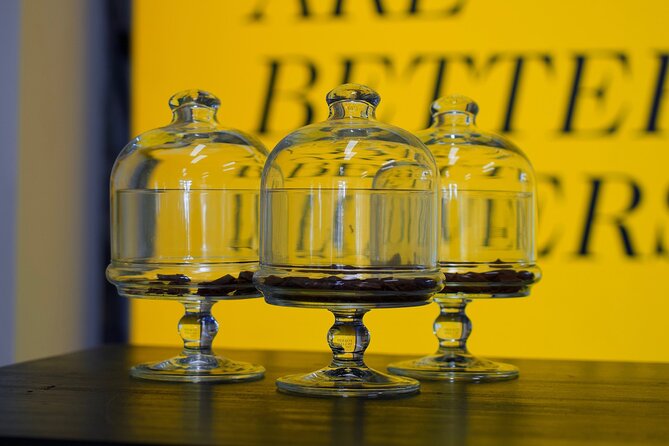
Chocolate can turn a short stop into a good memory. This 25-minute bean-to-bar tasting in Bonn offers a focused way to compare different chocolates, learn how they taste, and shop afterward in the same warehouse. I like the direct-trade sourcing and the fact that most cocoa comes from organic farming. I also like the relaxed format, which leaves room for questions instead of rushing you from sample to sample.
The main consideration is the short length. At $10.84 per person, it is an easy-priced introduction, but it is not a full chocolate-making class or a long food tour. You will need to reach the warehouse at Elsässer Str. 8 in Bonn, and the listed opening time is Tuesday from 10:00 a.m. to 5:00 p.m.
Key points at a glance
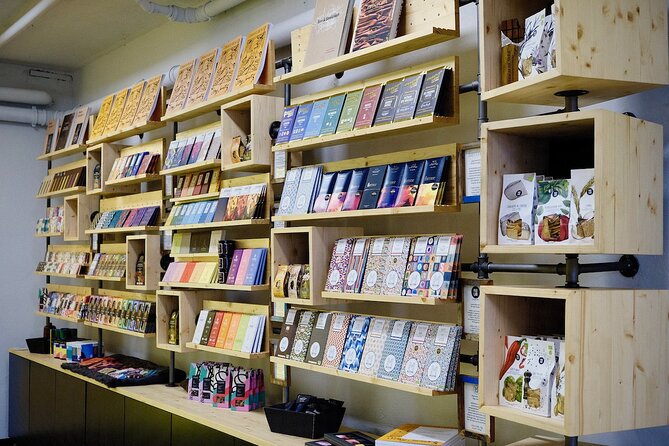
- A warehouse setting: The tasting takes place where chocolate is sold, giving you a practical look at the products rather than a formal museum-style setting.
- Bean-to-bar variety: You can sample a wide range of chocolates and compare how different bars taste.
- Ethical cocoa sourcing: All cocoa comes through direct trade, and most is from organic farming.
- Simple ingredient standards: The chocolates are free of soy, palm fat, and vanillin.
- Good for questions: The tasting can be adapted for allergies or intolerances, and the host takes time to explain the chocolate.
- Small-group scale: A maximum of 20 people keeps the session more personal than a large commercial tasting.
Starting at Elsässer Str. 8 in Bonn
Your visit begins at Elsässer Str. 8, 53175 Bonn. The meeting point is also the end point, so you do not need to plan a separate return journey or find your way to another part of the city after the tasting.
The location is near public transportation, which helps if you are visiting Bonn without a car. Still, check your route before setting out. The information provided gives the street address but does not list a particular tram, bus, or station, so you should allow enough time to locate the entrance.
The setting matters here. This is a warehouse sale and tasting, not a grand chocolate museum with displays and theatrical demonstrations. That can be a plus if you prefer an honest, working retail environment. You are close to the products, and you can move from tasting to buying without adding another stop.
The warehouse format may feel plain compared with a polished city-center attraction. You are paying for the chocolate and guidance, not for elaborate décor. I would treat the setting as part of the bargain: the money goes toward the tasting and products rather than a fancy room.
The listed schedule runs on Tuesdays from 10:00 a.m. to 5:00 p.m. The supplied operating dates cover March 26, 2023, through March 11, 2027. Since the booking is subject to availability, confirm the exact time when you reserve.
More Bean-to-Bar Chocolate Tours in the world:
- 1.5h Belgian Chocolate Workshop in Brussels (bean to bar)
★ 4.5 · 462 reviews - Bean to Bar Chocolate Workshop in Puerto Vallarta
★ 5.0 · 381 reviews - Bean to Bar Chocolate Workshop in Barcelona
★ 5.0 · 172 reviews
What happens during the 25-minute tasting
The tasting is short and purposeful. You arrive, receive an introduction to bean-to-bar chocolate, and sample a selection of products in the warehouse. The aim is not simply to hand you a piece of chocolate and send you on your way. It is to help you notice differences and find a style you like.
You can expect a guided comparison of several chocolates. The available description does not give a fixed tasting menu, so the exact selection may vary. That is useful for a shop with a broad range, but it also means you should not expect a named sequence of specific bars.
The host explains the chocolate and responds to questions. The small-group limit of 20 people supports that format, although the actual feel will depend on how many people book your time. The most favorable comments focus on the amount of time given to questions and explanations, including a session where a six-year-old was included appropriately.
That family detail is worth noting. A chocolate tasting can easily become too technical for a young child, but the format appears flexible enough to bring children into the conversation. At the same time, the activity is only about 25 minutes, so it works well for a short family outing rather than a full afternoon activity.
The tasting also seems relaxed rather than rigid. You may be able to try different chocolates according to your interests and ask for guidance based on what you enjoy. That makes the session more useful than a random set of samples. If you already know that you prefer very dark, milky, fruity, nutty, or plain chocolate, tell the host early.
Why bean-to-bar chocolate tastes different
Bean-to-bar means the chocolate maker works with cocoa beans and takes responsibility for turning them into finished chocolate. The term does not guarantee that every bar will suit your taste, but it encourages you to pay attention to the cocoa itself, not only added flavorings or sweetness.
During this tasting, you can compare chocolates that may differ in cocoa character, sweetness, texture, and finish. The precise range is not specified, so I would avoid arriving with expectations about particular countries or percentages. Instead, use the session to work out what you enjoy.
The host’s role is especially useful if you normally choose chocolate by wrapper alone. A guided tasting can show you why two bars that look similar may taste quite different. You might notice a cleaner finish in one, stronger bitterness in another, or a smoother texture in a third.
This is also a chance to slow down. Chocolate tasting works better when you take a small bite, let it melt, and notice what remains. With only 25 minutes, the pace will still be brisk, but you have enough time to make a few clear comparisons.
The most useful result may not be finding the most expensive or unusual bar. It may be discovering the kind of chocolate you would actually buy again. That makes the tasting valuable even if you are not a serious chocolate enthusiast.
Ethical sourcing you can taste and discuss
The company says 100 percent of its cocoa comes from direct trade, with farmers receiving significantly higher income. Most of the cocoa also comes from organic farming. These details give the tasting more substance than a simple sweets stop.
Direct trade can mean a closer buying relationship between the chocolate company and cocoa producers. The information provided does not give the names of farms, regions, certifications, or specific farmer programs, so you should not expect a full supply-chain lecture. Still, the stated model gives you a clear question to ask: where did the cocoa in a particular bar come from, and how was it purchased?
Organic farming is another useful point of comparison, but remember that most cocoa is organic, not necessarily every product. If that matters to you, ask which bars meet the standard before choosing what to buy.
I appreciate that the sourcing information is tied to the tasting itself. You are not only learning how chocolate tastes. You can also consider how the ingredients were produced and what your purchase supports. This is especially helpful if you want to buy less chocolate, but better chocolate.
The ethical claims should not be treated as a substitute for details. If you want certification or farm-level information, ask the host. The tasting appears well suited to that conversation because questions are welcomed and the group is limited.
A few more chocolate tours around the world worth a look
- Lindt Home of Chocolate Museum Entry Ticket
★ 4.7 · 9,329 reviews - Choco-Story Brussels: Chocolate Museum Entrance with Tasting
★ 4.3 · 4,883 reviews - Zurich: City Tour, Cruise, and Lindt Home of Chocolate Visit
★ 4.5 · 4,624 reviews - The Chocolatarium Chocolate Tour Experience in Edinburgh
★ 5.0 · 4,322 reviews
Ingredient standards and allergy planning
All the chocolates are free of soy, palm fat, and vanillin. That is useful for shoppers who avoid those ingredients or who want a more straightforward chocolate recipe.
Allergies and intolerances can be discussed in advance or at the start. The host says the tasting can be tailored to your needs, which is an important advantage. You should still explain your allergy clearly before sampling anything and ask about cross-contact if that is a concern.
The available information does not list every possible allergen, such as nuts, dairy, or gluten. It also does not promise a completely allergen-free environment. So if you have a serious allergy, do not rely only on the general ingredient policy. Contact the provider and confirm what can safely be included.
For a person with a dietary restriction, this flexibility may make the tasting possible when a standard chocolate tour would not. For everyone else, the ingredient policy adds another talking point and may help you understand why the bars taste the way they do.
The warehouse sale after the tasting
The retail side is an important part of the visit. After comparing chocolates, you can look through the products and decide what deserves a place in your suitcase or kitchen.
This setup has a practical advantage: you can buy a bar while your impressions are still fresh. If you liked one chocolate more than another, you do not need to remember its name and search for it later. You may also find a style you would never have picked from a shop shelf.
Do not feel that you need to buy something to justify the tasting. The $10.84 admission is modest enough to work as a stand-alone activity, and the guidance is the main point. If you do want souvenirs, chocolate is easier to carry than many food products, though the information does not specify packaging or shipping options.
The warehouse sale also means the session may appeal to serious chocolate shoppers more than to people looking for a major sightseeing attraction. I would pair it with other Bonn plans rather than make it the only reason for a long journey across the city.
Is $10.84 good value?
At $10.84 per person, this is priced as a light activity rather than a full culinary tour. For 25 minutes of guided tasting, the value depends on what you want.
If you want a quick introduction, the price is fair. You receive guided sampling, an explanation of the chocolates, the chance to ask questions, and access to a broad selection in the warehouse. The direct-trade and organic information gives the session more purpose than a simple free sample at a shop.
If you expect a long presentation, a chocolate-making demonstration, a take-home box, or a large meal, you will likely find the offer limited. None of those extras is listed. The short duration is the main boundary.
I would see the price as particularly good for a couple, a small group of friends, or a family already visiting Bonn. It is also low enough to suit a spontaneous food stop, though bookings are often made well ahead, with an average lead time of 24 days. That suggests you should not assume a same-day place will be available.
The free cancellation policy adds some flexibility. You can receive a full refund if you cancel at least 24 hours before the start time. Changes or cancellations made later are not accepted for a refund, and all cutoffs use local Bonn time.
Who will enjoy this tasting most?
I would recommend it to anyone who wants to understand what makes bean-to-bar chocolate different. You do not need prior knowledge. The host’s willingness to answer questions makes the activity approachable, and the short length keeps it from becoming a serious study session.
It suits:
- Chocolate fans who want to compare several styles before buying.
- Ethical shoppers who care about direct trade and organic farming.
- Families looking for a brief, manageable activity, including children.
- Visitors with some dietary concerns who can explain their needs in advance.
- Bonn visitors with a free Tuesday window near the listed opening hours.
- Small groups who prefer personal conversation over a large presentation.
It may not suit you if you want a major attraction, a long workshop, or a detailed tour of cocoa-growing regions. The activity is focused on tasting and shopping. That narrow purpose is also its strength.
Practical advice before you go
Book ahead if your schedule is fixed. The average booking lead time is 24 days, and confirmation arrives within 48 hours, subject to availability.
Plan around the Tuesday schedule of 10:00 a.m. to 5:00 p.m. The information supplied does not list individual appointment times, so check the exact start time on your confirmation.
Wear whatever is comfortable for a brief warehouse visit. No special equipment is listed. The activity ends where it begins, and mobile tickets are accepted.
If you have an allergy or intolerance, contact the provider before arrival or speak up immediately. The tasting can be adjusted, but you should give the host enough information to choose suitable samples.
Service animals are allowed, and the site is near public transportation. Most people can take part, though the information does not provide detailed physical accessibility notes. If you need specific access arrangements, ask before booking.
The maximum group size is 20. That is not an intimate private tasting, but it is small enough to allow questions, especially compared with a large food demonstration.
Should you book the Bonn bean-to-bar tasting?
Book it if you want a short, affordable, question-friendly chocolate tasting with credible ethical sourcing and a chance to shop afterward. The strongest reasons are the variety, the direct-trade cocoa, the simple ingredient standards, and the flexible approach to allergies and children.
Skip it if you are looking for a full chocolate workshop or a major sightseeing event. At 25 minutes, this is a focused stop, not an all-day activity. For most chocolate lovers already planning time in Bonn, though, the low price and useful guidance make it an easy addition to a Tuesday itinerary.
FAQ
Where does the chocolate tasting take place?
It takes place at Elsässer Str. 8, 53175 Bonn, Germany, in the provider’s warehouse.
How long does the tasting last?
The tasting lasts approximately 25 minutes.
What day and time is it offered?
The listed opening schedule is Tuesday from 10:00 a.m. to 5:00 p.m. Confirm the exact available time when booking.
How much does the experience cost?
The listed price is $10.84 per person.
Is the tasting offered in English?
Yes. English is one of the available languages.
Can the tasting accommodate allergies or intolerances?
Yes. You can inform the provider about an allergy or intolerance so the tasting can be adjusted to your needs.
How many people can join?
The activity has a maximum group size of 20 people.
Can I cancel for a full refund?
Yes. You can cancel for a full refund up to 24 hours before the experience begins. Cancellations or changes made less than 24 hours before the start time are not refunded.
Just added around the world
- Lindt Chocolate Museum with Cruise Transfer from Zurich★ 4.6 · 7 reviews
- Zagreb: Lake Bled and Ljubljana Day Tour with Chocolate Gift★ 5.0 · 26 reviews
- Zurich: Chocolate Tasting and Walking Tour with a Local★ 4.2 · 13 reviews
- Zurich Open-top Tour and Chocolate and Cheese Countryside★ 3.5 · 11 reviews
- Wine and Chocolate experience★ 4.6 · 3 reviews
- York: Introduction to Chocolate Making Experience★ 4.9 · 10 reviews
- Zaandijk-Near Zaanse Schans Chocolate making demo & tasting★ 4.8 · 13 reviews
- Private Wine and Chocolate Tasting Experience★ 4.4 · 3 reviews
Bean-to-Bar Chocolate Tours, compared.
1.5h Belgian Chocolate Workshop in Brussels (bean to bar)
Read our review →
Bean to Bar Chocolate Workshop in Puerto Vallarta
Read our review →
Project Chocolat Bean to Bar Experience from Hotel Chocolat
Read our review →
Puerto Viejo hands on chocolate making class. From bean to bar, get chocolatey!
Read our review →
Chocolatier for a day: raw bean to bar chocolate in Modica
Read our review →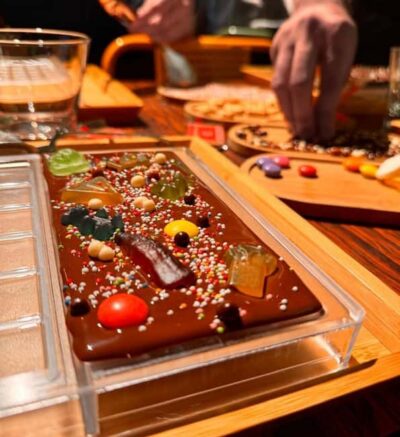
Browse the lists this tour appears in