
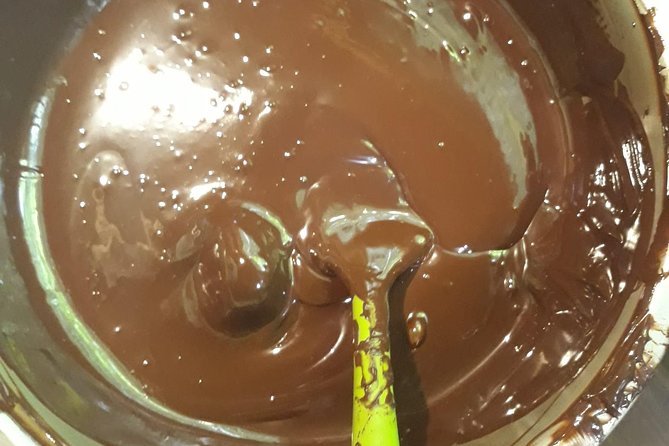
Review · COSTA RICA
Puerto Viejo hands on chocolate making class. From bean to bar, get chocolatey!
Chocolate is better when you know its story. This Puerto Viejo class takes you from the cacao tree to a finished bar, with Ansel explaining the plant, its cultural uses, and the many steps between bean and chocolate. I like the hands-on process and the chance to take home chocolate made during the class. I also like the relaxed, personal setting, where the group is limited to 18 people.
The main consideration is the amount of explanation before the practical work begins. Some people loved the detailed talk, while others found the opening portion too long and expected more immediate chocolate making. You should also be comfortable with an outdoor farm setting, including flies and free-roaming animals.
Key points to know before booking
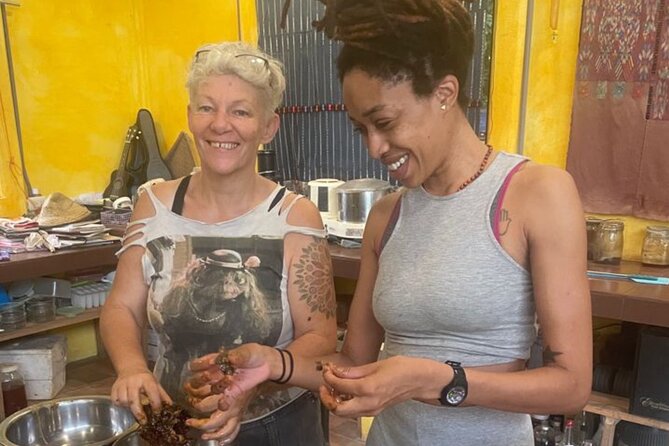
- You start with the cacao tree: The class begins by looking at the plant itself, then discussing its cultural, medicinal, and historical uses.
- You follow the bean-to-bar process: The class covers roasting, cracking, processing, grinding, and turning cacao into chocolate.
- You taste cacao at several stages: Tastings may include cacao beans, traditional hot chocolate, truffles, bars, and other chocolate preparations.
- You make chocolate to take home: You leave with your own chocolate, plus roasted beans and fine chocolate.
- The class can run longer than advertised: The listed duration is about 2 hours 15 minutes, but some sessions have lasted three to three and a half hours.
- The setting is rustic: Cats, dogs, birds, flies, and other farm activity are part of the surroundings, which some people enjoy and others may find distracting.
Starting with a cacao tree near Puerto Viejo
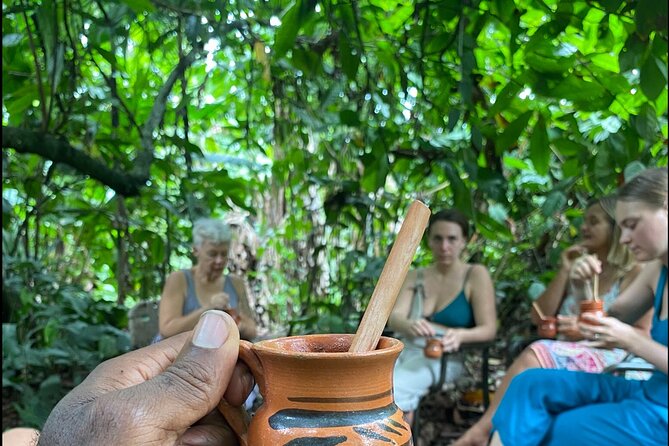
The experience begins at 10:00 a.m. at M64V+GM6 in the Puerto Viejo de Talamanca area of Limón Province. From there, you visit a cacao tree and learn how the plant grows and why it matters to Costa Rica and the wider region.
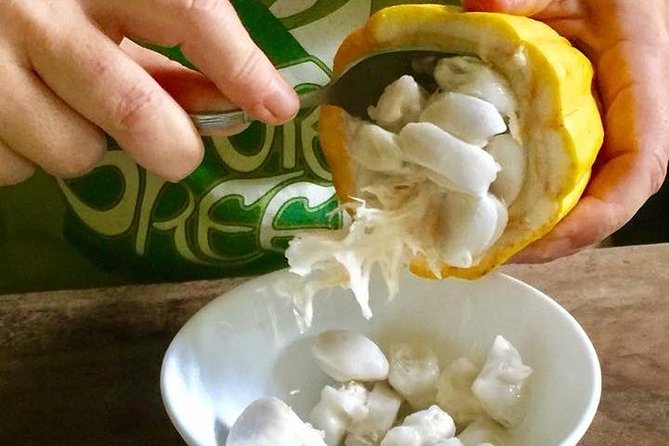
This opening is not just a quick photo stop. Ansel spends real time explaining the tree, fruit, beans, and changing uses of cacao. You learn how cacao has been connected to people, nature, medicine, trade, and modern chocolate culture.
That focus gives the class more substance than a simple candy-making workshop. Chocolate in a supermarket wrapper can seem far removed from a tropical fruit. Here, you get a chance to connect the finished product with its source.
There is a tradeoff. One session spent about 50 minutes beside the cacao tree before moving on, and some people found that too long. If you enjoy plant knowledge, cultural context, and detailed teaching, this may be one of the best parts. If you mainly want to make and eat chocolate, the opening can test your patience.
My advice is to book this with the right expectation. It is an educational cacao experience that includes chocolate making, not a quick confectionery class with a short introduction.
More Bean-to-Bar Chocolate Tours in the world:
- 1.5h Belgian Chocolate Workshop in Brussels (bean to bar)
★ 4.5 · 462 reviews - Bean to Bar Chocolate Workshop in Puerto Vallarta
★ 5.0 · 381 reviews - Bean to Bar Chocolate Workshop in Barcelona
★ 5.0 · 172 reviews
From fruit and seed to something edible
After the tree visit, you return to the chocolate-making facility. This is where the process becomes more practical. The class follows the same general method used to make chocolate from cacao grown on the farm.
You learn about fermentation and the changes that turn a cacao seed into something suitable for chocolate. The class then moves through the steps in order, including roasting, cracking open the beans, removing unwanted material, grinding cacao, and preparing the chocolate.
The order matters. You are not simply mixing melted chocolate with toppings. You see how much work comes before the smooth bar that most people buy in a shop.
Several people found this step-by-step teaching useful because it made chocolate feel possible to make at home. One person left with enough confidence to try making chocolate independently. That is a good sign for anyone who wants a skill rather than a one-time tasting.
Still, the exact balance between explanation and practice can vary. Some sessions have been highly interactive, with participants trying nearly every stage. Another person felt that the practical portion was too limited, mainly involving opening cacao beans before tasting the result.
If you want to get the most from the class, ask questions and take part whenever you are invited. This is a small-group activity, and your curiosity can help shape the pace.
Tasting cacao in several forms
The tasting portion is one of the most interesting parts because cacao changes greatly as it moves through the process. You may try roasted beans, cacao at different stages, traditional hot chocolate, truffles, bars, and the chocolate made by the group.
Do not expect every sample to taste sweet. Raw or minimally processed cacao can be bitter, sharp, or unfamiliar. The hot chocolate may also be more earthy and bitter than the sweet drink served in a café.
That point matters if you expect milk chocolate. The class focuses on dark chocolate, and one person specifically found this surprising. There is no indication that milk chocolate is part of the experience, so book it for an interest in cacao and dark chocolate rather than for a creamy candy fix.
The tasting is valuable because it shows how roasting, grinding, fermentation, and added ingredients affect flavor. You can compare the original bean with the finished chocolate and understand why the two taste so different.
The class also appears generous with samples. Several descriptions refer to eating chocolate during the session and taking some home. Exact quantities may vary, but you should expect to leave with edible results rather than only a demonstration.
Making your own bar at the chocolate facility
The central activity is making a chocolate bar with beans from the farm. You follow the process as it is done there each day, then create something of your own to keep.
This is where the experience earns its price. At $47.37 per person, you are paying for more than a tasting. You receive instruction, farm context, samples, a practical activity, and chocolate to take home. For anyone who values a personal lesson and local production, that is a fair package.
The value is especially good for families and friends who want an activity everyone can share. Adults can focus on the cultural and environmental discussion, while children have the appeal of cracking, grinding, tasting, and making chocolate. The class is also suitable for solo visitors because the small format makes it easier to ask questions.
The finished bar may not look like a professionally packaged chocolate product. That is part of the charm. You are learning a process and carrying home something you helped make, not buying a factory-perfect souvenir.
You may also leave with roasted beans and fine chocolate in addition to your own bar. Since the class explains the stages clearly, these items help you remember what you learned after you return to your accommodation.
More Chocolate Making Workshops in the world:
- Vienna: Chocolate Workshop in Chocolate Museum w/ Tasting
★ 4.5 · 1,802 reviews - Brussels: Belgian Chocolate Making Workshop with Tastings
★ 4.7 · 1,629 reviews - Brussels: 2.5-Hour Belgian Chocolate Making Workshop
★ 4.8 · 933 reviews - Belgian Chocolate Workshop in Bruges
★ 5.0 · 660 reviews
Ansel’s teaching style and the pace of the class
Ansel is the main reason the class receives such strong praise. Her teaching is described as warm, funny, passionate, and generous with information. She does not treat cacao as just an ingredient. She presents it as a plant tied to people, animals, land, trade, and daily life.
That personal interest gives the class character. You are not listening to a memorized sales pitch. The tone is relaxed, and the group can ask questions along the way.
The downside is that Ansel has a lot to say. A session listed at roughly 2 hours 15 minutes may last three hours, and one group stayed for about three and a half hours. If your morning schedule is tight, leave plenty of space afterward.
I would not plan a major appointment immediately after the class. The extra time may be welcome, especially if you enjoy conversation, but it is not ideal if you need to reach another activity at a precise hour.
The best match is someone who likes learning through stories and discussion. If you want a short, tightly timed workshop, this may feel slow. If you like understanding the reasons behind each step, the extended format can be a benefit.
A farm setting with real animals and outdoor conditions
The atmosphere is informal and connected to the farm. Dogs, cats, birds, and other animals may move around the property. Some people found this friendly and memorable, while another person felt uncomfortable around the animals.
Flies are also part of the setting. One complaint focused on flies near the ingredients and concern about cleaning the work surfaces. That is a serious consideration for anyone who expects a polished commercial kitchen.
The setting may suit you if you enjoy rustic, open-air activities and do not mind normal farm distractions. It may not suit you if you need a strictly controlled food-preparation environment or feel uneasy around dogs and cats.
The available information does not establish that every session has the same conditions. Still, you should arrive prepared for an informal setting rather than a spotless culinary studio. If you have an animal fear, food hygiene concern, or other strong preference, contact Talamanca Chocolate before booking.
How long to allow and how to reach the meeting point
The official duration is about 2 hours 15 minutes, with a 10:00 a.m. start. In practice, you should allow at least three hours if you want to avoid rushing.
The activity ends back at the starting point. The meeting location is in the Puerto Viejo de Talamanca area, and one description says it is easy to reach on foot from Puerto Viejo for people without a scooter or bicycle. It is also near public transportation.
Because this is a morning activity, it can fit well with a relaxed afternoon in Puerto Viejo. Just do not treat the listed duration as a guarantee if your later plans depend on exact timing.
The group can contain up to 18 people. That is not a private lesson, but it is still small enough to feel more personal than a large factory tour. The actual group size may be lower, and smaller groups seem to allow more questions and practical participation.
Who will enjoy this Puerto Viejo chocolate class
I would recommend it most strongly to:
- People who want to understand cacao before tasting chocolate
- Families looking for an educational activity
- Couples and friends who enjoy making something together
- Solo visitors who like small-group instruction
- Anyone interested in Costa Rica’s plants, food culture, and local production
- Dark chocolate fans who enjoy bitter, earthy flavors
- Home cooks who want to learn the basic path from cacao bean to bar
You may want to skip it if you only want a fast tasting, prefer milk chocolate, dislike long explanations, or need a highly polished indoor kitchen. You should also think twice if flies or free-roaming animals would make you uncomfortable.
One useful point is that the class can appeal even if you are not a serious chocolate lover. The plant, cultural, and environmental material gives it value beyond eating sweets. At the same time, a person who dislikes dark chocolate may not enjoy the tasting as much as someone who already likes cacao’s stronger flavor.
Booking, cancellation, and practical planning
The price is $47.37 per person, and the activity is often booked about 15 days in advance. That does not mean you must reserve exactly two weeks ahead, but it is sensible to plan early during a busy visit to Puerto Viejo.
Confirmation is provided at booking. Service animals are allowed, and the activity is near public transportation.
You can cancel for a full refund up to 24 hours before the start time. Changes or cancellations made less than 24 hours before the start are not accepted for a refund. The class depends on suitable weather and a minimum number of participants. If the provider cancels for either reason, you are offered another date or experience, or a full refund.
The class is not only about eating a bar at the end. Its value comes from the time with the teacher, the chance to handle cacao at several stages, the farm connection, and the chocolate you take away. For that reason, the price feels reasonable if you enjoy educational food activities.
Should you book this cacao experience?
Book it if you want a warm, personal lesson about cacao with real participation and plenty to taste. Ansel’s enthusiasm is the strongest part of the experience, and the best sessions give you a clear understanding of how cacao changes from fruit to bean to chocolate.
Go in expecting a rustic setting, dark chocolate, and a generous amount of talking before the main hands-on work. Allow more than the advertised 2 hours 15 minutes, and do not schedule anything tight afterward.
My final call: yes, book it if learning matters as much as eating. This is a particularly good choice for families, curious solo visitors, and anyone who wants to carry home a skill along with a chocolate bar. If you want a polished, fast-moving confectionery workshop, choose something else.
FAQ
Where does the Puerto Viejo chocolate class meet?
It meets at M64V+GM6 in Puerto Viejo de Talamanca, Limón Province, Costa Rica.
What time does the class start?
The stated start time is 10:00 a.m.
How long does the experience last?
The listed duration is about 2 hours 15 minutes. Some sessions have lasted three to three and a half hours, so allow extra time.
What will I learn during the class?
You learn about the cacao tree, its history, cultural and medicinal uses, fermentation, roasting, cracking, grinding, and the process of turning cacao beans into chocolate.
Do I get to make chocolate myself?
Yes. You make a chocolate bar using beans from the farm and follow the process used at the facility.
What do I take home?
You leave with chocolate you made, along with roasted beans and fine chocolate.
Is milk chocolate included?
The available information indicates that the class focuses on dark chocolate. Milk chocolate is not listed as part of the experience.
How many people can join the class?
The maximum group size is 18 people.
Can I cancel for a full refund?
Yes, if you cancel at least 24 hours before the scheduled start time. Cancellations or changes made less than 24 hours before the start are not refunded.
Just added around the world
- Lindt Chocolate Museum with Cruise Transfer from Zurich★ 4.6 · 7 reviews
- Zagreb: Lake Bled and Ljubljana Day Tour with Chocolate Gift★ 5.0 · 26 reviews
- Zurich: Chocolate Tasting and Walking Tour with a Local★ 4.2 · 13 reviews
- Zurich Open-top Tour and Chocolate and Cheese Countryside★ 3.5 · 11 reviews
- Wine and Chocolate experience★ 4.6 · 3 reviews
- York: Introduction to Chocolate Making Experience★ 4.9 · 10 reviews
- Zaandijk-Near Zaanse Schans Chocolate making demo & tasting★ 4.8 · 13 reviews
- Private Wine and Chocolate Tasting Experience★ 4.4 · 3 reviews
Chocolate Making Workshops, compared.

Chocolate Workshop in Chocolate Museum w/ Tasting
Read our review →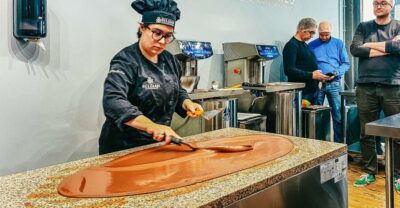
Belgian Chocolate Making Workshop with Tastings
Read our review →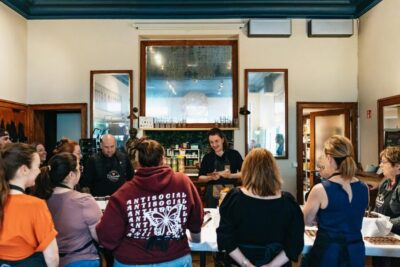
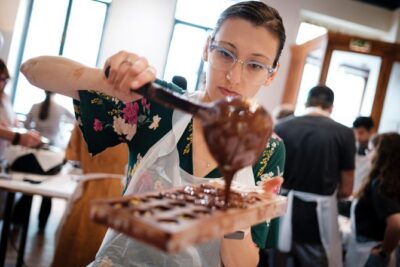
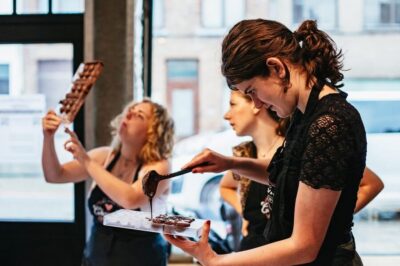
Belgian Praline and Mendiants Chocolate Workshop
Read our review →
1.5h Belgian Chocolate Workshop in Brussels (bean to bar)
Read our review →
45-minute Chocolate Making Workshop at Choco-Story
Read our review →
Chocolate Bar Making Workshop at York Cocoa Works
Read our review →Browse the lists this tour appears in