
Review · MEXICO
Casa Cacao – Journey From Cacao Bean to Chocolate
Chocolate starts with a bean, not a candy wrapper. At Casa Cacao in Mérida, you examine different cacao beans, learn how they are prepared, make a traditional Mexican cacao drink, and shape your own chocolate bar to take home. I like the hands-on format and the small group limit of seven, which gives the session a personal feel. I also like that Josh, the host, shares practical knowledge about Maya culture, local food, and Mérida.
The main drawback is the weekday schedule. Sessions run Monday through Friday only, with several set time slots, so this may not fit a short weekend visit. You should also allow up to 48 hours for booking confirmation, since reservations depend on availability.
Key points at a glance
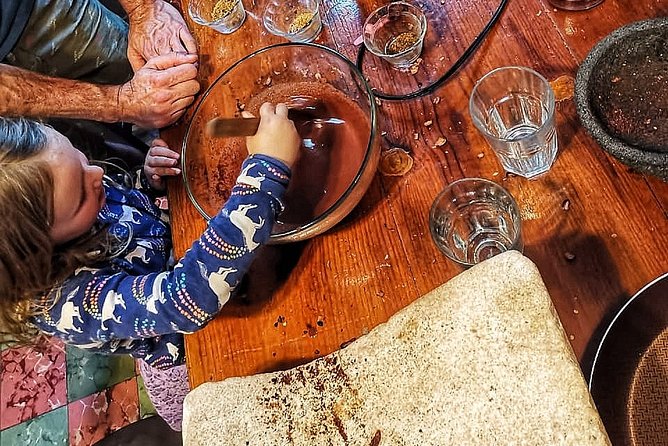
- You work with roasted cacao beans: The session includes grinding the beans with traditional ingredients rather than simply watching a demonstration.
- You taste a Mexican cacao drink: The drink connects the workshop to a tradition used in Mexico for thousands of years.
- You make chocolate to take home: The modern part of the class lets you create a molded bar using dark, milk, or white chocolate.
- The group has a maximum of seven people: This is a good size for questions and personal guidance.
- Josh adds local context: He explains cacao, Maya culture, and chocolate-making methods, while also offering advice about Mérida restaurants and entertainment.
- The class returns to its starting point: You meet at C. 49 499b beside Parque Santa Ana in central Mérida.
Meeting cacao in central Mérida
Casa Cacao begins at C. 49 499b, Parque Santa Ana, Centro, 97000 Mérida. That central address makes the workshop fairly easy to fit into a day of exploring Mérida, especially if you are already near Parque Santa Ana.
The meeting point matters because this is not a plantation visit. You are learning about what happens at the plantation and during processing, but the activity itself takes place in a city setting. That keeps the session convenient, though you should not expect a field trip among cacao trees.
The class ends back at the same meeting point. You do not need to arrange a second pickup location, and the short, contained format makes it easier to plan lunch, sightseeing, or an evening meal afterward.
The workshop is offered in English. That is useful if you want clear explanations of the stages from cacao bean to finished chocolate, especially during the grinding and tasting portions. The small group limit also gives you a better chance to ask about anything that catches your attention.
A few more chocolate tours around Mexico worth a look
- Finca 18 Puerto Vallarta Tequila Tour + Chocolate Pairing
★ 5.0 · 393 reviews - Bean to Bar Chocolate Workshop in Puerto Vallarta
★ 5.0 · 381 reviews - Chocolate Tour in Vallarta
★ 5.0 · 226 reviews
Learning what happens before chocolate
The first part focuses on cacao beans and the work done before chocolate reaches a mold or a shop shelf. You examine several types of beans and learn about the plantation stage, sourcing, and the steps that prepare cacao for later use.
This is one of the strongest parts for anyone who has only known chocolate as a finished sweet. Cacao beans do not arrive ready to eat. Seeing different types side by side helps you understand that chocolate begins with an agricultural product, and that preparation affects the final taste and texture.
The class also places cacao in a Mexican and Maya cultural setting. One participant used the session to learn about Maya culture as well as cocoa, and that wider context is important. The drink and grinding work are not just culinary tricks. They show how cacao has been used in Mexico for millennia and how older methods still shape modern chocolate.
Josh is described as patient and easy to talk with. That matters in a workshop built around questions. If you want to know where cacao is sourced, how traditional methods differ from current production, or why certain ingredients are added, you should have room to ask rather than simply listen to a prepared speech.
The information appears suited to beginners. You do not need a background in food production to follow the process, and the practical work gives each explanation a clear purpose.
Grinding roasted beans with traditional ingredients
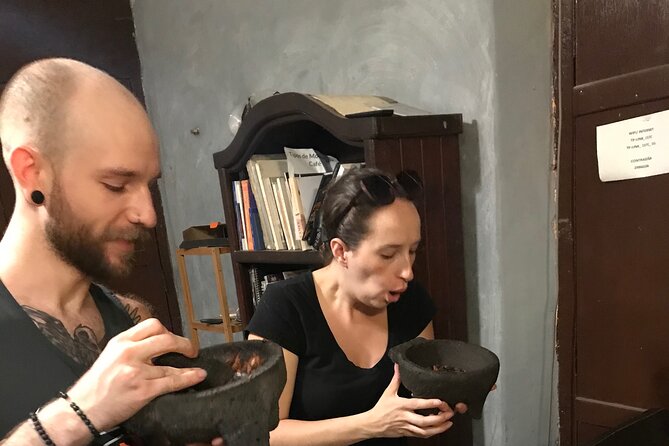
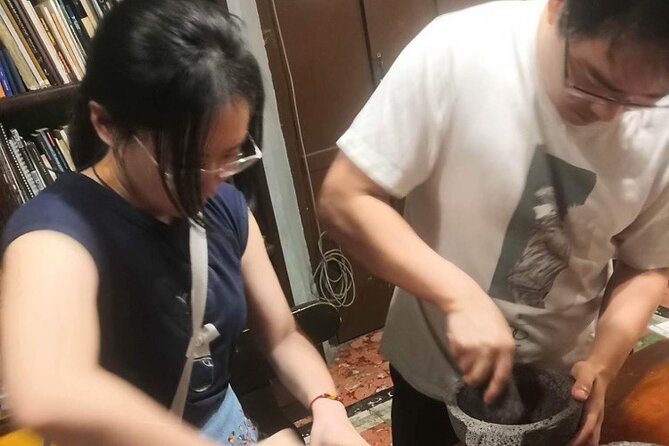
The central hands-on task is grinding roasted cacao beans together with traditional ingredients. You do not merely watch a finished drink being served. You take part in the work that turns roasted cacao into something you can taste.
That step gives the session a useful physical rhythm. You can see and feel how the ingredients change as they are worked together, then taste the result soon afterward. For families, this is likely to be more memorable than a talk alone, since everyone has a task and a result to share.
The drink is a traditional Mexican cacao beverage. The supplied information does not specify every ingredient, so you should not expect a fixed recipe beyond the use of roasted cacao and traditional additions. The value is in understanding the method and tasting a form of cacao that predates the familiar chocolate bar.
This may also be the part that best connects the workshop to local culture. The session does not treat chocolate as only a modern dessert. It shows how cacao can be a drink, a cultural ingredient, and a product shaped by both older customs and newer production methods.
You should be ready for a flavor that may differ from a sweet chocolate drink. The exact balance depends on the ingredients used during the class, but the experience is designed to show cacao in a traditional form rather than simply recreate a commercial candy flavor.
Making a chocolate bar to take home
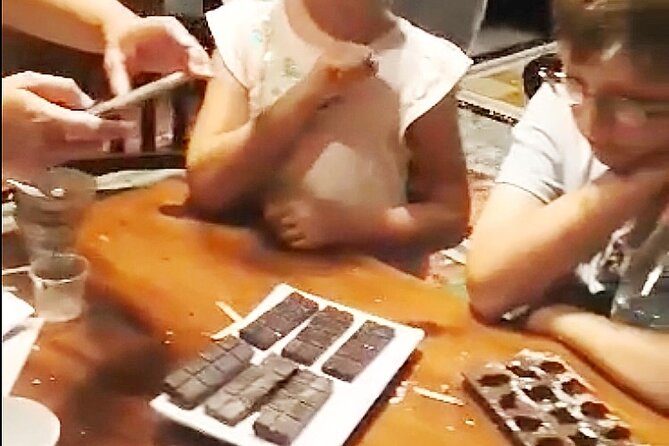
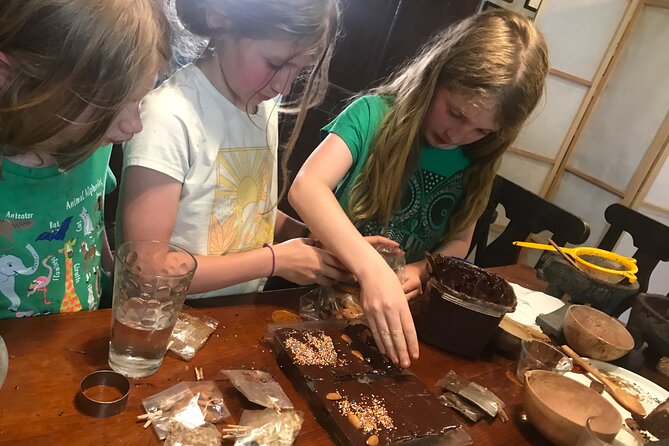
After the traditional drink, the class shifts to modern chocolate-making. You make your own molded chocolate bar and take it with you.
This change in focus gives the workshop a clear before-and-after structure. First, you work with roasted beans and traditional ingredients. Then you move toward the familiar chocolate forms found in shops and kitchens. The contrast helps explain how cacao becomes the dark, milk, or white chocolate most people recognize.
The sample dessert selection includes:
- Dark chocolate
- Milk chocolate
- White chocolate
The exact choices available for your bar are not described in detail, so you should treat these as the main chocolate styles presented rather than assume every possible topping or filling is included. Still, having several chocolate types makes the final activity suitable for different tastes.
The take-home bar adds practical value. You leave with more than a memory and a few photographs. You also have a small result from the process, which can make the experience especially appealing to families, couples, and anyone who likes food workshops.
Do not expect a full professional chocolatier course in two hours. The session is an introduction to cacao and chocolate production, with enough practical work to make the subject tangible. It is not presented as advanced pastry training.
Same place, a different sort of tasting:
- Chocolate & Margarita Workshop
★ 5.0 · 207 reviews - Chocolate and truffles workshop
★ 5.0 · 157 reviews - San Jose del Cabo Art Walk, Beer Tasting &Chocolate Demonstration
★ 5.0 · 141 reviews - Artisanal Mezcal and Fine Chocolate Tasting
★ 5.0 · 132 reviews
Why the small group size matters
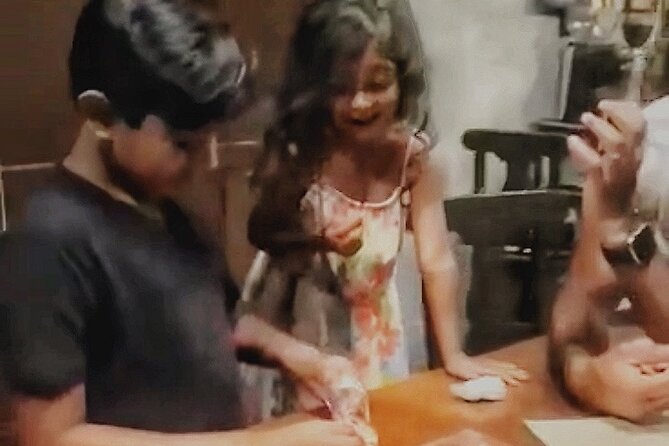
The maximum group size is seven people. That is a strong feature for this kind of activity because grinding, tasting, and molding all work better when you are not standing behind a large crowd.
A smaller group should make it easier to hear explanations and get help with the practical steps. It also gives you more freedom to ask about details such as cacao sourcing, Maya customs, and differences between older and newer techniques.
The experience is hosted by Josh Nisenfeld. The strongest descriptions of the session focus on his patience, warmth, and ability to explain the subject in a relaxed way. He is also praised for helping with questions about Mérida beyond the workshop, including restaurants and local entertainment.
That informal local advice can be useful, but it should be viewed as an extra rather than the main reason to book. The core attraction remains the cacao lesson and the chocolate-making work.
The information also refers to two warm hosts, so you may meet more than one person helping with the session. Josh is the named host, and his personal approach appears to be an important part of the class.
A two-hour activity with useful time slots
The activity lasts about two hours. The available weekday sessions are:
- 11:00 a.m. to 12:30 p.m.
- 1:00 p.m. to 2:30 p.m.
- 3:00 p.m. to 4:30 p.m.
- 6:00 p.m. to 7:30 p.m.
The listed duration is approximately two hours, while the published time blocks show 90 minutes. You should confirm the exact timing when booking, since the information gives both descriptions. Either way, this is a compact activity rather than a full-day outing.
The late-afternoon and evening slots are helpful if you want to spend the morning sightseeing. The 1:00 p.m. time may work well between central Mérida plans, though you should allow enough time to arrive at the Parque Santa Ana meeting point.
The weekday-only schedule is the clearest limitation. If your visit falls on a Saturday or Sunday, this particular timetable will not help. The activity is available during the stated operating period through February 13, 2027, but you should check the date and availability before building your day around it.
Because the class ends where it begins, you can plan around it without arranging transport at the far end. The meeting point is near public transportation, and service animals are allowed.
Is the workshop good value?
No price is provided here, so I cannot judge whether it is cheap or expensive in pesos. I can judge what you receive for the fee: a small English-language group, instruction on cacao beans and plantation preparation, a traditional drink made from roasted beans, a modern chocolate activity, and a bar to take away.
That combination gives the session more substance than a simple tasting. You are paying for participation, cultural context, and guidance from a local host, not only for dessert.
The value will be strongest if you enjoy food and want to understand process. If you only want to buy excellent chocolate, a shop visit may be simpler. If you want a quick, social activity with something edible at the end, Casa Cacao offers more involvement than a standard tasting.
Families should find plenty to hold their attention, especially during the grinding and molding steps. The class also suits couples and solo visitors who prefer a small group over a large scheduled tour.
People seeking an agricultural excursion should set expectations correctly. You learn what happens at the plantation, but the activity does not take you to a plantation. It is a city-based workshop about the journey from cacao bean to chocolate.
Who should book Casa Cacao?
I would recommend this experience to you if you enjoy food, culture, and short practical activities. It is particularly suitable for:
- Families looking for an activity that includes making and tasting
- Couples who want something more interactive than sightseeing
- Solo visitors who enjoy asking questions in a small group
- Chocolate fans curious about cacao before it becomes a bar
- People interested in Maya culture and traditional Mexican drinks
- Visitors with a free weekday morning, afternoon, or early evening
You may want to skip it if you dislike sweet foods, want a large plantation visit, or have no weekday time in Mérida. The workshop is also not the best match if you want advanced chocolate technique. Its purpose is to explain the process and let you try key stages yourself.
The high rating of 4.7 out of 5 and the 93 percent recommendation figure support the idea that the format works well for most people. The most praised features are consistent: warm hosting, patient instruction, cultural information, and hands-on chocolate-making.
Booking and cancellation details
Confirmation is sent within 48 hours of booking, subject to availability. I would book ahead rather than assume a same-day place, especially if you need one particular time slot.
Free cancellation is available if you cancel at least 24 hours before the start time. If you cancel within the final 24 hours, the payment is not refunded, and changes made during that period are not accepted. The cut-off follows Mérida local time.
Should you book this chocolate experience?
Book Casa Cacao if you want to understand cacao by handling it, grinding it, drinking it, and turning it into a chocolate bar. The small group, English instruction, central Mérida location, and patient guidance from Josh make it a practical choice for a weekday.
I would give it priority over a basic chocolate tasting because the session connects cacao to Maya culture and lets you work through both traditional and modern methods. Just keep the limits in mind: it is not a plantation tour, the schedule is weekday-only, and the exact price is not available here.
For a two-hour Mérida activity with a strong food focus and something sweet to take home, this is an easy recommendation.
FAQ
Where does Casa Cacao begin?
The experience begins at C. 49 499b, Parque Santa Ana, Centro, 97000 Mérida, Yucatán, Mexico.
Where does the experience end?
It ends back at the same meeting point.
How long does the activity last?
The tour summary gives an approximate duration of two hours. The listed time blocks run for 90 minutes, so confirm the exact duration when booking.
Is the experience offered in English?
Yes. The experience is offered in English.
How many people can join?
The activity has a maximum of seven travelers.
What days and times is it available?
It is listed Monday through Friday at 11:00 a.m., 1:00 p.m., 3:00 p.m., and 6:00 p.m. The published end times are 12:30 p.m., 2:30 p.m., 4:30 p.m., and 7:30 p.m.
Can I cancel for a full refund?
Yes, if you cancel at least 24 hours before the experience start time. Cancellations made less than 24 hours before the start are not refunded.
Just added around Mexico
- Tulum: Chocolate & Honey Sanctuary Experience with Lunch★ 4.2 · 34 reviews
- Tulum: Chocolate & Honey Sanctuary Experience with Cenote★ 3.5 · 6 reviews
- Cultural Adventure: Artisanal Chocolates, Coffee and Doll Making★ 5.0 · 2 reviews
- Private Make Your Own Chocolate Experience in Puerto Vallarta★ 5.0 · 8 reviews
- Tarot Reading with Coffee & Chocolate or Smoothie★ 5.0 · 17 reviews
- Sayulita Magical Town Tour: Local food, and chocolate.★ 5.0 · 18 reviews
- Chocolate Macarons Workshop in Puerto Vallarta★ 5.0 · 5 reviews
- Amazing Walk through the Zapotec Mountains with Hot Chocolate★ 5.0 · 4 reviews
Chocolate Tours, compared.
Choco-Story Brussels: Chocolate Museum Entrance with Tasting
Read our review →
City Tour, Cruise, and Lindt Home of Chocolate Visit
Read our review →
The Chocolatarium Chocolate Tour Experience in Edinburgh
Read our review →
Award-Winning Geneva Chocolate &Old Town Tour with Boat Ride (3h)
Read our review →
Yarra Valley Wine, Gin, Whisky and Chocolate Tour
Read our review →
4×4 Dominican Adventure with Chocolate and Coffee Tasting
Read our review →
Browse the lists this tour appears in