
Review · MEXICO
Cozumel: Chocolate Workshop at The Mayan Cacao Company
Chocolate has an ancient story. At The Mayan Cacao Company, you learn how cacao served as a sacred food, social marker, and ceremonial ingredient in Mayan life, then grind cacao seeds yourself and make a handmade bar. I especially like the workshop’s hands-on use of a traditional pre-Hispanic metate and the chance to taste 13 artisanal chocolates afterward. The main drawback is that the experience is not suitable for anyone with chocolate or nut allergies, and it is not wheelchair accessible.
The 1.5-hour format works well for a Cozumel shore day or a short cultural outing. I also like that the workshop is not only a tasting stop. Guides such as Paty, Roberto, Eduardo, and Leti have been praised for making the history lively and for helping children and first-time chocolate makers. The $40 price is fair if you value an interactive activity, though it may feel high if you only want free samples and a souvenir.
Key points to know before you go
- Grind cacao on a traditional metate: You take part in the old-style preparation instead of simply watching a demonstration.
- Make a chocolate bar: The ingredients and tools are included, so you leave with something you created during the workshop.
- Taste 13 artisanal chocolates: The tasting gives you a broad look at different chocolate styles in one sitting.
- Learn cacao’s Mayan role: The presentation covers cacao as a sacred food, a sign of prestige, and part of religious and social life.
- Plan for a 1.5-hour visit: It is short enough to fit into a busy Cozumel schedule, but long enough for history, preparation, and tasting.
- Bring cash and wear comfortable clothes: Hotel transfers, food, and drinks are not included.
Why this Cozumel chocolate visit is more than a tasting
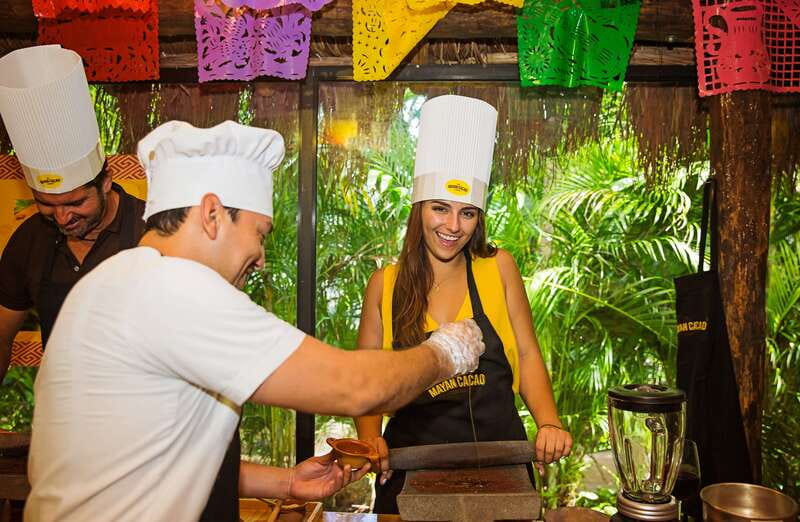
Many chocolate stops are built around a quick sample and a shop. This one gives you a cultural frame first. You hear how cacao fit into pre-modern Mayan society before handling the same basic ingredient in a traditional preparation process.
That context matters. Cacao was not treated simply as a sweet snack. It held religious meaning, appeared in rituals and ceremonies, marked status, and served as a social centerpiece. The workshop connects those ideas to the physical work of grinding cacao, so the history does not remain an abstract talk.
I like that balance. You get information, but you also have a task to complete. The result is less like a museum lecture and more like a small food lesson with a clear connection to Mexican culture.
The guides seem to be a major part of the experience. Paty is repeatedly praised for her enthusiasm, patience, and willingness to help with grinding. Roberto is described as especially energetic and attentive, with one small group receiving extra time for questions. Eduardo has worked well with families, and Leti helped make the subject engaging for children aged 9 and 11.
That suggests a useful tip: if you have questions, ask them. The workshop appears to reward curiosity, especially when the group is small. The style may vary depending on whether your guide is Paty, Roberto, Eduardo, or another member of the team, but the strongest feedback points to friendly, involved instruction rather than a rushed script.
More Chocolate Making Workshops in Mexico
- Bean to Bar Chocolate Workshop in Puerto Vallarta
★ 5.0 · 381 reviews - Chocolate Workshop
★ 5.0 · 92 reviews - Make Your Own Chocolate with Oaxacan Tradition Private Class
★ 5.0 · 45 reviews
Arriving at The Mayan Cacao Company
You meet at The Mayan Cacao Company in Quintana Roo, Mexico. Hotel pickup and drop-off are not included, so you need to arrange your own way to the site. If you are visiting Cozumel as part of a busy day, allow enough time to arrive 15 minutes before the scheduled start.
The meeting point detail is simple but important. This is not a door-to-door excursion, and the $40 price does not cover transportation. You should also bring cash, since that is listed among the recommended items.
Wear comfortable clothes. Chocolate preparation can be hands-on, and you may prefer not to arrive in clothing that feels restrictive. The supplied information does not specify whether the activity creates a major mess, so comfortable, practical clothing is the sensible choice.
The workshop is offered in Spanish and English. Check the available starting times when booking, since the schedule can affect how easily you fit it around other Cozumel plans.
The Mayan cacao story comes first
The first part focuses on cacao’s place in Mayan culture. You learn about its use as a sacred food, a sign of prestige, and an ingredient connected with religious ceremonies and social life.
This is the part that gives the activity its purpose. You are not simply learning how chocolate becomes candy. You are learning why cacao mattered before modern chocolate production changed the way most of us encounter it.
The presentation is designed to be interactive. Several guides have been praised for answering questions and adjusting their pace to the group. That is useful because the subject can appeal to very different ages. Adults may be more interested in ceremony and social status, while children often connect faster with the chance to handle cacao and make something edible.
Families appear to be a particularly good match. One parent described a young child making a chocolate bar and feeling proud of the result. Another family found that the guide kept children aged 9 and 11 engaged with the cultural material. The key is that the workshop does not ask children to sit through a long lecture before anything happens.
You should still know what this is not. It is not a full Mayan archaeological tour, and the information provided focuses on cacao and chocolate rather than a broad survey of Mayan civilization. If you want ruins, temples, or a longer cultural tour, you will need a separate activity.
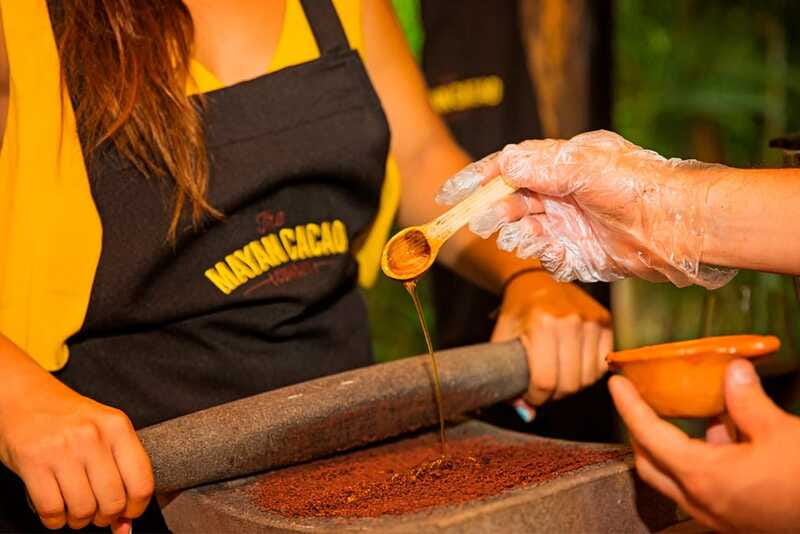
Grinding cacao on the pre-Hispanic metate
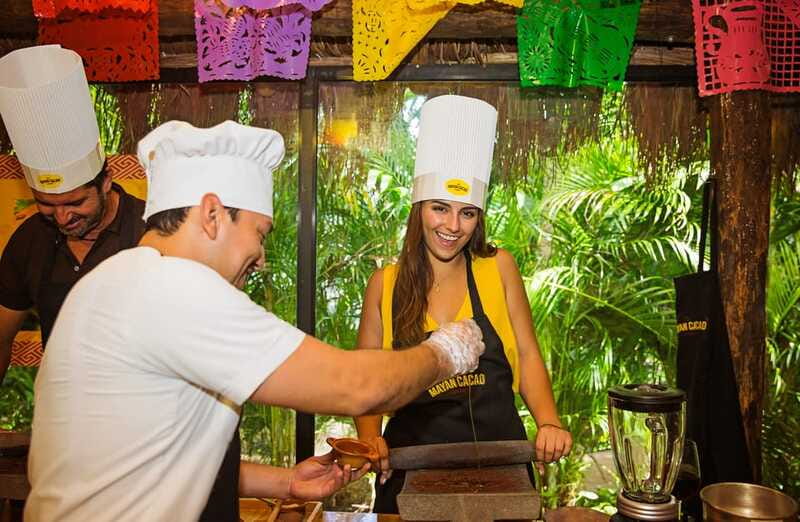
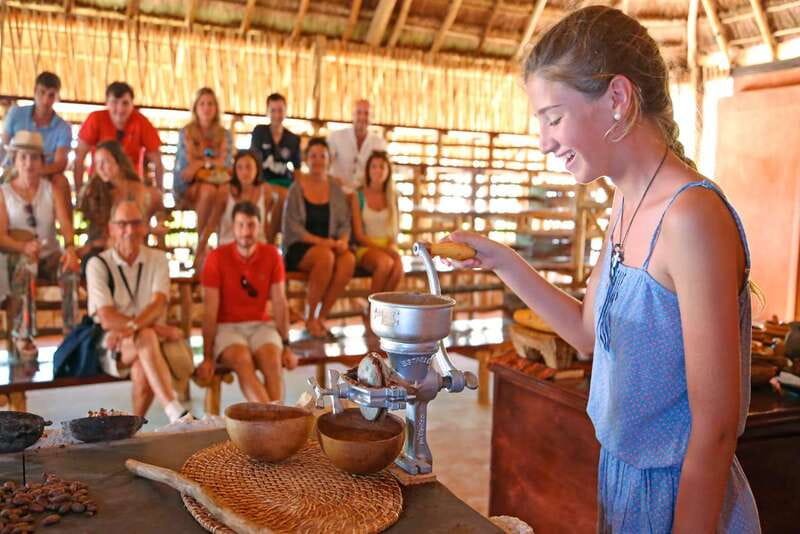
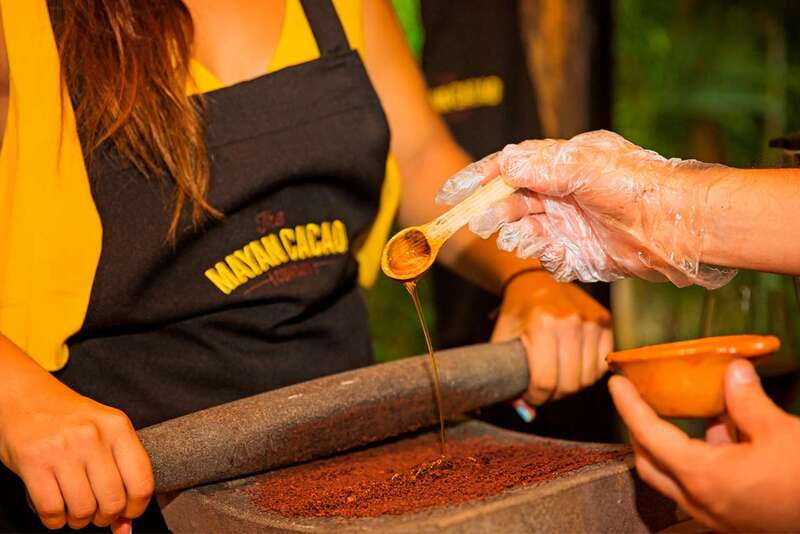
The practical heart of the workshop is the grinding process. You use cacao seeds associated with Mayan rituals and ceremonies, place them on a traditional pre-Hispanic metate, and work them by hand.
The metate is more than a prop. It shows the physical effort behind a preparation method that modern kitchen equipment usually hides. You feel the texture change as the cacao is worked, and you gain a better sense of how much labor sits behind a simple finished product.
This is also where a helpful guide matters. Paty has been specifically praised for assisting with the grinding, which is useful if you find the process tiring or awkward. The activity is intended to be participatory, but you do not have to figure everything out alone.
I would treat this part as a cultural demonstration that you actively join, not as a professional cooking class. The information provided does not promise advanced chocolate-making skills or a long recipe lesson. Instead, you get a direct connection to an older method and a clear understanding of the ingredients involved.
The physical work may be less comfortable for people with mobility limitations. The experience is not wheelchair accessible, so check carefully before booking if access is a concern.
Same place, a different sort of tasting:
- Finca 18 Puerto Vallarta Tequila Tour + Chocolate Pairing
★ 5.0 · 393 reviews - Chocolate Tour in Vallarta
★ 5.0 · 226 reviews - Chocolate & Margarita Workshop
★ 5.0 · 207 reviews - Chocolate and truffles workshop
★ 5.0 · 157 reviews
Mixing simple ingredients and making your own bar
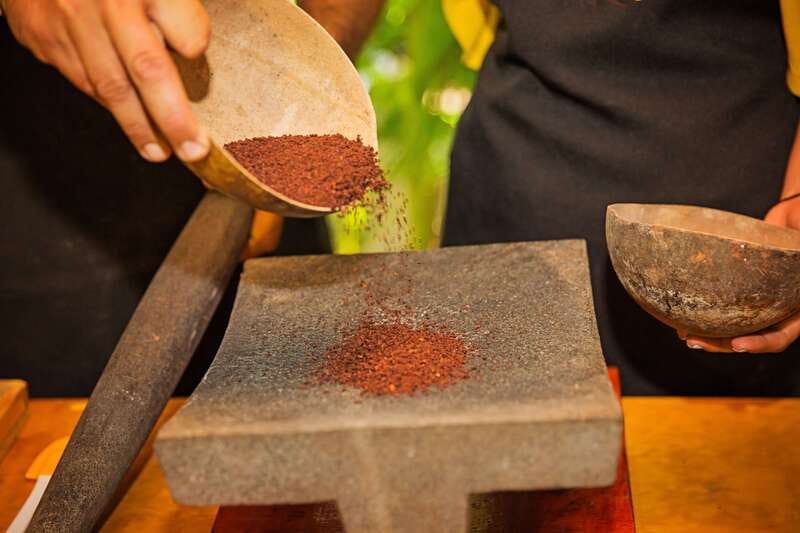
After grinding the cacao, you mix it with simple ingredients and shape your own handmade chocolate bar. The ingredients and tools are included in the price.
This is the moment that makes the $40 cost easier to justify. You are not only receiving a talk and a sample. You are taking part in a process and producing a small edible keepsake. The bar also gives children a concrete reward for paying attention to the cultural side of the workshop.
Do not expect a factory-style chocolate-making session with a long menu of custom choices. The supplied details describe a traditional preparation using simple ingredients. The pleasure is in the process, the texture, and the connection to Mayan cacao traditions.
The workshop has earned strong praise for making this part enjoyable. One parent called the children’s own chocolate the highlight, while another family said the activity was worth the time and money, especially with kids. Adults who enjoy food culture should appreciate it too, particularly if you like knowing how a local product connects to the place you are visiting.
Your bar is a better souvenir than another mass-produced trinket because you made it during the visit. Still, you should not book this expecting to bring home a large quantity of chocolate. The activity centers on one handmade bar and a tasting, not a full box of take-home products.
Thirteen artisanal chocolates at the boutique
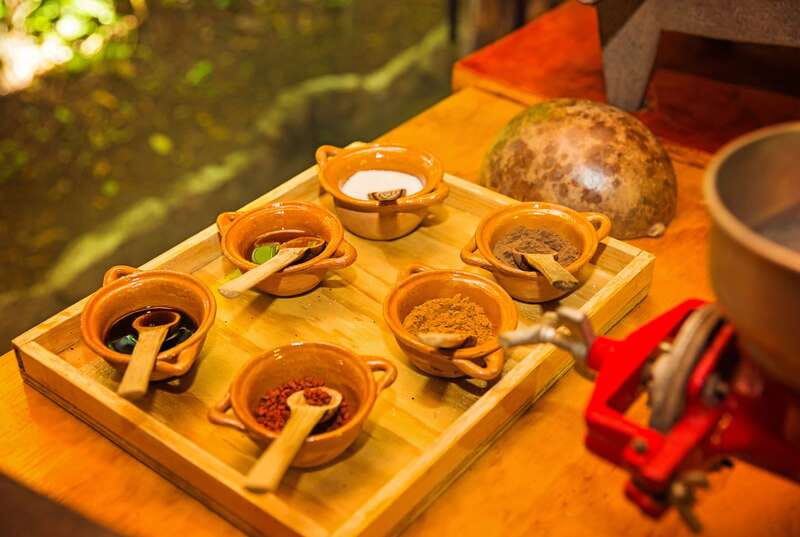
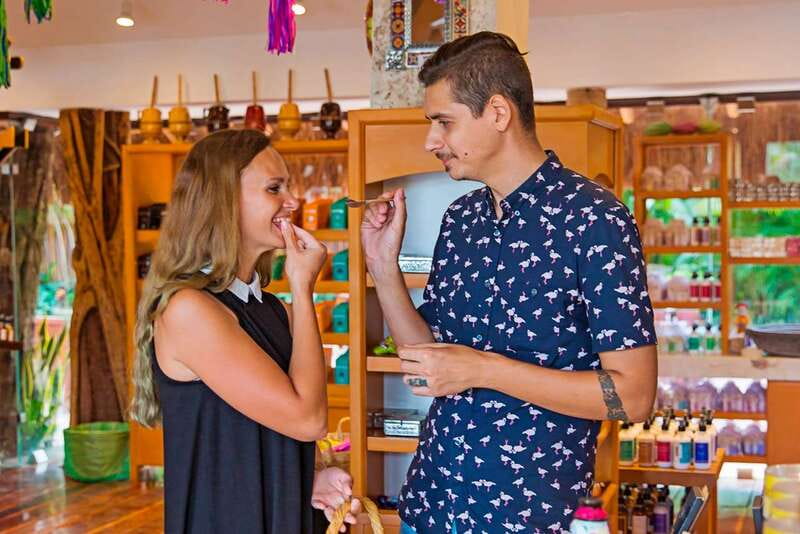
After the workshop, you visit the chocolate boutique and taste 13 different artisanal chocolates. This is the sweetest part of the visit, but it also adds range to the experience.
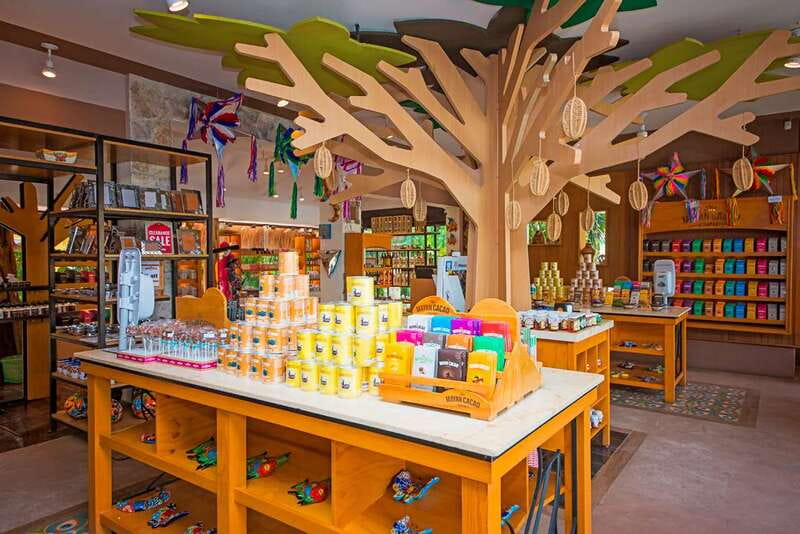
The tasting lets you compare several preparations rather than judging the workshop on one sample. It gives you a chance to decide what kinds of chocolate you prefer before browsing the boutique. If you want a food souvenir from Cozumel, this is the point where you can consider buying something beyond the included activity.
Food and drinks are not included outside the listed chocolate tasting. That means you should not count on a meal or a full beverage service as part of the $40. One family specifically suggested trying the chocolate smoothie, but the supplied details do not state that it is included, so plan to pay separately for any additional food or drink.
The tasting is also why people with food allergies need to be cautious. The workshop is not recommended for anyone with chocolate or nut allergies, and the experience is specifically listed as unsuitable for people with food allergies. Do not assume that avoiding one particular sample will make the activity safe. Ask the provider before booking if you have any allergy concern.
Is $40 a good value for 90 minutes?
At $40 per person, this is not the cheapest way to eat chocolate in Cozumel. You are paying for more than the food, though. The cost includes entrance to The Mayan Cacao Company, the chocolate tasting, and all ingredients and tools needed to make your bar.
I think the price is reasonable for three reasons. First, the experience has a clear cultural focus rather than being only a retail visit. Second, it includes a hands-on activity using a traditional metate. Third, the 13-chocolate tasting gives you plenty to sample within a relatively short visit.
The value is strongest for families, couples, and food-minded visitors who enjoy participating. It is also a practical choice if you have only a small window in Cozumel because the duration is 1.5 hours.
The value is weaker if you do not care about cultural explanation or hands-on preparation. If your only goal is to buy chocolate, you may prefer a shorter shop visit. You also need to add your own transportation costs, and any extra food or drinks are separate.
The activity has a 4.8 rating from 41 ratings, with especially strong praise for guide enthusiasm, clear explanations, and help during the grinding process. That pattern matters more than the number alone. The guide seems to shape the experience, so an excellent session depends partly on who leads your group and how much time is available for questions.
Who will enjoy this workshop most?
I would recommend it most to:
- Families with children who enjoy making things
- Couples looking for a short cultural activity
- Food lovers interested in traditional preparation
- Cruise passengers with time for an independent Cozumel outing
- Visitors who prefer a small, interactive experience over a long lecture
- Anyone curious about the social and religious importance of cacao
The workshop may be less suitable for people with food allergies, anyone who needs wheelchair access, or visitors seeking a broad Mayan history tour. It is also not the right pick if you want hotel transportation included.
Children seem to do well because the activity moves from story to action. Adults should not assume it is only for kids, though. The cultural material gives the workshop enough substance for anyone interested in how food carries meaning.
Practical details that affect your visit
Book with the 15-minute early arrival requirement in mind. Since transportation is not included, you should plan your route before the day of the workshop rather than treating the meeting point as a last-minute stop.
The activity is available in English and Spanish. Starting times vary, so check availability for the date you want.
You can cancel up to 24 hours before the activity for a full refund. A reserve-now, pay-later option is also available, which helps if your Cozumel schedule is still changing.
Bring comfortable clothes and cash. Most importantly, do not book if you have a chocolate or nut allergy without first receiving clear guidance from the provider. The workshop is not wheelchair accessible, so this needs to be part of your decision from the start.
Should you book The Mayan Cacao Company workshop?
Book it if you want a short, friendly cultural activity with real participation. The metate grinding, handmade chocolate bar, and 13-chocolate tasting give the 1.5-hour visit a good mix of learning and fun. Families should find it especially rewarding, and the repeated praise for Paty, Roberto, Eduardo, and Leti suggests that the guides bring warmth and energy to the presentation.
Skip it if you need accessible facilities, have food allergies, or want transportation and a meal included. For everyone else, $40 is a fair price for a Cozumel experience that lets you do more than taste chocolate. You learn why cacao mattered, work with it by hand, and leave with a small piece of your own making.
FAQ
How long does the chocolate workshop last?
The workshop lasts 1.5 hours.
How much does the experience cost?
The price is $40 per person.
What is included in the price?
The price includes entrance to The Mayan Cacao Company, the chocolate tasting, and the ingredients and tools used to make your handmade chocolate bar.
Is transportation included?
No. Hotel pickup and drop-off are not included, and you meet at The Mayan Cacao Company.
How early should I arrive?
You should arrive 15 minutes before the activity begins.
What languages are available?
The workshop is offered in English and Spanish.
What should I bring?
Bring comfortable clothes and cash.
Is the workshop suitable for people with food allergies?
No. The workshop is not recommended for people with chocolate or nut allergies and is listed as unsuitable for people with food allergies.
Is the experience wheelchair accessible?
No. The workshop is not wheelchair accessible.
Just added around Mexico
- Tulum: Chocolate & Honey Sanctuary Experience with Lunch★ 4.2 · 34 reviews
- Tulum: Chocolate & Honey Sanctuary Experience with Cenote★ 3.5 · 6 reviews
- Cultural Adventure: Artisanal Chocolates, Coffee and Doll Making★ 5.0 · 2 reviews
- Private Make Your Own Chocolate Experience in Puerto Vallarta★ 5.0 · 8 reviews
- Tarot Reading with Coffee & Chocolate or Smoothie★ 5.0 · 17 reviews
- Sayulita Magical Town Tour: Local food, and chocolate.★ 5.0 · 18 reviews
- Chocolate Macarons Workshop in Puerto Vallarta★ 5.0 · 5 reviews
- Amazing Walk through the Zapotec Mountains with Hot Chocolate★ 5.0 · 4 reviews
Chocolate Making Workshops, compared.
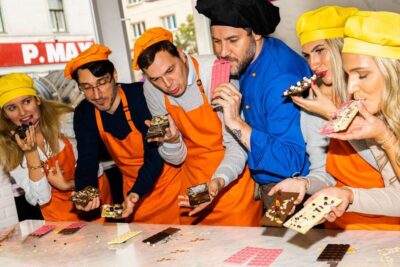
Chocolate Workshop in Chocolate Museum w/ Tasting
Read our review →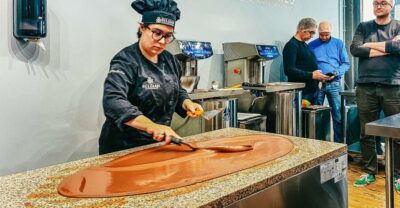
Belgian Chocolate Making Workshop with Tastings
Read our review →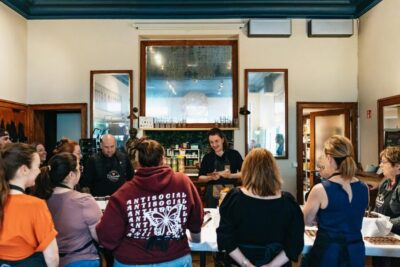
Belgian Praline and Mendiants Chocolate Workshop
Read our review →
1.5h Belgian Chocolate Workshop in Brussels (bean to bar)
Read our review →
45-minute Chocolate Making Workshop at Choco-Story
Read our review →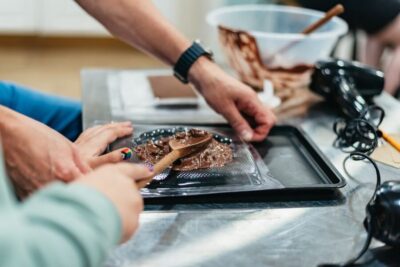
Chocolate Bar Making Workshop at York Cocoa Works
Read our review →Browse the lists this tour appears in