
Review · ITALY
Monforte d’Alba: Wine and Chocolate Tasting Experience
Chocolate meets Barolo in the Langhe. This compact tasting in Monforte d’Alba combines five local wines, Piedmontese chocolate, vineyard views, and a guided visit to a working farm and winery. I like the small group of no more than six people, which should make it easier to ask questions, and I like the careful pairing of one chocolate with each wine. The main consideration is that this is a focused 90-minute visit, not a long day among several wineries.
The setting adds real value. You begin among the vines, visit a museum filled with old photographs and objects, then finish in a historic cellar used as the tasting room. I would especially look for a session led by Alessandro or Francesca, both praised for clear, warm guidance. Since the tasting includes alcohol and is limited to adults, it suits wine-focused visitors far better than families with young children.
Key points at a glance
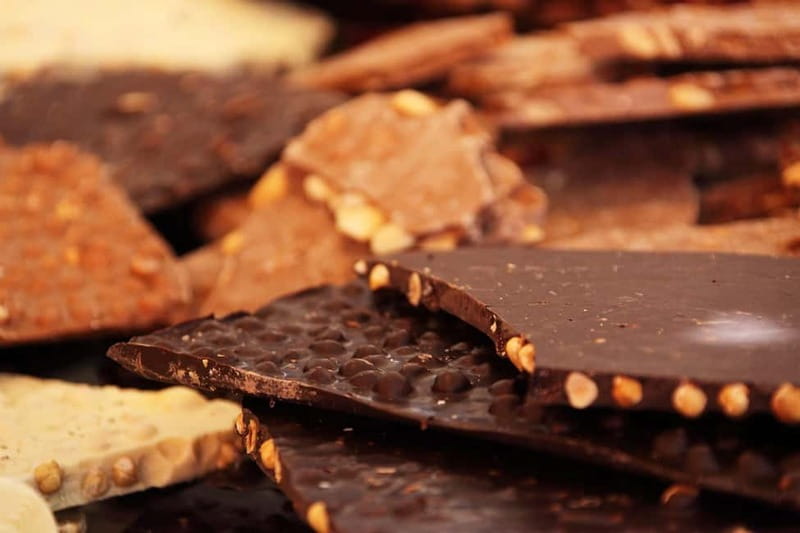
- Five wines, five chocolate pairings: Each Piedmontese chocolate is matched to a particular wine, with Barolo included.
- A vineyard start: The visit begins among the vines with views across the Langhe, a UNESCO World Heritage Site.
- The winery’s story comes first: Period images and old objects help explain how the farm developed.
- A small group of six maximum: The format is useful for questions and personal attention.
- Guides are a major strength: Alessandro, Francesca, and Gabriella are praised for clear, well-measured explanations.
- A practical 90-minute format: You get a concentrated introduction without giving up an entire afternoon.
Why this short Monforte d’Alba visit works
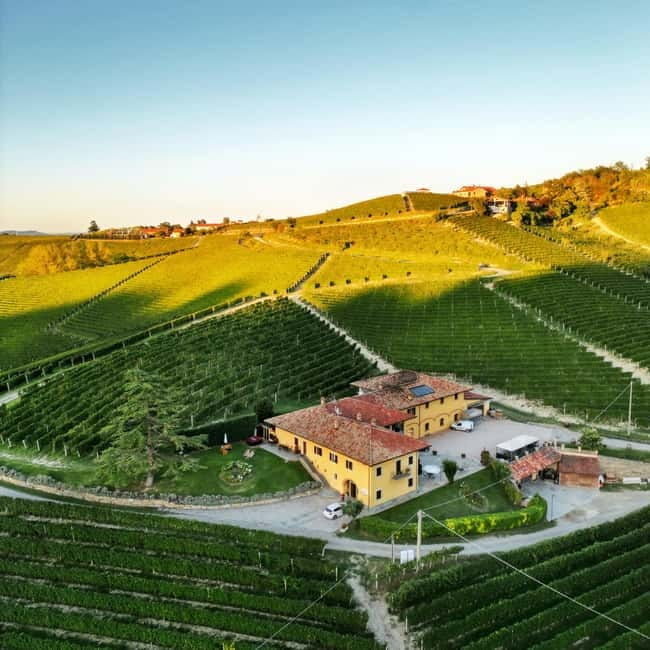
Monforte d’Alba is one of the Langhe’s best-known wine villages, and this tasting gives you several ways to understand the area in a short time. You see the vines, learn how the farm makes wine, hear about its past, and taste the finished products. That progression matters. It keeps the tasting from feeling like a simple flight of glasses in a room.
I like the balance between scenery and substance. The vineyard stop is not just a photo opportunity. It gives you a physical sense of where the grapes begin, while the museum and cellar explain what happens after harvest. You are not asked to spend hours on technical details, but you receive enough context to make the wines more meaningful.
The format also suits a busy Piedmont itinerary. At $41 per person, the price is reasonable if you value both the guided visit and the five pairings. You are paying for more than five pours and a few pieces of chocolate. The fee covers the winery tour, water, five local wines, and the chocolate, with an expert guide leading the tasting.
Still, keep your expectations in proportion. This is not a full meal, a vineyard picnic, or a broad tour of several producers. It is a polished introduction to one local winery and the food traditions of Piedmont.
More Chocolate Tastings in Italy
- The Turin Chocolate & Wine Tasting Experience
★ 4.7 · 87 reviews - The Turin Chocolate Tasting Experience
★ 4.7 · 83 reviews - Fine Chocolate Tasting in Turin
★ 4.8 · 71 reviews
Beginning among the vines and Langhe views
The visit starts outdoors, among the rows of vineyards around the farm. From here, you can look across the Langhe scenery, a UNESCO World Heritage Site known for its wine-growing hills and historic villages.
The exact amount of time spent outside is not specified, so I would think of this as an opening walk rather than a vineyard hike. That is good news for most people. You get the setting without needing special walking ability or a separate half-day excursion.
This first section gives you a useful visual lesson. Wine labels can feel abstract when you see them on a shop shelf, but the vines make the product concrete. You see the terrain where local grapes are grown before hearing about hand-picking and production.
Bring sensible shoes if you want to feel comfortable on the short walk from the vines into the estate. The activity is wheelchair accessible, but the visit begins outdoors and includes movement through the property, so anyone with specific mobility needs should confirm the details when booking.
The museum: old photographs and working memories
After the short walk, you enter the estate and visit its museum. The collection uses period photographs and ancient objects to show the company’s past.
This is a valuable stop because it connects the winery to the people and work behind the bottle. Wine production is often presented as a polished final product, but the museum gives you a glimpse of the tools, routines, and earlier generations that shaped the farm.
The museum does not appear to be a huge collection, and that is probably an advantage during a 90-minute visit. You should expect a focused display rather than a major cultural institution. The guide’s explanation is what gives the objects meaning.
This is also where the tour becomes more personal. The story is not only about Barolo as a famous name. It is about one farm and its way of working. That local focus makes the visit more useful than a generic introduction to Piedmontese wine.
From hand-picked grapes to bottles
The next part covers the winemaking process. You learn how grapes are hand-picked in nearby vineyards and how the wine moves through production until bottling.
The information is presented as part of a centuries-old tradition of making high-quality wines. You should not expect a long technical lecture on fermentation or cellar chemistry. Instead, the guide gives you a practical outline of how the farm maintains its methods and standards.
I find this part especially helpful for people who enjoy wine but do not speak the language of producers. You can ask questions about the basic stages, and the small group should make that easier. With only six participants, the guide has more room to respond than on a large coach tour.
The tour also helps explain why wines from the same region can differ. Farming, picking, cellar work, and bottling all affect what reaches your glass. Even a short explanation of those steps makes the tasting more than a sequence of unrelated samples.
Same place, a different sort of tasting:
- Turin: Visit to the Chocolate and Gianduja Museum, Choco-Story Torino
★ 4.6 · 221 reviews - Turin Sweet & Chocolate Walking Food Tour by Do Eat Better
★ 4.5 · 86 reviews - Chocolate & Sweets of Turin: La Dolce Vita Torino | Semi-Private
★ 5.0 · 71 reviews - The Turin Chocolate & Wine Tasting Experience
★ 5.0 · 62 reviews
Five wines in the historic cellar
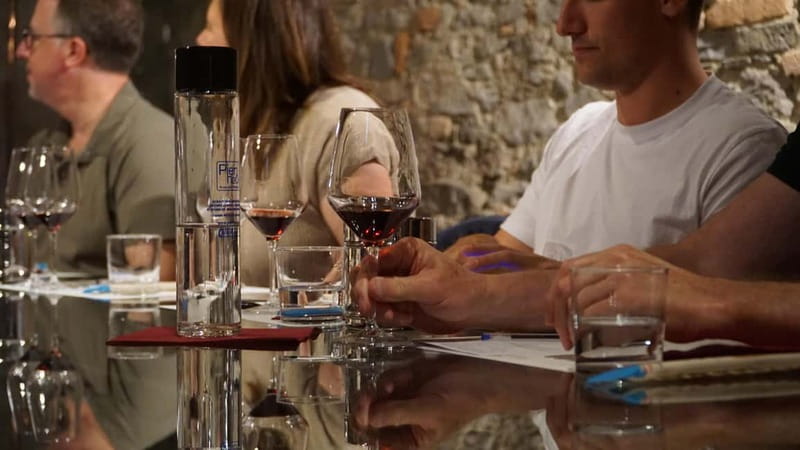
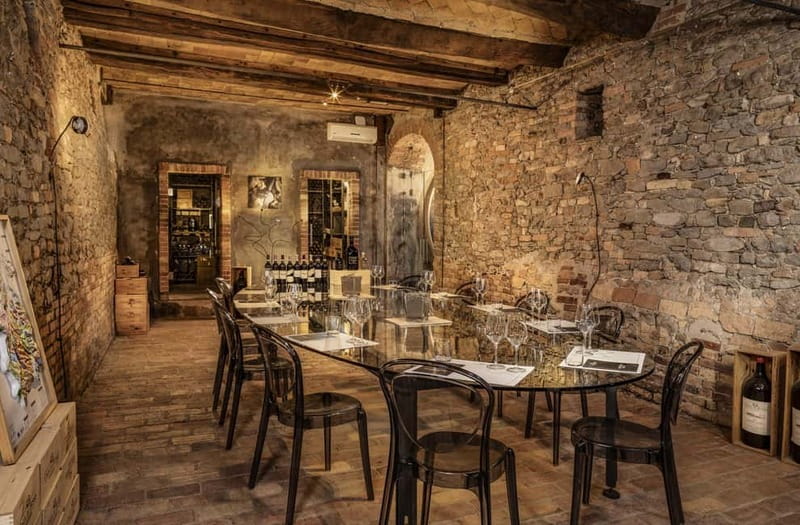
The tasting takes place in the historic cellar, now used as a tasting room. This setting gives the final section a sense of place. You are tasting in the winery rather than in a detached bar or restaurant.
Five local wines are served, including a fine Barolo. The remaining wines are not named in the available details, so you should not assume that every classic Piedmont label appears. The useful point is variety within the local production, with Barolo as the clear centerpiece.
Water is included, which is important during a five-wine tasting. It helps you pace yourself and reset your palate between samples. The activity is still designed for adults, and children under 18 are not accepted.
A good guide can make or break a wine tasting, and the guide feedback here is unusually consistent. Alessandro is praised for explaining both the wine and the farm’s story. Francesca is described as smiling, well prepared, and patient with many questions. Gabriella is praised for giving enough information without overloading the group.
That last point matters. Wine explanations can become a fog of grape names, soil terms, and tasting vocabulary. The best guide keeps the information useful. Based on the comments about Gabriella, you can expect a measured style rather than a long speech at every glass.
Why the chocolate pairings matter
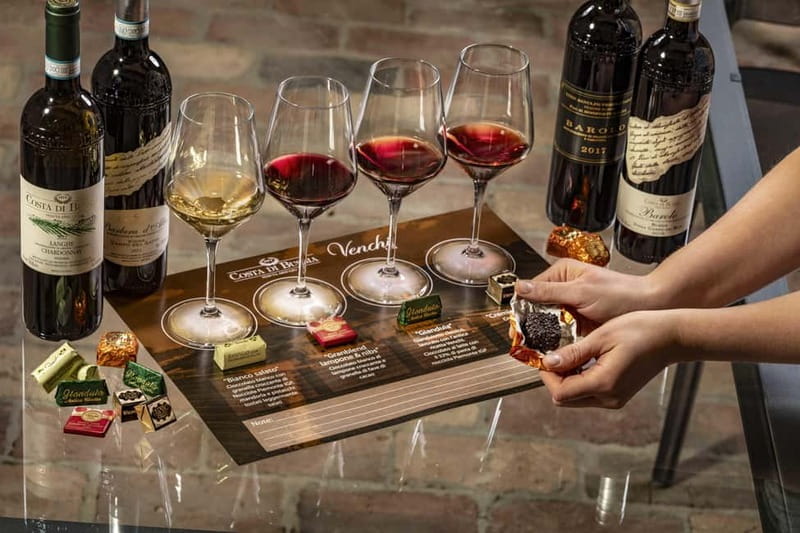
The unusual feature here is not simply wine with chocolate. It is the one-to-one pairing: each of the five wines is matched with a different Piedmontese artisanal chocolate.
That approach gives you a simple way to compare flavors. Taste the wine alone, then try the chocolate, and notice how the sweetness, bitterness, texture, and aroma change the impression. The guide explains the qualities of both products and why the combination works.
One particularly enthusiastic account describes each chocolate as made specifically for its assigned wine, creating a strong mix of flavors and aromas. That is the heart of the activity. You are not just snacking during a tasting. You are using chocolate to see how a food can alter the wine in your mouth.
There is also a regional logic to the pairing. Piedmont is known for both wine and chocolate traditions, so the combination brings together two local strengths. It may sound indulgent, but the format is more thoughtful than a bowl of sweets beside the glasses.
Chocolate can also soften the sharper edges of some wines, while a strong wine can make a sweet chocolate seem less heavy. Not every pairing will suit every palate, of course. If you prefer dry wine or do not enjoy sweet foods, this may not be your ideal tasting. For anyone curious about food matching, it is the most distinctive part of the visit.
The guides make the difference
The guides receive the strongest praise, and that is worth taking seriously. The comments highlight clear explanations, professional answers, and a good balance of information.
Alessandro is noted for combining a solid tasting with the history of the farmhouse. Francesca is praised for guiding the group through the process while answering many questions. Gabriella is singled out for giving enough information without making the visit feel overloaded.
The guides speak Italian and English. Some content may be presented in its original language, so the experience may not translate every word or cultural detail. Still, English is listed as an available tour language, and the activity is designed for a live guide rather than an audio recording.
Because the group is limited to six, you should have a better chance to shape the conversation. Ask about the production method, the vineyard work, or the reason a certain chocolate was matched with a certain wine. That is where a small group becomes valuable.
Price, timing, and who gets good value
At $41 per person, the cost is fair for a 90-minute guided visit that includes five wines, water, chocolate, the winery tour, and a Barolo tasting. It is particularly good value if you want a compact cultural activity rather than a simple drink at a wine bar.
The value is less clear if your only goal is to taste as much wine as possible. You are also paying for the museum, the vineyard walk, the guide, and the explanation of the farm’s work. If those elements do not interest you, a basic tasting elsewhere could suit you better.
The 1.5-hour length is one of the strongest practical features. You can fit it between other activities in the Langhe without building your entire day around it. Check the available starting times before booking, since the schedule can affect how easily it fits with transport and meals.
Hotel pickup and drop-off are not included. You need to arrange your own way to the winery in Monforte d’Alba. Extras are also not included, so the stated price should be treated as the cost of the listed tasting and guided visit, not a full outing with transportation or additional purchases.
Free cancellation is available up to 24 hours before the start, and you can reserve now and pay later. Those policies make it easier to fit the tasting into a changing Piedmont itinerary.
Who should book this tasting
I would recommend this for adults who want a short, polished introduction to Langhe wine. It works especially well for couples, solo visitors, and small groups who enjoy food pairings but do not want a long winery day.
It is also a good choice if you want local context. The combination of vines, museum, production explanation, cellar, and tasting gives you a clear story in a sensible order.
You may want to choose another activity if you are looking for:
- A full meal or substantial food
- A long vineyard walk
- Visits to several wineries
- A family activity suitable for children under 18
- Hotel transport
- A highly technical wine course
The accessible format and small group are helpful, but the details of movement around the estate still matter if you have particular mobility requirements. Confirm anything specific before booking.
Should you book the Monforte d’Alba tasting?
Book it if you want five carefully matched wines and chocolates in a historic winery, with enough background to understand what you are tasting. The Barolo, Langhe views, museum, and small group make the $41 price reasonable.
I would be especially happy to recommend it to someone with limited time in Piedmont. You get a taste of the region’s scenery, farming, history, and table culture without surrendering half a day.
Skip it if chocolate pairings do not appeal to you, if you need transportation included, or if you want a broad survey of many wineries. For the right visitor, though, this is a focused and friendly way to connect the bottle, the vineyard, and the food on the plate.
FAQ
Where does the wine and chocolate tasting take place?
It takes place in Monforte d’Alba, in Piedmont’s Langhe area, at an authentic farm and local winery.
How long does the activity last?
The tasting and winery visit last 1.5 hours.
How many wines are included?
The tasting includes five local wines, including Barolo.
Is chocolate included?
Yes. Artisanal Piedmontese chocolate is included, with a different chocolate paired with each wine.
Is a winery tour included?
Yes. The activity includes a guided winery tour, a visit to the museum, an explanation of winemaking methods, and time in the historic cellar used as the tasting room.
What languages are available?
The live guide is available in Italian and English. Some content may be shown in its original language.
Can children join the activity?
No. The activity is not suitable for children under 18.
Is the activity wheelchair accessible?
Yes, the activity is listed as wheelchair accessible.
What is included in the $41 price?
The price includes the guided winery tour, five local wines, water, and the chocolate tasting. Hotel pickup, drop-off, and extras are not included.
Can I cancel or pay later?
You can cancel up to 24 hours in advance for a full refund. You can also reserve your place and pay later.
More Wine and Chocolate Tours in Italy
- Wine & Chocolate Tour and Tasting in Alba area
★ 5.0 · 5 reviews - Melbourne: Yarra Valley Wine, Gin, Whisky and Chocolate Tour
★ 5.0 · 3,667 reviews - Epic Yarra Valley Wine Tour + Lunch, Chocolate & Gin/Beer Option
★ 5.0 · 1,819 reviews - Amazing Yarra Valley Wine Tour + Chocolate, Farm Fresh, Gin
★ 5.0 · 1,566 reviews
Just added around Italy
- Willy Wonka in Turin – A chocolate adventure★ 3.7 · 6 reviews
- Venchi Pantheon: Chocolate Tasting Experience in Rome★ 5.0 · 2 reviews
- Venchi Duomo: Chocolate Tasting Experience in Florence★ 4.3 · 4 reviews
- Turin: 45-Minute Chocolate Workshop at Choco-Story★ 4.7 · 25 reviews
- Turin’s Sweet Delights: A Chocolate Walking Tour★ 4.9 · 26 reviews
- Venchi Rialto: Chocolate Tasting Experience in Venice★ 5.0 · 5 reviews
- Fine Chocolate Tasting in Turin★ 5.0 · 26 reviews
- Guided tour of the Artisan Chocolate Factory in Tuscany★ 4.5 · 13 reviews
Chocolate Tastings, compared.
Belgian Chocolate Making Workshop with Tastings
Read our review →
Choco-Story Chocolate Museum Guided Tour w/Tastings
Read our review →
Paris French Sweets Tasting Tour with Pastries and Chocolates
Read our review →
Brussels Walking and Tasting Tour (Beers,Chocolates&Fries/Waffle)
Read our review →
Brussels and Bruges Tour & Optional Chocolate Tasting
Read our review →
Beer Tour with 6 Beers and 3 Chocolate Tastings
Read our review →Browse the lists this tour appears in