
Review · VIETNAM
Bean to bar Chocolate Workshop in Ho Chi Minh City
Chocolate starts with a fruit, not a wrapper. This two-hour bean-to-bar workshop in central Ho Chi Minh City takes you through that full story, from fresh cacao pod to finished chocolate bar. I like the hands-on work with a granite mortar, and I like that you leave with two decorated bars rather than just a few samples. The one catch is that grinding cacao by hand takes effort, especially for younger children.
The class costs $32 per person and is limited to 10 people. That small size should give you room to work, ask questions, and handle the tools without feeling lost in a crowd. It is a good pick for families with children aged 8 and up, couples, and anyone who wants a break from sightseeing that still connects closely to Vietnam.
Key points at a glance
- Fresh cacao pod tasting: You taste cacao fruit before it becomes beans, an unusual part of the chocolate process.
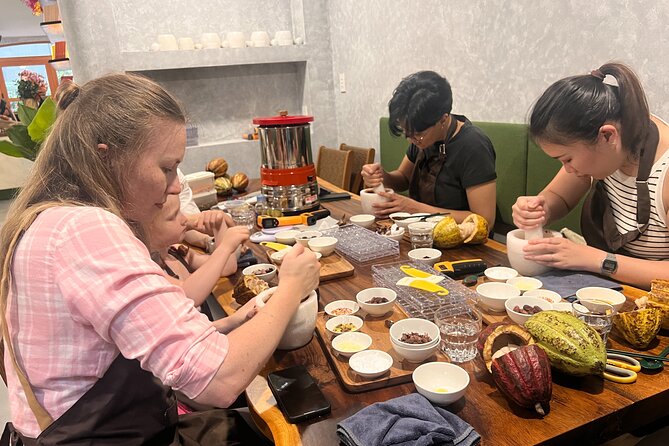
- Traditional granite grinding: You turn cacao beans into paste with a granite stone mortar, giving you a feel for the work behind handmade chocolate.
- Vietnamese ingredients: The class uses local cacao, cacao nibs, cacao butter, and cane sugar.
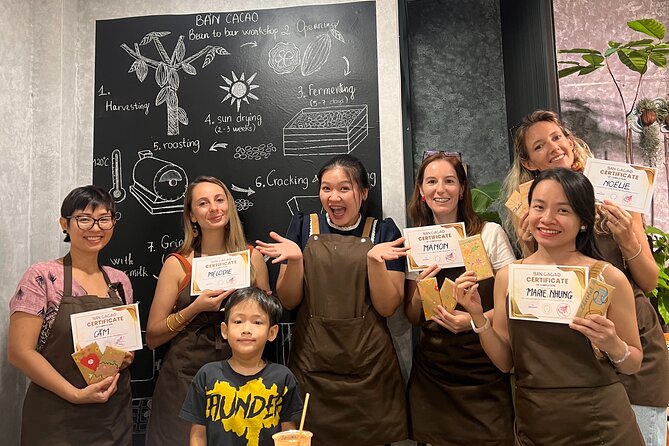
- Two bars to take home: You make, decorate, wrap, and keep your own chocolate bars.
- A drink included: Each participant receives a chocolate drink, served hot or iced.
- Central District 1 location: The class begins and ends at 89/14 Ham Nghi in District 1, near public transportation.
A small chocolate class with a full story
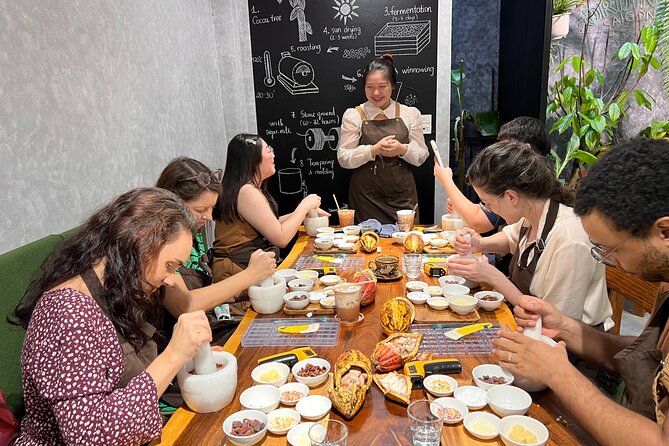
Many chocolate activities stop at dipping, melting, or adding toppings. This one begins much earlier. You learn how cacao pods become beans, how beans become paste, and how that paste becomes a molded bar.
That difference matters. When you taste a fresh cacao pod, you get a sense of the fruit behind the familiar sweet snack. When you husk the beans yourself, you see that chocolate making is not simply a matter of melting something from a packet. The process has several physical steps, and this workshop lets you handle many of them.
The setting is Ban Cacao, a Vietnamese chocolate maker in Ho Chi Minh City. The class focuses on chocolate made from local cacao, so it gives you a direct connection to Vietnamese ingredients rather than presenting a generic confectionery lesson.
I also like the scale. With a maximum of 10 people, this is small enough to feel practical. You are not watching a distant demonstration from the back of a room. You should expect to work with the materials and tools yourself.
More Bean-to-Bar Chocolate Tours in Vietnam:
- Ho Chi Minh City: Premium Bean-to-Bar Chocolate Workshop
★ 4.8 · 8 reviews - 1.5h Belgian Chocolate Workshop in Brussels (bean to bar)
★ 4.5 · 462 reviews - Bean to Bar Chocolate Workshop in Puerto Vallarta
★ 5.0 · 381 reviews
Fresh cacao pods before the chocolate
The class begins with an explanation of the pods-to-bars process and the history of cacao in Vietnam. This opening gives the rest of the activity a useful frame. You first learn what you are handling, then you work through each stage.
One of the most unusual parts is tasting fresh cacao pods. Most people know cacao only as powder, nibs, or chocolate. The fresh fruit offers a different starting point and helps explain why chocolate has both fruit and earthy qualities before sugar and other ingredients shape its final taste.
You also learn how Vietnamese makers use local ingredients. The materials include fresh cacao fruits, cacao beans, cacao nibs, cacao butter, and cane sugar. That list is simple, but it shows the movement from whole fruit to a finished product.
I would pay close attention during this section if you are interested in food production. The workshop is not just about making a sweet treat. It explains the chain of work that comes before the bar reaches a shop shelf.
Husking beans and using a granite mortar
Next comes the more physical work. You husk your own cacao beans, then make cacao paste in the traditional style with a granite stone mortar.
The mortar is an important part of the experience. Modern chocolate production relies on machines that hide much of the labor. Grinding by hand slows the process down and makes the texture of chocolate feel less abstract. You can see and feel how the ingredients change as you work them.
This is also the part that requires patience. One parent found the grinding tiring for an 8-year-old child, so I would treat the class as hands-on rather than passive entertainment. Children aged 8 and up can take part, but younger participants may need help or breaks during the grinding stage.
The work gives you a better sense of why handmade chocolate takes time. The class uses a thermometer and scale along with the granite mortar, so you are not simply mixing ingredients by instinct. The tools show the balance between old methods and basic chocolate-making control.
From cacao paste to your own bar
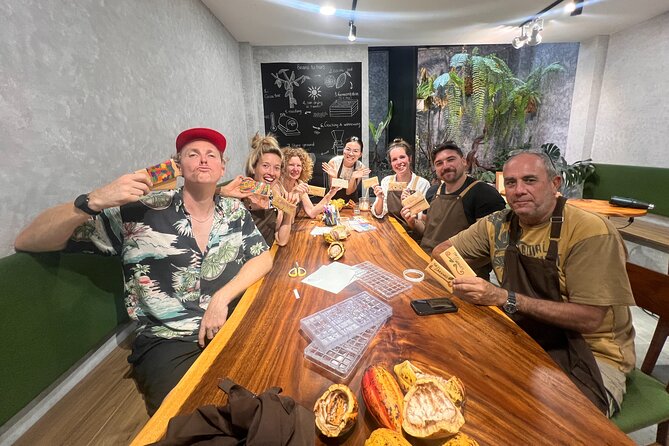
After the early stages, you move toward the finished chocolate. You work with the cacao paste, cacao butter, cane sugar, and other listed materials to prepare the mixture for molding.
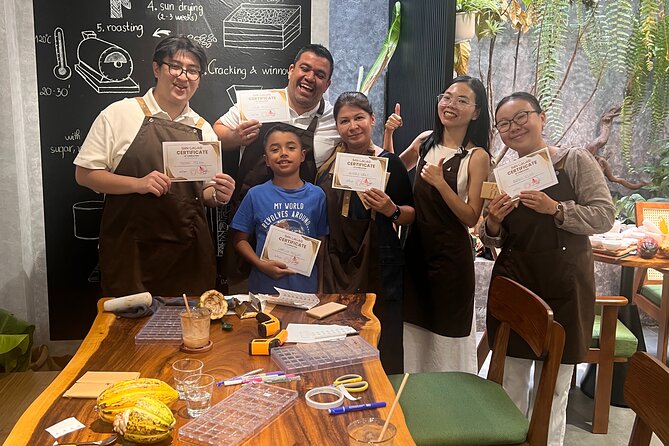
The workshop also includes a chocolate mold, which gives the chocolate its final shape. You can then decorate your own bars and wrap them in paper that you personalize. This is a nice touch because the finished item is not only something to eat. It becomes a small souvenir connected to the work you did in the class.
You get two bars to keep. That makes the activity feel more worthwhile than a short tasting session. One bar can be enjoyed soon after the class, while the other can travel back to your hotel or home, assuming you can resist eating both quickly.
The decorating stage should suit children and adults alike. It adds a creative finish after the more labor-intensive grinding. It also gives you something personal to show for the class, rather than an identical product handed to every person.
More Chocolate Making Workshops in Vietnam:
- Alluvia Hoi An Chocolate Making Class
★ 4.5 · 12 reviews - Da Lat: Handmade Chocolate Workshop
★ 5.0 · 4 reviews - Vienna: Chocolate Workshop in Chocolate Museum w/ Tasting
★ 4.5 · 1,802 reviews - Brussels: Belgian Chocolate Making Workshop with Tastings
★ 4.7 · 1,629 reviews
A hot or iced chocolate break
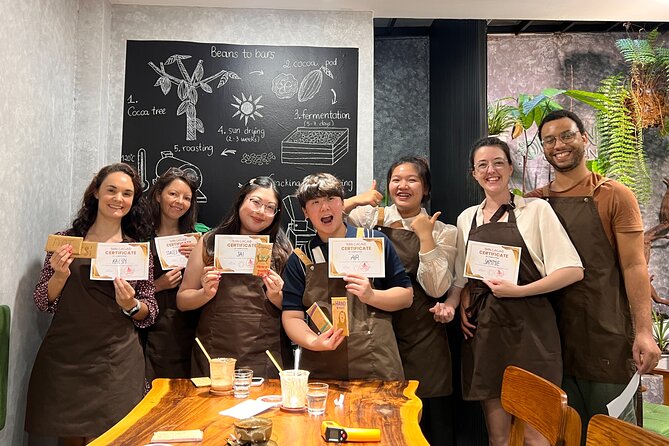
The class includes a chocolate drink for each person. You can have it hot or iced, and one family described both versions as especially enjoyable.
This drink adds a pleasant pause to the workshop. After handling cacao and working with the ingredients, you get to taste chocolate in another form before finishing the bars.
The drink is also useful for families. An 8-year-old may not have the stamina for every part of the process, but a chocolate break gives the class a relaxed rhythm. It is still worth remembering that the activity is built around making chocolate, not simply drinking it. The hands-on work remains the main event.
Why the $32 price makes sense
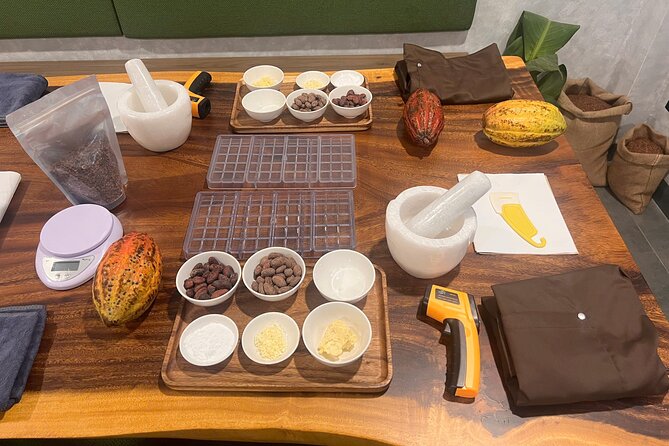
At $32 per person, the price is higher than a simple café stop but reasonable for a two-hour, small-group activity with materials included. You are not paying only for a demonstration. The fee covers fresh cacao fruit, beans, nibs, cacao butter, sugar, use of the mortar and other tools, the chocolate drink, and your finished bars.
The take-home chocolate adds clear value. You receive two bars that you have made and decorated, along with the memory of how they came together. The class also offers something you cannot reproduce by simply buying Vietnamese chocolate in a shop: direct contact with the raw cacao and the physical stages of production.
I would consider the price particularly fair if you want an activity with a clear beginning and end during a Ho Chi Minh City stay. It lasts about two hours, so it fits neatly into a morning or afternoon without taking over your day.
The value is less obvious if you only want to taste chocolate or prefer a polished cooking demonstration with little effort. The mortar work is part of the point, and that may feel tiring rather than relaxing.
Who will enjoy this Ho Chi Minh City activity
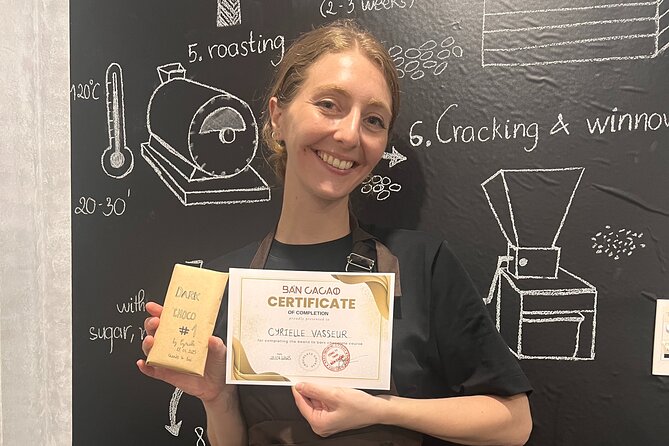
I would recommend this class most strongly to:
- Families with children aged 8 and up
- Couples looking for a shared activity
- Food lovers interested in Vietnamese ingredients
- Visitors who enjoy making souvenirs instead of buying them
- Anyone curious about the full chocolate-making process
The class works well for families because it combines tasting, handwork, a drink, and decoration. The two bars give children a clear reward at the end, while the personalized wrappers add a craft element.
It also suits adults who want a break from museums, markets, and city walks. The activity is indoors at the Ban Cacao store, and the two-hour length is manageable even if you have a packed itinerary.
I would be more cautious if you dislike repetitive handwork. Grinding cacao with a granite mortar can be tiring, and the class is not designed as a quick photo stop. You should arrive ready to participate.
Location and timing in District 1
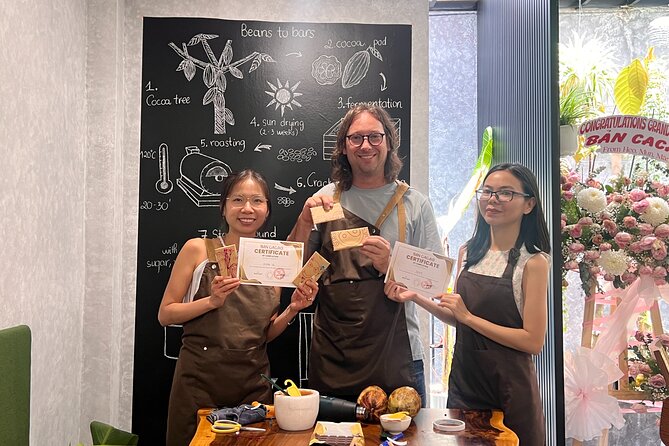
The meeting point is 89/14 Ham Nghi, in Nguyen Thai Binh Ward, District 1, Ho Chi Minh City. The activity ends at the same place, so you do not need to arrange a separate return transfer.
The location is near public transportation, which makes it practical to add before or after other plans in central Ho Chi Minh City. Since the experience is held at the chocolate maker’s store, you also avoid the extra travel time that a countryside cacao visit would require.
The published duration is approximately two hours. The class is typically booked 11 days ahead, so I would reserve early if you have a fixed date, especially if you want to include it in a family schedule.
A mobile ticket is provided, and booking confirmation arrives at the time of booking. You can cancel for a full refund if you do so at least 24 hours before the start time. Changes or cancellations made inside that 24-hour window are not accepted for a refund.
What the small group changes
The maximum group size is 10 people. That limit matters in a workshop because everyone needs access to the raw materials, scales, thermometer, mold, and mortar.
A smaller group should also make the explanation easier to follow. You can ask about cacao, the Vietnamese process, or the purpose of each ingredient without competing with a large crowd.
Still, a maximum of 10 does not mean a private class. If you want one-on-one instruction throughout, this may not be the right format. The experience is a shared lesson, with each person taking part in the same stages.
The good news is that the workshop has enough variety to keep a group engaged. Tasting the pod, husking beans, grinding paste, preparing chocolate, drinking hot or iced chocolate, and decorating wrappers create a natural sequence.
Practical tips for a better class
Plan to use your hands. The activity includes husking beans and grinding cacao, so it is not the place for a spotless, passive afternoon.
If you are bringing a child, explain that the grinding stage may be tiring. An 8-year-old can take part, but an adult may need to help with the mortar work. The reward comes later with the drink, decoration, and two bars to take home.
Keep your schedule flexible around the two-hour duration. The class is approximately two hours, and the actual pace may depend on the group and the amount of time spent decorating.
Think of the finished bars as part of the experience, not the only measure of value. The real benefit is learning how a local cacao product moves through several stages before it becomes chocolate.
Should you book the Ban Cacao workshop?
Book it if you want a practical, food-focused activity in central Ho Chi Minh City. The fresh pod tasting, granite-mortar grinding, local ingredients, chocolate drink, and two decorated bars give the class more substance than a standard tasting.
It is especially suited to families with children over 8, though you should be ready to help with the tiring part. It also makes sense for couples and solo visitors who prefer a small group and a hands-on souvenir.
Skip it if you want a fast, effortless introduction to Vietnamese chocolate. This class asks you to work for your bar, which is exactly why it feels worthwhile. At $32, it offers a focused two-hour experience, useful context about cacao in Vietnam, and something personal to take home.
FAQ
Where does the chocolate workshop take place?
The class takes place at Ban Cacao, a Vietnamese chocolate maker, at 89/14 Ham Nghi, Nguyen Thai Binh Ward, District 1, Ho Chi Minh City.
How long does the workshop last?
The workshop lasts approximately two hours.
What does the class include?
It includes an explanation of the pods-to-bars process and cacao in Vietnam, fresh cacao pod tasting, bean husking, cacao paste grinding with a granite mortar, chocolate bar making, decoration, wrapping, and chocolate bars to take home.
Do I get to keep the chocolate I make?
Yes. You make and decorate your own chocolate bars and take them home. A family experience also included two bars per person.
Is a drink included?
Yes. Each participant receives a chocolate drink, served either hot or iced.
What ingredients are used?
The listed materials include fresh cacao fruits, cacao beans, cacao nibs, cacao butter, and cane sugar.
What tools are provided?
The class provides a granite mortar, thermometer, scale, chocolate mold, and wrapping paper.
Is the workshop suitable for children?
It is recommended for children over 8. The grinding stage can be tiring, so younger children may need help.
What is the cancellation policy?
You can cancel at least 24 hours before the start time for a full refund. Cancellations or changes made less than 24 hours before the experience are not accepted for a refund.
Just added around Vietnam
- Full Day Experience to Farm and Chocolate★ 5.0 · 22 reviews
- Alluvia Hoi An Chocolate Making Class★ 4.5 · 12 reviews
- Phu Quoc: Bittersweet Chocolate Factory Tour & Workshop★ 4.5 · 38 reviews
- Ho Chi Minh City: Premium Bean-to-Bar Chocolate Workshop★ 4.8 · 8 reviews
- Da Lat: Handmade Chocolate Workshop★ 5.0 · 4 reviews
- Can Tho: Explore Mekong, Floating Market, Cacao & Local Life★ 4.9 · 21 reviews
- Can Tho: Countryside Cycling Tour with Cocoa Farm Visit★ 5.0 · 2 reviews
- Can Tho: Floating Market, Cacao & Canals with French Guide★ 5.0 · 37 reviews
Chocolate Making Workshops, compared.

Chocolate Workshop in Chocolate Museum w/ Tasting
Read our review →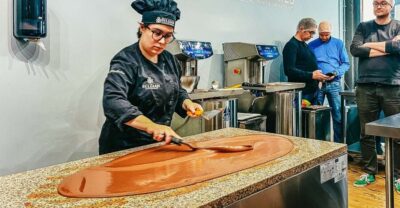
Belgian Chocolate Making Workshop with Tastings
Read our review →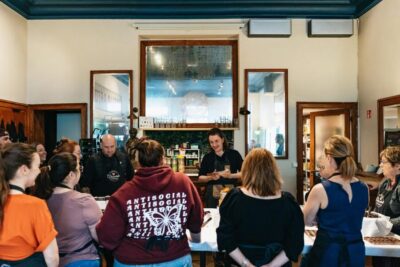
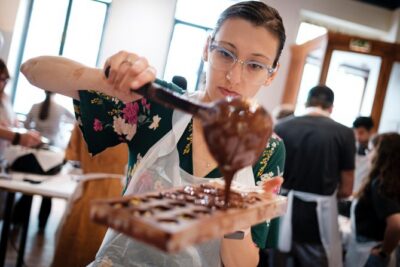
Belgian Praline and Mendiants Chocolate Workshop
Read our review →
1.5h Belgian Chocolate Workshop in Brussels (bean to bar)
Read our review →
45-minute Chocolate Making Workshop at Choco-Story
Read our review →
Chocolate Bar Making Workshop at York Cocoa Works
Read our review →Browse the lists this tour appears in