
Review · VIETNAM
Alluvia Hoi An Chocolate Making Class
Chocolate gets a Vietnamese makeover here. The Alluvia Hoi An Chocolate Making Class gives you a short, hands-on introduction to cacao production in Vietnam, then lets you turn chocolate and local ingredients into your own bar, truffles, and pralines. I like the small group limit of six, which keeps the class personal, and I like that you leave with both finished chocolate and useful techniques for making it at home. The main drawback is the brief two-hour format, so this is an introduction rather than a full pastry workshop.
The class costs $21.76 per person, includes one drink, and starts at 2 p.m. The room is kept cool at about 16 to 20°C, a practical detail in warm Hoi An but one that makes a light jacket or long-sleeved shirt a good idea. Milk chocolate costs a small extra amount, while dark chocolate is part of the standard course.
Key points at a glance
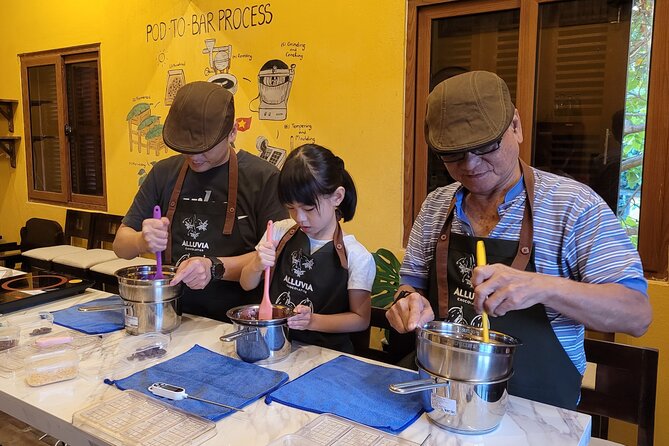
- Small class of up to six: You get a more focused lesson and hands-on time without a crowd around the worktable.
- From cacao pod to chocolate bar: The class explains cacao trees, chocolate production, and Vietnam’s role in making chocolate.
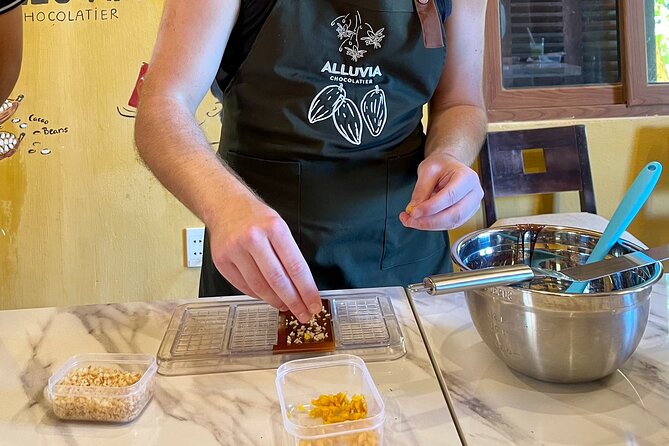
- Three kinds of chocolate work: You learn to temper dark chocolate, make a 30-gram bar, and prepare pralines and truffles.
- A useful take-home skill: The instructor shares practical tips that can help you repeat the process at home.
- One drink included: Choose one coffee or tea from the menu, with refillable water also available.
- Simple two-hour schedule: The class fits neatly into an afternoon in Hoi An, though it does not leave much room for a long, detailed pastry lesson.
Starting at Alluvia Chocolate House at 2 p.m.
The class begins at Alluvia Chocolate House, at 36 Đ. Phan Chu Trinh in Hoi An’s Minh An area. You return to this same meeting point at the end, so there is no separate finish location to manage.
The 2 p.m. start works well with Hoi An’s sightseeing rhythm. You can spend the morning and early afternoon exploring, then use the class as a cool indoor break. It also gives you a clear two-hour block rather than taking over an entire day.
The venue is near public transportation, which helps if you are staying outside the old center. You still need to plan your own way there, since transportation is not listed as part of the experience.
The room temperature deserves attention before you arrive. At roughly 16 to 20°C, it is intentionally cool for chocolate work. That is helpful for handling chocolate, especially during a warm Hoi An afternoon, but you may feel chilly if you are dressed for the tropical weather outside. Pack a thin layer rather than spending the class wishing you had one.
More Chocolate Making Workshops in Vietnam:
- Bean to bar Chocolate Workshop in Ho Chi Minh City
★ 5.0 · 10 reviews - Ho Chi Minh City: Premium Bean-to-Bar Chocolate Workshop
★ 4.8 · 8 reviews - Da Lat: Handmade Chocolate Workshop
★ 5.0 · 4 reviews
Learning about cacao from pod to bar
The first part of the experience explains the cacao tree and the stages of chocolate production. You learn about the characteristics of the cacao tree, how cacao is produced in Vietnam, and how local chocolate makers turn the raw ingredient into something familiar on a shop shelf.
This background gives the practical work some context. Instead of simply melting chocolate and adding toppings, you get a basic picture of where the ingredient begins and how it changes along the way. For a short class, that is a sensible amount of instruction. It helps connect the finished sweets to Vietnamese agriculture and local food production.
The class also covers how Vietnamese makers use local ingredients in chocolate. The available information does not specify every ingredient or flavor choice, so you should expect guidance and options rather than a fixed list of recipes. The useful point is that you are not only copying a European-style chocolate exercise. The lesson includes a Vietnam-based view of cacao and chocolate making.
I would pay attention during this opening explanation, even if your main goal is to eat chocolate. It helps you understand why tempering matters and why chocolate behaves differently depending on temperature and handling.
Tempering dark chocolate without the guesswork
Tempering is one of the main technical lessons. The standard course teaches you how to temper dark chocolate, a process that controls the chocolate’s texture and finish as it sets.
For a beginner, this is probably the most valuable skill in the class. Melting chocolate is easy. Getting it to set with the right snap and appearance takes more care. The instructor gives tips related to chocolate making, so you can take those ideas home instead of treating the class as a one-time craft activity.
The course focuses on dark chocolate as the included option. If you prefer milk chocolate, you can choose it for a small additional payment. That extra charge is worth noting when you compare the advertised price with what you may actually spend.
The class is not described as a professional chocolatier course, and the two-hour schedule puts a natural limit on detail. Still, learning the basic tempering method gives you a useful starting point for home experiments. You will likely get more from this section if you ask questions and watch closely rather than rushing toward the decorating stage.
Making a 30-gram chocolate bar
After the tempering lesson, you make a 30-gram chocolate bar. You also learn how to wrap it in paper, which turns a simple piece of chocolate into a small finished item you can take away.
The bar is modest in size, but that is part of the appeal. A small portion lets you practice the technique without wasting much chocolate if your first attempt is not perfect. It also gives you a neatly packaged result rather than a handful of loose samples.
The wrapping step adds a practical touch. You learn how to present the bar, which can be useful if you want to repeat the activity at home or make a small edible gift. This is the sort of detail that makes the class feel like a complete workshop instead of a demonstration followed by a tasting.
Do not expect to leave with a large box of chocolate from the bar alone. The 30-gram piece is one part of the session, alongside the truffles and pralines. The value is in the combined activity and the technique, not simply the quantity of chocolate you carry out.
A few more chocolate tours around Vietnam worth a look
- Can Tho: A Real Mekong Tour, Floating Market, Cacao & Life’s
★ 4.9 · 574 reviews - Cai Rang floating market, Cacao & hidden small canal
★ 5.0 · 244 reviews - Can Tho: Floating Market, Canal, Cacao Farm & Mekong’ Life
★ 5.0 · 45 reviews - Cai Rang floating market, see sunrise, CaCao orchard, small canal
★ 5.0 · 44 reviews
Shaping pralines and truffles
The class also includes instruction in making chocolate pralines and truffles. These give you a different kind of practice from the bar. A bar is mostly about tempering, molding, and wrapping, while pralines and truffles involve making smaller individual pieces with their own shapes and finishes.
The available information does not set out the exact fillings, designs, or number of pieces. You should think of this as an introduction to the methods rather than a guaranteed menu of specific flavors. The ingredients used for the bars, pralines, and truffles are provided, as is the equipment.
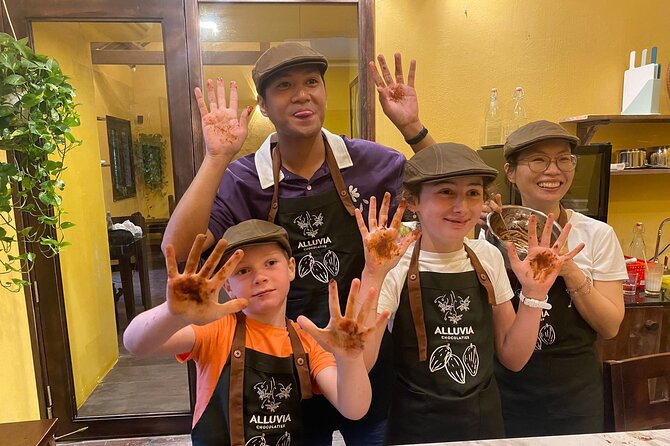
This section should suit people who enjoy making food with their hands. It is also a good fit for couples, friends, and families who want a shared activity rather than a passive tasting. You can compare your results with the people at your table, and the small group size should make it easier to follow the instructor.
The main limitation is time. With only about two hours, the class needs to move from explanation to tempering, molding, shaping, and wrapping at a steady pace. If you want a slow lesson with several recipes and repeated practice, you may find this format too short. If you want a friendly introduction with several chocolate projects in one sitting, the pace makes sense.
What the $21.76 price really covers
At $21.76 per person, the price is fair for a hands-on activity that includes equipment, chocolate, other ingredients, instruction, and one drink. You are paying for more than a tasting. The session gives you a basic lesson in Vietnamese cacao, a tempering demonstration, and several things to make yourself.
The included coffee or tea adds a small but welcome benefit. You can choose one free drink from the menu, and water is available for refill. This is not a meal, though, and lunch or other desserts and drinks are not included.
The value is strongest if you care about the process. If you only want to sample local chocolate, buying a bar at a shop may cost less and take less time. If you want to understand how chocolate is made and try the techniques yourself, the class offers more for the money.
Milk chocolate comes with a small extra charge. Dark chocolate is the standard option, so check the added cost if milk chocolate is important to you. The price also does not include transportation to the meeting point.
A good fit for solo visitors, couples, and small groups
The class has a maximum of six people. That is one of its best features. Small groups usually make hands-on instruction easier, and you should have a better chance of seeing the demonstration and getting help with your own chocolate.
It works well for solo visitors because the activity gives you a clear shared focus. You do not need to arrive with a group to enjoy it. Couples can treat it as a relaxed afternoon activity, while friends can turn it into a playful comparison of homemade bars and truffles.
Families may also like the format, though the supplied details do not give a minimum age. If you are booking with children, confirm age suitability before paying. Chocolate work involves equipment and temperature control, so younger children may need close help.
The class suits people who like food, crafts, and local production stories. It is less suitable if you dislike sweet foods, want a long formal cooking course, or expect a full meal. The experience is compact and specific: learn about cacao, make several chocolate items, enjoy a drink, and return to the meeting point.
Practical points before you book
Confirmation is provided when you book, and the activity is typically reserved about 22 days ahead. That booking pattern suggests you should not leave it until the last minute if the 2 p.m. session is important to your schedule.
The experience requires good weather, and the provider may cancel if conditions are poor. If that happens, you are offered another date or a full refund. The activity also requires a minimum number of participants, so a cancellation is possible if that number is not reached. In either case, you receive the choice of another date or experience, or a full refund.
You can cancel for a full refund up to 24 hours before the start time. Cancellations or changes made inside that 24-hour window are not refunded or accepted. The cut-off follows Hoi An local time, so keep that in mind if you are arranging the class from another time zone.
Bring a light jacket or long-sleeved shirt. Wear something comfortable enough for a worktable, and avoid planning a large meal immediately around the class unless you know you will want one. The included drink is welcome, but the course does not cover lunch.
Should you book the Alluvia chocolate class?
I would book this class if you want a short, friendly food activity with a clear Vietnamese connection. The strongest reasons are the small group size, the explanation of cacao production in Vietnam, and the chance to make several types of chocolate rather than simply watch a demonstration.
The class offers good value at $21.76 when you count the ingredients, equipment, drink, instruction, and take-home work. It also gives you a useful skill: basic dark chocolate tempering. That makes the experience more than a sweet snack stop.
Skip it if you want a full-day cooking course, a large quantity of chocolate, or a meal included in the price. Also factor in the cool classroom and the small extra charge for milk chocolate. For most chocolate fans with two free afternoon hours in Hoi An, though, this is an easy activity to recommend.
FAQ
Where does the Alluvia Hoi An Chocolate Making Class begin?
It begins at Alluvia Chocolate House, 36 Đ. Phan Chu Trinh, Phường Minh An, Hội An, Quảng Nam, Vietnam.
What time does the class start?
The class starts at 2 p.m.
How long does the chocolate class last?
The experience lasts approximately two hours.
What chocolate items will I make?
You will learn to temper dark chocolate, make a 30-gram chocolate bar, wrap the bar with paper, and make chocolate pralines and truffles.
Is a drink included?
Yes. You can choose one free coffee or tea from the menu. Water is also available for refill. Lunch, other desserts, and additional drinks are not included.
What is the cancellation policy?
You can cancel at least 24 hours before the start time for a full refund. Cancellations or changes made less than 24 hours before the start time are not refunded or accepted.
Just added around Vietnam
- Full Day Experience to Farm and Chocolate★ 5.0 · 22 reviews
- Bean to bar Chocolate Workshop in Ho Chi Minh City★ 5.0 · 10 reviews
- Phu Quoc: Bittersweet Chocolate Factory Tour & Workshop★ 4.5 · 38 reviews
- Ho Chi Minh City: Premium Bean-to-Bar Chocolate Workshop★ 4.8 · 8 reviews
- Da Lat: Handmade Chocolate Workshop★ 5.0 · 4 reviews
- Can Tho: Explore Mekong, Floating Market, Cacao & Local Life★ 4.9 · 21 reviews
- Can Tho: Countryside Cycling Tour with Cocoa Farm Visit★ 5.0 · 2 reviews
- Can Tho: Floating Market, Cacao & Canals with French Guide★ 5.0 · 37 reviews
Chocolate Making Workshops, compared.

Chocolate Workshop in Chocolate Museum w/ Tasting
Read our review →
Belgian Chocolate Making Workshop with Tastings
Read our review →
Belgian Praline and Mendiants Chocolate Workshop
Read our review →
1.5h Belgian Chocolate Workshop in Brussels (bean to bar)
Read our review →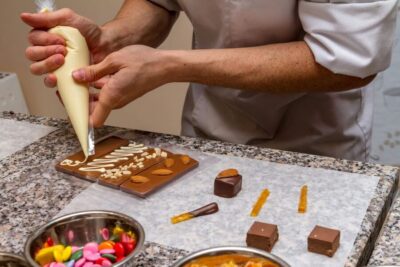
45-minute Chocolate Making Workshop at Choco-Story
Read our review →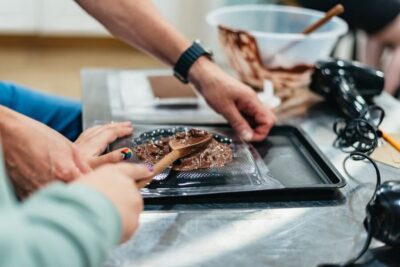
Chocolate Bar Making Workshop at York Cocoa Works
Read our review →Browse the lists this tour appears in