

Review · KENYA
Visit kibera Slum the chocolate city
Kibera asks you to look closer. This 150-minute walking tour takes you through Nairobi’s largest informal settlement, where community spirit and local enterprise are central to the experience. I like the chance to hear directly about daily life and to visit projects focused on education, skills training, and community development. I also like that the tour treats responsible tourism as part of the lesson, not an afterthought.
The tour costs $25 per person, which is fair if your guide provides strong local context and the community visits are handled with care. The main consideration is that an entrance fee is not included, and the amount is not specified. Pick-up is also not provided, so you need to reach Equity Ayani on your own.
Key points at a glance

- A 2.5-hour walking tour: The route begins and ends at Equity Ayani, with sightseeing and views along the way.
- Local community focus: You can meet residents and community leaders and hear about their experiences and local initiatives.
- Empowerment projects: The tour may include organizations and social enterprises working in education, skills training, and development.
- A broader look at Kibera: You learn how the settlement fits into Kenya’s urban growth and social challenges.
- Responsible tourism matters: The experience addresses respectful behavior, ethical visits, and support for local work.
- Highly praised guiding: The activity has a 4.8 rating from three reviews, with Daniel singled out by Sara from Spain for a magnificent tour and another review praising the guide’s kindness and professionalism.
Starting at Equity Ayani in Nairobi

The tour starts at Equity Ayani and returns there after roughly two and a half hours. That fixed meeting point keeps the plan simple, but you are responsible for getting there because hotel pick-up is not included.
I would allow extra time to reach the starting point. The exact meeting instructions, group size, and transport arrangements are not provided, so confirm those details before booking. If you are building a full day around this outing, remember that 150 minutes refers to the tour itself, not your journey to or from Equity Ayani.
Starting and finishing at the same place is useful in a city where traffic and directions can eat into your day. You do not need to arrange a one-way transfer at the end. The drawback is equally clear: if Equity Ayani is inconvenient for you, the $25 price does not cover the effort or cost of reaching it.
A few more chocolate tours around the world worth a look
- Lindt Home of Chocolate Museum Entry Ticket
★ 4.7 · 9,329 reviews - Choco-Story Brussels: Chocolate Museum Entrance with Tasting
★ 4.3 · 4,883 reviews - Zurich: City Tour, Cruise, and Lindt Home of Chocolate Visit
★ 4.5 · 4,624 reviews
Walking through Kibera for two and a half hours
The main part of the experience is a guided walk through Kibera. You can expect sightseeing, conversation, and scenic views on the way rather than a quick drive-by visit.
A walking tour gives the guide room to explain what you are seeing as you go. Kibera is not presented as a backdrop for photographs. The purpose is to understand how people live, work, organize, and respond to the pressures of urban life in Kenya.
The 150-minute length is useful here. A shorter visit might show you only a few streets and leave little time for questions. This tour allows space for historical background, community visits, and discussion of local projects. It is still not a full day, so you should expect an introduction rather than an exhaustive study of every part of Kibera.
The route itself is not described in detail. You should not book expecting a list of guaranteed stops or specific viewpoints. Instead, think of the outing as a guided walk whose value depends heavily on the route and the conversations on the day.
Meeting residents and community leaders

One of the strongest parts of the tour is its focus on people rather than labels. You may interact with local residents and community leaders and hear about their experiences, initiatives, and difficulties.
That matters because a settlement of this size cannot be understood through statistics alone. Personal accounts can show how residents see their own neighborhood, what they want to improve, and how community groups respond to limited resources.
You should approach this part with courtesy. Listen first, ask sensible questions, and avoid treating private lives as tourist attractions. The tour specifically emphasizes responsible tourism, so respectful behavior is not just good manners. It is part of the subject being taught.
The exact residents or leaders you will meet are not listed, and these interactions may vary. The experience is best for people who are comfortable with an open-ended conversation rather than those looking for a fixed performance or polished cultural show.
Seeing education and skills projects in action

The tour may include local organizations and social enterprises that support education, skills training, and community development. These visits add practical detail to the larger discussion of poverty and urban growth.
I find this focus more useful than a tour that only points out problems. It gives you a chance to see how residents and local groups are working toward solutions. Education programs can show the importance of opportunity for young people, while skills training and social enterprises point to ways people build income and independence.
The wording of the activity indicates that projects are part of the expected program, but it does not name each organization or guarantee a particular visit. Ask the operator what is scheduled when you book, especially if one type of project matters most to you.
You should also remember that a tour fee is not the same as a direct donation. The experience emphasizes support for local initiatives, but it does not state how much of your $25 reaches any organization. If you want to contribute beyond the tour price, ask your guide which projects accept appropriate support and what form that support should take.
Same place, a different sort of tasting:
- The Chocolatarium Chocolate Tour Experience in Edinburgh
★ 5.0 · 4,322 reviews - Award-Winning Geneva Chocolate &Old Town Tour with Boat Ride (3h)
★ 5.0 · 3,721 reviews - Melbourne: Yarra Valley Wine, Gin, Whisky and Chocolate Tour
★ 5.0 · 3,667 reviews - 4×4 Dominican Adventure with Chocolate and Coffee Tasting
★ 5.0 · 2,920 reviews
Art, music, and local enterprise
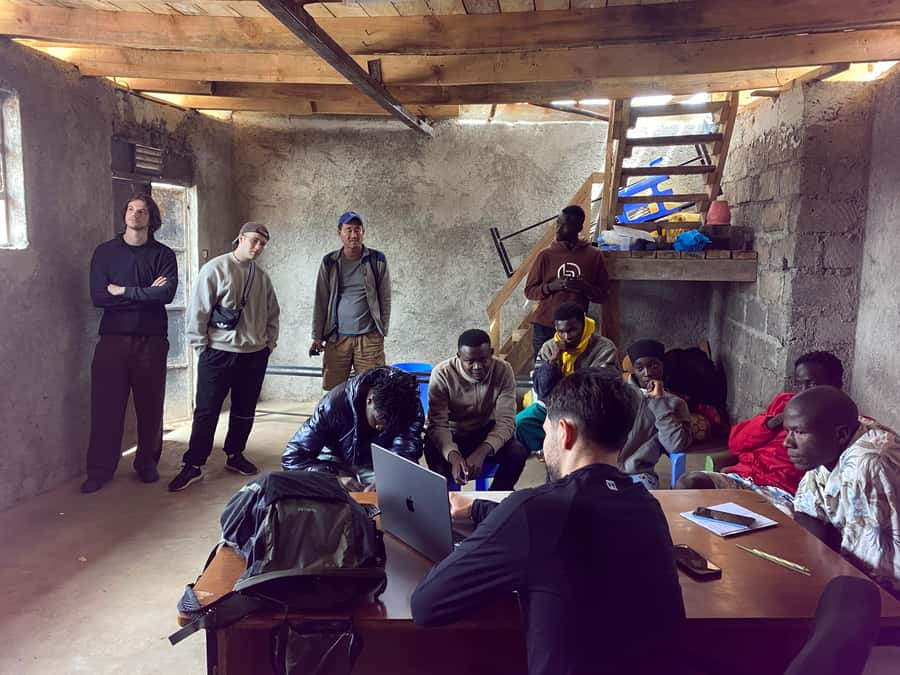
Kibera’s cultural side is another part of the walk. The tour introduces you to local art, music, and entrepreneurial activity, offering a broader picture than the phrase informal settlement might suggest.
These elements can make the visit more human and more balanced. Art may communicate ideas that a formal explanation cannot. Music can show community identity and energy. Small businesses and local enterprise reveal the practical ways residents earn a living and serve their neighbors.
The details are not fixed in the information available for this tour, so keep your expectations flexible. You might encounter different creative work or businesses depending on the day and the guide’s route. The important point is that Kibera is presented as a place where people create, trade, organize, and adapt, not simply as an area defined by hardship.
Photography deserves care here. No specific photography policy is provided, so ask before photographing people, homes, businesses, or community activities. A respectful question takes only a moment and helps keep the visit on the right footing.
Understanding Kibera’s place in Nairobi
The historical context gives the walk more meaning. You will learn about Kibera’s development and its place within wider issues of urbanization and social pressure in Kenya.
The tour does not promise an academic lecture, and the available details do not identify particular dates or historical events. Instead, the guide should help connect what you see on the ground with the forces that shape a fast-growing city.
That context is valuable because it discourages simple judgments. Kibera cannot be reduced to either a symbol of deprivation or a feel-good story about resilience. You are likely to leave with a more layered understanding of housing, opportunity, community organization, and the challenges faced by informal settlements.
This is also where the quality of the guide matters most. A good explanation can turn a walk into a useful lesson. A rushed or shallow explanation would make the same route feel much less worthwhile.
The guide makes or breaks the experience

The tour includes a live guide, and guiding is clearly central to its value. The activity is offered with support for English, Chinese, Esperanto, German, Italian, Spanish, and French, though you should confirm the language available for your chosen departure.
Daniel received specific praise from Sara of Spain, who booked the experience on April 30, 2025. Another verified review from Switzerland, dated August 7, 2024, describes the guide as very kind and professional. Those comments fit the nature of this tour: patience, tact, and clear explanations matter more here than flashy presentation.
The overall rating is 4.8 from three reviews. That is encouraging, particularly because the available comments praise the guide’s professionalism and personal manner. Still, three reviews are a small sample, so I would treat the score as a positive signal rather than a guarantee.
If you have strong preferences about language, ask for confirmation before paying. The listed language range is unusually broad, but the information does not say that every language is available at every time.
Is $25 a fair price?
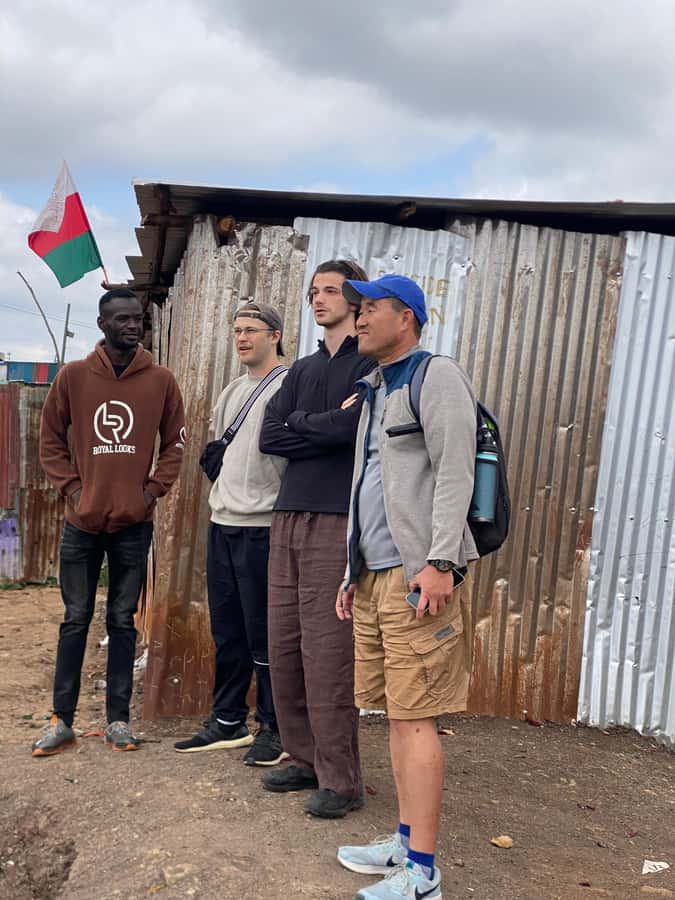
At $25 per person, this is reasonably priced for a 150-minute guided walking experience if the community visits and explanations are well handled. You are paying for local guiding, historical context, cultural information, and access to a structured route that would be difficult to interpret on your own.
The value is not in an entrance ticket or a luxury vehicle. The tour includes only the guide, and pick-up is not included. An additional entrance fee is also excluded, with no amount given. That means your final cost will be slightly higher than the headline price.
I would consider the tour good value for a visitor who wants context and conversation. It is less attractive if you want a private vehicle, a tightly scheduled list of attractions, or a tour where every cost is included upfront.
Ask two questions before booking: what entrance fee should you expect, and which community projects are included on your departure? Those answers will help you judge the price honestly.
What responsible tourism looks like here

Visiting a marginalized community requires more care than visiting a museum or public monument. The tour makes responsible tourism one of its stated themes, covering respect, understanding, and support for local initiatives.
For you, that means following the guide’s instructions, asking permission before taking photographs, and avoiding intrusive questions. It also means remembering that residents are not there to provide a spectacle. You are entering a real neighborhood where people work, study, raise families, and manage daily responsibilities.
A responsible tour should leave local people with dignity and some practical benefit. The information provided does not explain the operator’s exact community arrangements or financial contributions, so ask for clarity if that issue is important to you.
The best attitude is curious but modest. You are visiting to learn, not to compare your life with someone else’s or to collect dramatic images.
Who will enjoy this Kibera walk?
I would recommend this experience to you if you want:
- A direct introduction to community life in Nairobi
- A guided discussion of urbanization and social challenges
- Encounters with local projects and social enterprises
- Cultural experiences involving art, music, and enterprise
- A short activity that fits into a wider Nairobi itinerary
- A tour led in one of the listed languages
It may not suit you if you dislike walking, want guaranteed stops, or expect a conventional sightseeing route. The experience also requires emotional maturity. Some subjects may be difficult, and the point is to understand them with respect rather than turn them into entertainment.
Families and first-time visitors should check the route and meeting details before booking, since no age guidance, accessibility information, or group-size information is provided.
Should you book the Chocolate City Kibera tour?
Book it if you want a grounded, people-focused look at Nairobi and you are willing to listen carefully. The strongest reasons are the community engagement, the chance to visit empowerment projects, and the guide-led context that connects Kibera with Kenya’s wider urban story.
The praise for Daniel and the kind, professional guide gives the experience a good start, while the 4.8 rating is promising but based on only three reviews. I would confirm the meeting instructions, tour language, expected entrance fee, and planned community visits before committing.
For $25, this is a sensible choice for an open-minded visitor who values local perspective over polished sightseeing. If you want complete cost certainty or a fixed attraction list, choose a different Nairobi activity.
FAQ
Where does the Kibera tour start?
The tour starts at Equity Ayani in Nairobi.
Where does the tour finish?
The tour returns to Equity Ayani after the visit.
How long does the tour last?
The experience lasts 150 minutes, or approximately two and a half hours.
How much does the tour cost?
The listed price is $25 per person.
Is pick-up included?
No. Pick-up is not included, so you must make your own way to Equity Ayani.
Is an entrance fee included?
No. An entrance fee is not included, but the specific amount is not provided.
What does the tour include?
The tour includes a guide. It also features a guided walk, community engagement, cultural information, historical context, and visits to local empowerment projects as part of the planned experience.
Which languages are available?
The listed guide languages are English, Chinese, Esperanto, German, Italian, Spanish, and French. Confirm the language for your selected departure.
Can I cancel for a full refund?
Yes. You can cancel up to 24 hours in advance for a full refund. You can also reserve now and pay later.
Just added around the world
- Lindt Chocolate Museum with Cruise Transfer from Zurich★ 4.6 · 7 reviews
- Zagreb: Lake Bled and Ljubljana Day Tour with Chocolate Gift★ 5.0 · 26 reviews
- Zurich: Chocolate Tasting and Walking Tour with a Local★ 4.2 · 13 reviews
- Zurich Open-top Tour and Chocolate and Cheese Countryside★ 3.5 · 11 reviews
- Wine and Chocolate experience★ 4.6 · 3 reviews
- York: Introduction to Chocolate Making Experience★ 4.9 · 10 reviews
- Zaandijk-Near Zaanse Schans Chocolate making demo & tasting★ 4.8 · 13 reviews
- Wine and Chocolate Bike Tour: ride, taste, lunch, vineyards.★ 4.1 · 10 reviews
Chocolate Tours, compared.

Choco-Story Brussels: Chocolate Museum Entrance with Tasting
Read our review →
City Tour, Cruise, and Lindt Home of Chocolate Visit
Read our review →
The Chocolatarium Chocolate Tour Experience in Edinburgh
Read our review →
Award-Winning Geneva Chocolate &Old Town Tour with Boat Ride (3h)
Read our review →
Yarra Valley Wine, Gin, Whisky and Chocolate Tour
Read our review →
4×4 Dominican Adventure with Chocolate and Coffee Tasting
Read our review →
Browse the lists this tour appears in