

Review · KENYA
Nairobi: Kibera Slum (The Chocolate city)Guided Walking Tour
Kibera tells Nairobi’s story. This guided walk brings you into the city’s largest informal settlement with local guides, market visits, community projects, and meetings with artisans, musicians, and young people. I especially like the local leadership and the clear link between your $22 fee and community support. I also like that the tour looks beyond hardship to creativity and hope. The main consideration is that this is a walking experience in a challenging urban setting, not a polished sightseeing outing.
Guides Daniel and Elijah have earned special praise for their work with children and the wider community. You should expect direct conversation, uneven walking surfaces, and some limits on photography. Go with respect, comfortable shoes, and an open mind. This is not poverty entertainment, and your attitude matters as much as your camera or questions.
Key points to know before you go

- Local guides lead the way: The tour is guided by people connected to Kibera, giving you a personal view of daily life and community work.
- The walk begins at Greenhouse Mall: From there, you walk into Kibera and finish near Equity Bank Kibera.
- Toi Main Market is a major stop: You have time for guided sightseeing, shopping, and a closer look at local trade.
- Community projects are part of the experience: A portion of the fee supports local initiatives, including expenses connected with a school for children.
- You meet working creatives: Artisans, musicians, and young people help show Kibera through skill and effort, not only through its problems.
- Plan for a respectful outdoor walk: Wear walking shoes, carry sun protection, and ask before taking photographs.
What this Kibera walk is really about

Kibera can be reduced to a headline, but a good visit gives you more than a label. This tour aims to show how people live, work, organize, create, and plan for the future in one of Nairobi’s best-known informal settlements.
Your guide is central to the experience. Guides born and raised in Kibera can explain the area through personal knowledge rather than a distant script. That does not remove the difficult parts. It does help place them in context. You learn about daily challenges while also seeing local initiative, enterprise, music, craft, and youth projects.
I like that the tour does not promise a fantasy version of Kibera. It also does not frame the area only through poverty. That balance is important. You are being asked to look carefully, listen well, and remember that this is someone’s home.
The experience costs $22 per person. That is a modest price for a guided day of walking, local interpretation, market time, community visits, and introductions to people doing practical work. The value depends partly on your expectations. If you want major monuments, air-conditioned transport, or a carefully staged cultural show, this is the wrong choice. If you want a human view of Nairobi that includes social realities and community action, the price is reasonable.
A portion of the proceeds supports local initiatives. Information connected with the tour points to help for children and school expenses, which gives the fee a purpose beyond admission to an activity. You should still ask your guide how the contribution is used if that matters to your booking decision. The supplied details do not promise a fixed donation amount.
More Chocolate Walking Tours in the world:
- Brussels: Historical Walking Tour with Chocolate & Waffle Tasting
★ 5.0 · 1,165 reviews - Brussels Walking and Tasting Tour (Beers,Chocolates&Fries/Waffle)
★ 5.0 · 929 reviews - Brussels Chocolate Walking Tour and Workshop
★ 4.5 · 885 reviews
Starting at Greenhouse Mall
The meeting point is Greenhouse Mall. This gives you a clear urban starting place before the walk enters Kibera. Transportation to Greenhouse Mall is not included, so you need to arrange your own way there and also plan your return from the finish at Equity Bank Kibera.
The exact start time depends on availability. The activity is sold as valid for one day, but the information provided does not state a fixed number of walking hours. Check the available departure time when you book, and avoid scheduling another important activity immediately afterward.
This is also the moment to prepare properly. Wear shoes that can handle a full day of walking and varied surfaces. A hat and sunscreen are sensible in Nairobi’s strong sun. Carry only what you need, keep valuables secure, and do not bring alcohol, drugs, or cigarettes.
Your guide should set the tone early. Ask about the route, photography, and any places where you should be especially careful. Good manners here are not a minor detail. They are part of responsible sightseeing.
Walking into Kibera with a local guide

The central section is on foot. Walking makes the experience more immediate, but it also means you cannot stay at a comfortable distance from the setting. You move through working streets and residential areas, where people are carrying on with ordinary routines.
That closeness can be valuable. You get a stronger sense of how homes, shops, projects, and public spaces fit together. Your guide can explain what you are seeing and answer questions about the issues residents face. The tour description also points to stories of hope and progress, so the conversation is meant to include solutions and local effort, not just problems.
You need to follow your guide’s instructions. Photography may be restricted in certain areas, and you should never assume that a person, home, child, shop, or project is available for a picture. Ask first. If the answer is no, accept it without debate.
This is not a suitable outing for everyone. The experience is not recommended for children under 10, people with heart problems, or wheelchair users. The walking format and setting may be physically demanding, and the tour does not offer wheelchair suitability.
Toi Main Market, the tour’s liveliest stop
Toi Main Market is the named market stop, and it gives the tour a practical focus. You receive a guided visit, time for sightseeing, and the chance to shop. That combination lets you observe local commerce rather than simply pass through a residential area.
Markets are useful places to understand a neighborhood. Goods, prices, customer habits, and small businesses all tell you something about how people earn and spend money. Your guide can help you read the scene and explain what is worth noticing.
Shopping is optional in spirit, even if it is part of the route. Do not feel pressured to buy something just to prove you enjoyed the visit. If you do purchase an item, keep the transaction polite and straightforward. Personal expenses are not included in the $22 price.
The market may be the most demanding part for anyone who prefers quiet sightseeing. You could encounter close foot traffic, noise, or crowded paths. The supplied details do not promise a calm, slow stroll, so keep your belongings close and pay attention to your footing.
A few more chocolate tours around the world worth a look
- Lindt Home of Chocolate Museum Entry Ticket
★ 4.7 · 9,329 reviews - Choco-Story Brussels: Chocolate Museum Entrance with Tasting
★ 4.3 · 4,883 reviews - Zurich: City Tour, Cruise, and Lindt Home of Chocolate Visit
★ 4.5 · 4,624 reviews - The Chocolatarium Chocolate Tour Experience in Edinburgh
★ 5.0 · 4,322 reviews
Community projects, artisans, and musicians
The strongest part of the tour may be its community focus. You visit local projects and meet artisans, musicians, and young people who are working to improve their neighborhood. These encounters give you a chance to see skills and ambition that a quick drive through Nairobi would miss.
The children’s work is especially important. Information from the experience connects part of the payment with local initiatives and school expenses. Guides Daniel and Elijah have been praised for educating children and creating opportunities in the community. Their role appears to go beyond leading a walk, which adds weight to the project visits.
You should approach these meetings as exchanges, not performances arranged for your benefit. Ask thoughtful questions. Listen to the answers. If music or craft is part of your visit, give people room to explain their work in their own terms.
The tour does not name every project or guarantee a particular artisan, musician, or youth group on every departure. That means the exact encounters can vary. The reliable promise is the community-project focus, not a fixed cast of people.
What you may learn about daily life

The tour is designed to explain both hardship and resilience. You may hear about limited services, economic pressure, education, and the effort required to support families and children. The details will depend on your guide and the questions you ask.
A local guide can also challenge simple assumptions. Kibera is not just a place people pass through for a striking photograph. It is a community where residents trade, teach, create, worship, raise children, and organize support. That broader view is one reason I find the experience worthwhile.
Still, you should not expect a complete account of Nairobi’s social or political history in one walk. This is a focused community tour. Its strength is the personal connection and the chance to see local projects. Its limit is the short format and the fact that one route cannot represent every experience in Kibera.
You can get more from the visit by asking specific, respectful questions. Ask what the community project does, how young people take part, what kind of support is useful, and how proceeds from the tour help. Avoid questions that treat poverty as a spectacle or demand private information.
Languages and guide quality

The activity is offered with live guiding in English, Spanish, German, French, and Chinese. That is useful if you prefer to discuss difficult subjects in a language you understand well. Confirm the language available for your chosen departure rather than assuming every language runs at every time.
The named guides Daniel and Elijah have received especially warm praise for their kindness, safety-conscious approach, and work with children. That matters because the quality of this experience depends heavily on the guide. A good guide can explain sensitive issues without turning the walk into a lecture. A poor guide would leave you with little more than hurried sightseeing.
You can help the conversation by asking questions. The information provided specifically encourages visitors to ask about the village, so this is not a silent follow-the-leader walk. If you are curious, speak up.
Practical comfort and respectful behavior

You do not need to pack a full day of equipment. Comfortable walking shoes, a hat, sunscreen, and water are sensible choices, though meals are not included. Bring money only for personal expenses or optional shopping, and keep it secure.
Photography needs care. Restrictions may apply in certain areas, and permission should come before photographing residents or activities. Your guide is the best source for what is appropriate on the day.
Smoking, alcohol, and drugs are not allowed. The rule is simple, and it fits the nature of the visit. You are entering a residential community, not a nightlife district or a theme park.
The tour finishes at Equity Bank Kibera. Since transport to and from Kibera is not included, you should think through both ends of the day. You can arrange your route to Greenhouse Mall before the tour and your onward transport from the finish in advance.
Free cancellation is available up to 24 hours before the activity for a full refund, and you can reserve now and pay later. Those terms make the booking less risky if your Nairobi schedule is still changing. They do not remove the need to check the exact start time and available language.
Who will appreciate this experience most
I would recommend this tour to adults and older teenagers who want to understand Nairobi through local voices. It suits you if you are comfortable walking, asking questions, and seeing a place that may challenge your assumptions.
It is also a good fit for visitors who want their spending to connect with community work. The stated support for local initiatives, especially children’s projects, gives the fee added meaning. You should not book solely to feel charitable, but the community link is a genuine reason to consider it.
This is less suitable for anyone seeking an easy sightseeing loop. It is not designed for children under 10, people with heart problems, or wheelchair users. It may also frustrate you if you need guaranteed photography opportunities, a fixed list of personal encounters, or a precise duration.
Should you book the Kibera walking tour?
Book it if you want a direct, guided look at Nairobi that includes local markets, community projects, and people building opportunities from within Kibera. The $22 price is fair because it combines guiding, access to local projects, and a stated contribution to community initiatives.
Before booking, make sure you are ready for a serious walking experience and agree with the ground rules on photography and behavior. Wear proper shoes, protect yourself from the sun, and leave enough time for your return from Equity Bank Kibera.
I would choose this tour for its local guides, its community purpose, and the chance to meet people involved in education, craft, music, and youth work. I would skip it only if you need a highly controlled, accessible, or purely comfortable sightseeing activity. Go respectfully, ask good questions, and let Kibera be a community first, not a backdrop.
FAQ
Where does the tour start?
The tour starts at Greenhouse Mall in Nairobi.
Where does the tour finish?
The tour finishes at Equity Bank Kibera.
Is transportation included?
No. Transportation to and from Kibera is not included.
What is included in the tour?
The price includes a local guide, visits to local markets and community projects, and interaction with local artisans and musicians.
Is food included?
No. Meals are not included.
What languages are available?
Live guiding is available in English, Spanish, German, French, and Chinese. Check availability for your chosen starting time.
Is photography allowed?
Photography may be restricted in certain areas. Follow your guide’s instructions and ask before taking photographs.
Who should not take this tour?
The activity is not suitable for children under 10, people with heart problems, or wheelchair users.
Just added around the world
- Lindt Chocolate Museum with Cruise Transfer from Zurich★ 4.6 · 7 reviews
- Zagreb: Lake Bled and Ljubljana Day Tour with Chocolate Gift★ 5.0 · 26 reviews
- Zurich: Chocolate Tasting and Walking Tour with a Local★ 4.2 · 13 reviews
- Zurich Open-top Tour and Chocolate and Cheese Countryside★ 3.5 · 11 reviews
- York: Introduction to Chocolate Making Experience★ 4.9 · 10 reviews
- Zaandijk-Near Zaanse Schans Chocolate making demo & tasting★ 4.8 · 13 reviews
- Wine and Chocolate experience★ 4.6 · 3 reviews
- Private Wine and Chocolate Tasting Experience★ 4.4 · 3 reviews
Walking Tours, compared.
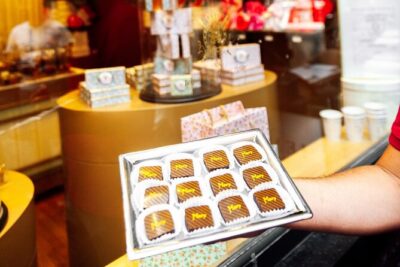
Historical Walking Tour with Chocolate & Waffle Tasting
Read our review →
Brussels Walking and Tasting Tour (Beers,Chocolates&Fries/Waffle)
Read our review →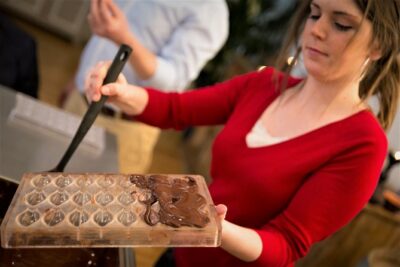
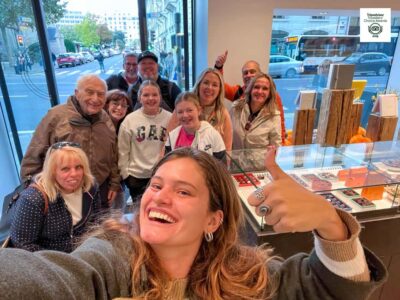

Saint-Germain: Gourmet Chocolate & Pastry Walking Food Tour
Read our review →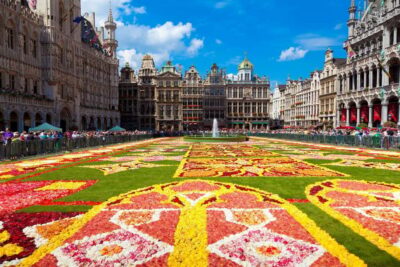
Walking Food Tour with Chocolate, Beer, & Waffles
Read our review →
Melbourne Lanes & Arcades Chocolate and Dessert Walking Tour
Read our review →
Browse the lists this tour appears in