
Review · GERMANY
Dresden: Guided Walking Tour and Chocolate Museum Ticket
Dresden tells its story in layers. This 90-minute walk links the city’s medieval beginnings, Renaissance energy, Baroque splendor, and modern reunification story with major sights such as the Frauenkirche, Semperoper, and Zwinger. I like the route because it gives you a fast, useful introduction to central Dresden, and I like the added Chocolate Museum ticket because it brings an unexpected local subject into the day.
The guide’s German commentary is often praised for being lively, witty, and easy to follow. Several recent bookings describe the tour as informative without feeling long, and one especially warm comment praised a well-prepared guide who clearly loves Dresden. The main consideration is language: the walking tour is in German, and the Chocolate Museum visit is self-guided rather than led by your guide.
Key points at a glance

- A compact route through Dresden’s historic center: Walk from Dresden Castle past Brühl’s Terrace, the Procession of Princes, Stallhof, Dresden Cathedral, and the Frauenkirche.
- Major landmarks in one short outing: You’ll see or view the Frauenkirche, Semperoper, Baroque Zwinger, Taschenbergpalais, and Augustus Bridge.
- A German-only guided experience: The live guide speaks German, so this works best if you understand the language well enough for spoken stories and historical detail.
- A flexible museum ticket: Visit the Chocolate Museum at any time on the same day, without needing to join the guide.
- Chocolate with a Dresden connection: Learn why the city was once called Germany’s capital of chocolate and why it is linked with the origins of milk chocolate.
- Good value at $18: The price combines a guided Old Town walk, museum admission, and a chocolate tasting, with free cancellation up to 24 hours before the start.
Why this Dresden pairing works
Dresden is a city where a short walk can cover a lot of ground. Its central sights sit close together, but the buildings belong to different periods and tell very different stories. A guide helps you connect those pieces instead of seeing them as a series of grand façades.
I like the balance here. The walking tour gives you a fixed time and a local guide, while the museum ticket lets you choose your own pace afterward. You can spend a few minutes looking at chocolate molds, or take more time with the cocoa-to-bar story. The two activities feel related, but they are not bundled into one long guided session.
At $18 per person, the package is priced well for a short city introduction. You receive a 1.5-hour guided walk, entry to the museum, and a tasting. Dresden’s Old Town can certainly be explored without paying for a tour, but this option gives you a clear route and historical context, then adds a museum that you might otherwise overlook.
The tradeoff is that you need to manage the museum visit yourself. Your guide does not accompany you inside, and the tour time you select applies to the walking portion only. If you pick the 4:00 PM walk, you must visit the museum before the tour because the museum closes at 6:00 PM.
More Chocolate Museums in the world:
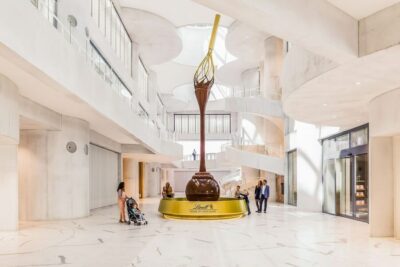
- Lindt Home of Chocolate Museum Entry Ticket
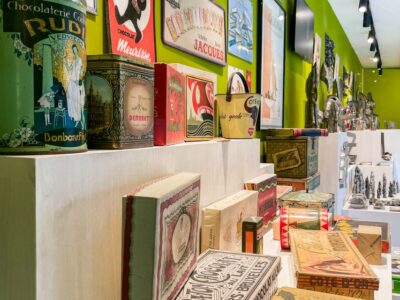
★ 4.7 · 9,329 reviews - Choco-Story Brussels: Chocolate Museum Entrance with Tasting
★ 4.3 · 4,883 reviews - Cologne: Chocolate Museum Entrance Ticket
★ 4.4 · 2,790 reviews
Starting beneath QF Passage
The meeting point is in the basement of the QF Passage, in the seating area of Dresden Information. Give yourself enough time to find the lower level, especially if you do not know the passage already. This is a practical meeting place near the Frauenkirche area, and it puts you close to the main Old Town sights.
The tour begins at a scheduled time that you select when booking. The walking section lasts about 90 minutes. Since the tour covers several major landmarks in a short period, expect a steady introduction rather than a slow, detailed visit inside every building.
The guide speaks German. That point matters more than the low price. If you understand German comfortably, the tour can give you much more than a silent walk through the center. The strongest praise focuses on the guides’ enthusiasm, humor, preparation, and ability to explain a lot in a short time.
If your German is limited, you can still recognize the sights and enjoy the route, but you may miss the stories that give the walk its value. There is no indication that the live commentary is offered in English or another language.
Dresden Castle and the city’s changing eras

The route begins at Dresden Castle, one of the city’s key historical anchors. From here, the guide introduces Dresden through several periods: the Middle Ages, the Renaissance, and the Baroque era. That sequence gives you a useful framework for the rest of the walk.
The medieval period is not presented as a simple age of old buildings. The tour also covers the city’s darker times, then moves toward the energy of the Renaissance and the grandeur of the Baroque age. I like this approach because it avoids treating Dresden as only a postcard of ornate architecture.
A short guided explanation can also help you read the city’s rebuilding and changing identity. The experience includes background on the Peaceful Revolution of 1989 and the reunification of East and West Germany. Those subjects give the historic center a modern political context, especially for anyone who wants more than architecture.
The walk does not promise extended interior visits at each sight. Think of it as a guided orientation with stops for explanation and views. You’ll leave knowing what you are looking at and which places deserve a longer visit later.
Brühl’s Terrace and the Procession of Princes
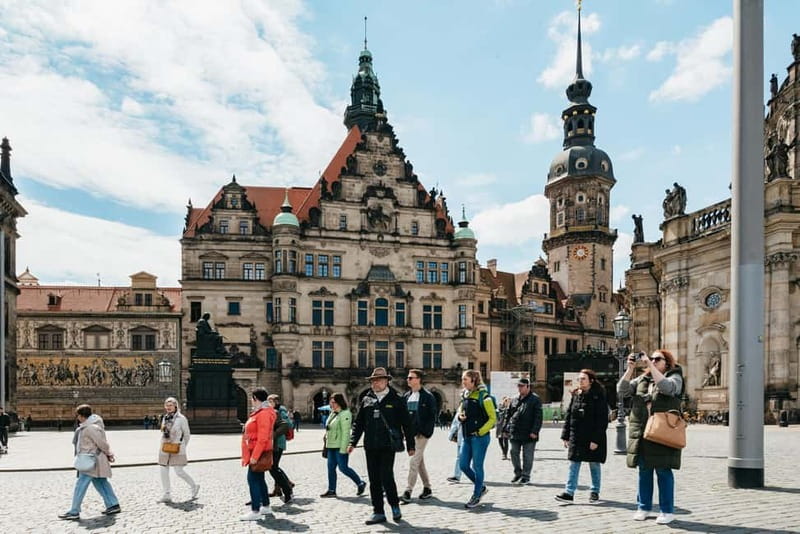
From the castle area, the route continues toward Brühl’s Terrace. This is one of Dresden’s best-known viewpoints and a key part of the Old Town experience. It helps you see how the city’s grand buildings relate to the Elbe and to one another.
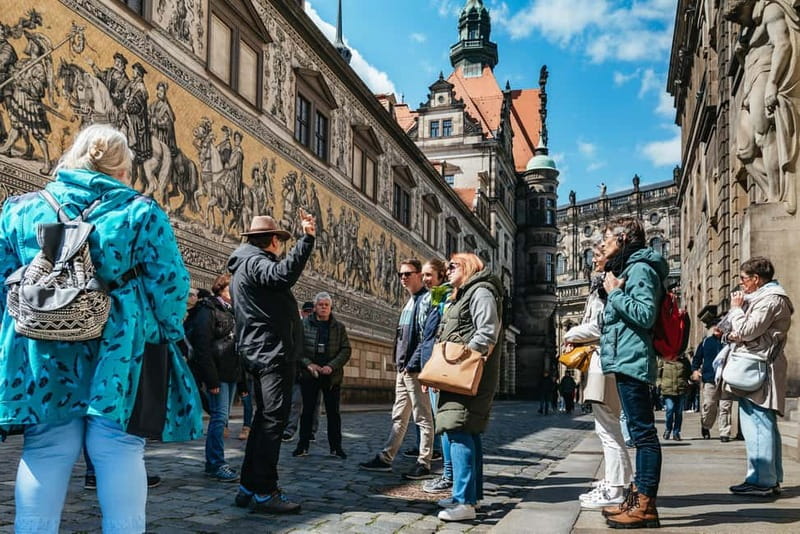
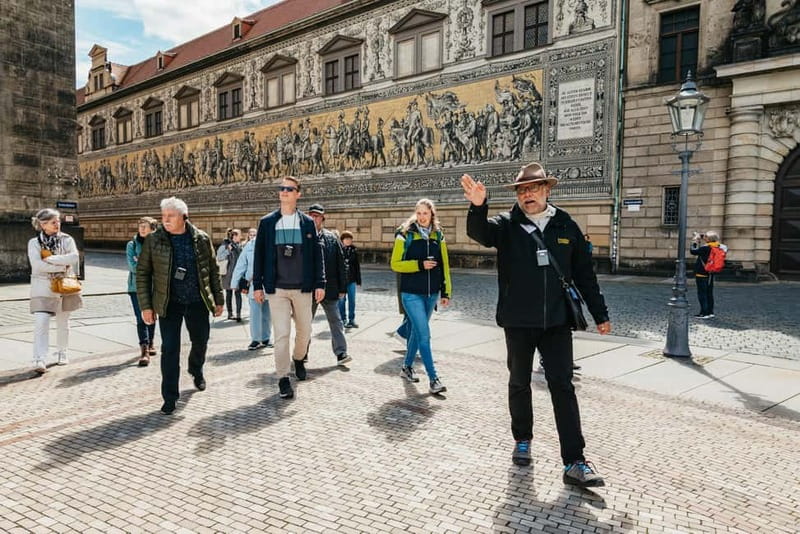
The walk also includes the Procession of Princes, a major visual record of Dresden’s rulers. The guide’s historical narration is especially useful here because a long row of figures can otherwise become decorative background. With context, it becomes part of the city’s story of power, ceremony, and succession.
You will also see Stallhof, another important part of the historic center. These stops give the tour a good rhythm: broad city views, public art, royal spaces, and religious architecture arrive close together. The route is compact, but it does not feel like a single-theme walk.
More Chocolate Walking Tours in the world:
- Brussels: Historical Walking Tour with Chocolate & Waffle Tasting
★ 5.0 · 1,165 reviews - Brussels Walking and Tasting Tour (Beers,Chocolates&Fries/Waffle)
★ 5.0 · 929 reviews - Brussels Chocolate Walking Tour and Workshop
★ 4.5 · 885 reviews - Chocolate Flavors Walking Tour of Geneva
★ 4.9 · 670 reviews
Cathedral, Taschenbergpalais, and Augustus Bridge
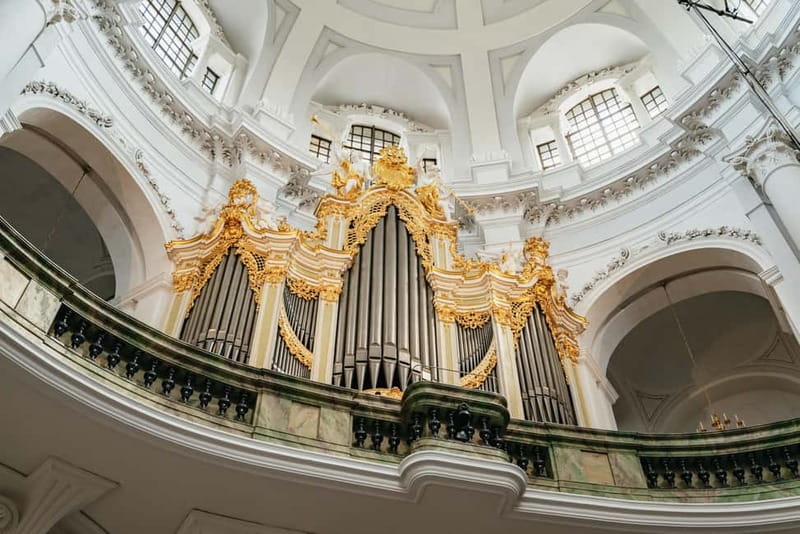
Dresden Cathedral comes next. The church is one of the central landmarks in the Old Town, and its position helps explain the close relationship between the city’s royal and religious districts.
The route then passes the Taschenbergpalais. This gives you another look at Dresden’s courtly architecture and the way grand buildings were placed around the royal center. The guide’s job here is less about rushing you from one photo stop to another and more about showing how the buildings fit into Dresden’s wider story.
Augustus Bridge adds a change of view. From the bridge area, you can better understand the city’s position along the river and take in a broader view of the historic center. The walk does not turn into a separate river cruise or a long bridge tour, but this stop helps break up the close-set architecture of the Old Town.
The tour finishes near the Frauenkirche. That is a convenient ending point because the church is one of Dresden’s most recognizable sights and a useful place to continue exploring afterward. You can also use the area to find food, shops, or another attraction, though those extras are not included.
Frauenkirche, Semperoper, and Zwinger views
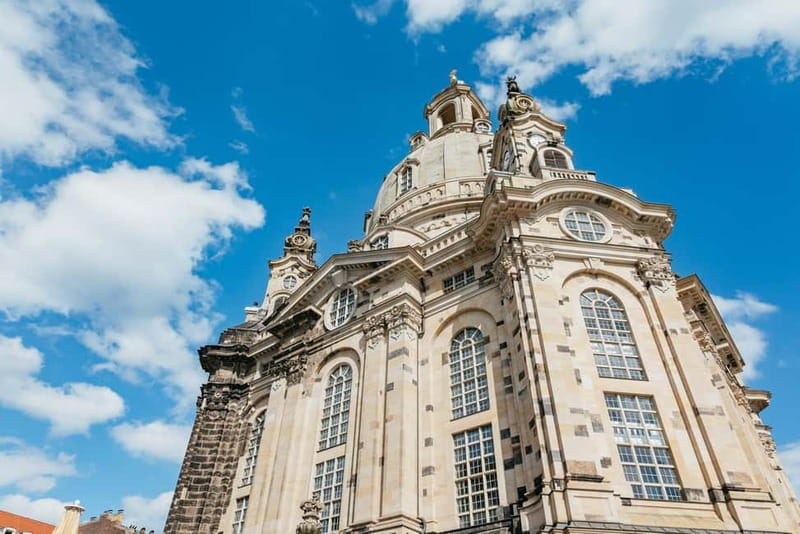
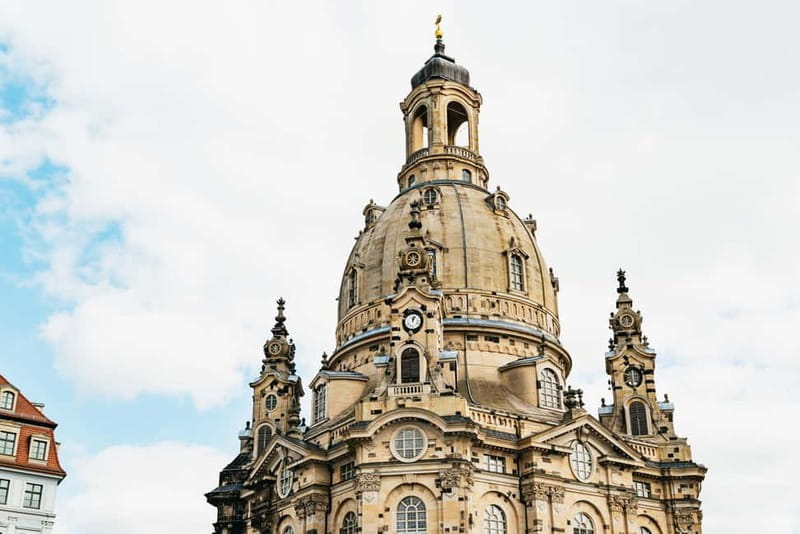
The Frauenkirche is one of the headline sights of the outing. Its history is closely tied to Dresden’s destruction and rebuilding, making it an important symbol of the city’s modern identity. The walk ends nearby, so you get a strong final landmark rather than finishing in an anonymous side street.
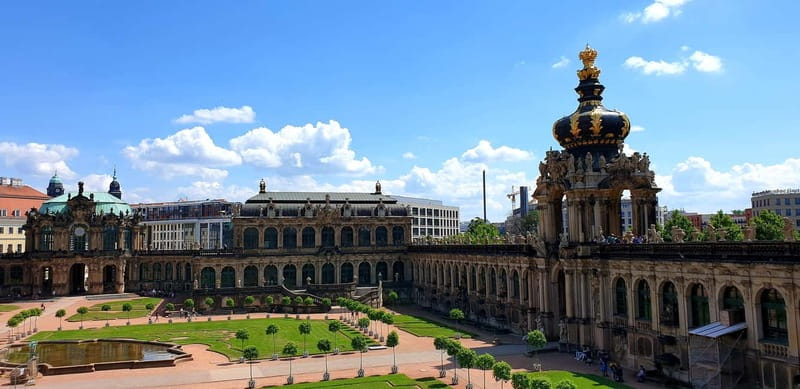
The route also includes views of the Semperoper and the Baroque Zwinger. These are among Dresden’s most important architectural attractions. You may not have time to explore their interiors during the walking portion, but seeing them from the route helps you decide where to return.
That is one of the package’s practical strengths. A first visit to Dresden can feel confusing because so many famous buildings are close together. This walk gives you a map in your head. Later, you can return to the opera house, Zwinger, cathedral, or Frauenkirche with a better sense of where each belongs.
Inside Dresden’s Chocolate Museum
The Chocolate Museum adds a surprising second chapter to the day. Dresden was once known as Germany’s capital of chocolate, and the museum explains how that reputation developed. The focus is not simply on finished sweets. You learn about cocoa beans, the main components of chocolate, production, and the qualities that make good chocolate.
The museum also covers Dresden’s many chocolate factories during the 19th century. That industrial story adds useful local context. Instead of treating chocolate as a generic German souvenir, the museum connects it to Dresden’s commercial past.
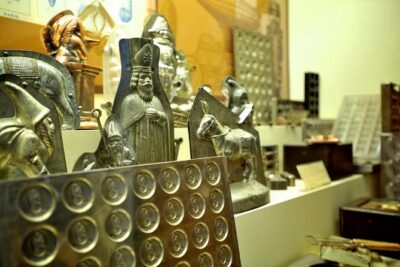
One of the most unusual features is the collection of chocolate molds by Anton Reiche. It is described as one of the world’s largest collections of chocolate molds. These objects show how chocolate was shaped and sold in earlier periods, and they give the museum something more distinctive than a standard food display.
The museum also explores the origins of milk chocolate, which is said to have been invented in Dresden. You will hear about the long path from cocoa bean to finished chocolate, then learn what early chocolate bars may have tasted like.
The visit ends with a tasting of German milk chocolate. It is a small treat, but it makes the subject more concrete. After hearing about ingredients and production, you get to judge the result yourself.
Remember that this portion is self-guided. You use your voucher to enter on the day of the walking tour, at any time during opening hours, without arranging a separate museum appointment. The museum is open daily from 11:00 AM to 6:00 PM, though you should check for special closing times before you go.
Timing the walk and museum properly
The flexible museum ticket is helpful, but only if you plan around the clock. For most walking tour times, you can visit the museum before or after the guided route. The 4:00 PM walking tour is the exception because the museum closes at 6:00 PM, so you should visit the museum first.
That schedule may suit an early afternoon arrival. You can start at the museum, follow it with the Old Town walk, and finish near the Frauenkirche. If you prefer a later museum visit, choose an earlier walking tour.
The whole guided activity lasts 1.5 hours, but your complete outing can take longer because the museum is independent. I would allow extra time if you want to read the displays carefully and enjoy the tasting rather than simply enter, glance around, and leave.
The walk itself is wheelchair accessible according to the activity details. The route is in the historic center, and the supplied information does not promise a particular group size or walking pace, so anyone needing very specific route details should confirm them before booking.
What the $18 price really buys
The value is strongest if you want a first look at Dresden rather than a specialist tour. For $18, you get a live German guide, a defined route through the Old Town, museum admission, and chocolate tasting. The low price also makes the tour a sensible choice for a short stay when you want structure without committing to a full-day program.
The historical coverage is broad. You hear about several major eras, the 1989 Peaceful Revolution, and German reunification, while also seeing the city’s most famous buildings. The guide’s lively delivery is repeatedly praised, with comments describing the tour as personal, witty, well prepared, and easy to enjoy.
The price is less attractive if you do not understand German or if you want extensive time inside each landmark. This is not a private tour, a museum-led chocolate workshop, or an in-depth architectural study. It is a brisk city walk followed by an independent museum visit.
The chocolate portion is also more valuable for curious visitors than for anyone expecting a large food event. You receive a tasting, but the main purpose is learning how Dresden became linked with chocolate and how the product developed.
Who should book this experience?
I would recommend it to first-time visitors who want to get their bearings quickly. It is also a good fit for anyone who enjoys history in short, lively explanations and wants to combine major sights with an unusual local museum.
Families and mixed-interest groups may find the pairing useful. One person can enjoy royal buildings and political history, while another gets a museum built around chocolate. The tasting gives the second half a simple payoff.
German speakers should get the most from the guided portion. The tour’s strongest qualities are the guide’s enthusiasm, humor, and personal presentation, so understanding the language is central to the experience.
I would choose another option if you need English commentary, want a slow architectural tour, or prefer a guide to accompany you through the museum. I would also avoid the 4:00 PM walking time unless you are happy to visit the Chocolate Museum first.
FAQ
What is included in the Dresden walking tour and museum experience?
The package includes a guided walking tour, admission to the Dresden Chocolate Museum, and a chocolate tasting.
How long is the guided walking tour?
The walking tour lasts 1.5 hours. The Chocolate Museum visit is separate and self-guided, so you decide how long to stay.
What language is the live tour guide?
The live guide speaks German. The provided activity details do not list another live tour language.
Where is the meeting point?
Meet in the basement of the QF Passage, in the seating area of Dresden Information.
When can I visit the Chocolate Museum?
You can use your voucher at any time on the day of your walking tour, without prior notice. The museum is open daily from 11:00 AM to 6:00 PM, subject to special closing times.
What happens if I book the 4:00 PM walking tour?
You should visit the Chocolate Museum before the walking tour because the museum closes at 6:00 PM.
Should you book it?
Book this experience if you want an affordable, well-organized introduction to Dresden’s Old Town and you understand German. The guide-led route covers an impressive number of landmarks in 90 minutes, and the chocolate museum adds a different side of the city without requiring another reservation.
Skip it if you need English commentary, want a private pace, or expect a guide to lead you through the museum. For German-speaking visitors who enjoy concise history, strong city views, and a little chocolate at the end, $18 is a fair price for a useful first look at Dresden.
Just added around the world
- Lindt Chocolate Museum with Cruise Transfer from Zurich★ 4.6 · 7 reviews
- Zagreb: Lake Bled and Ljubljana Day Tour with Chocolate Gift★ 5.0 · 26 reviews
- Zurich: Chocolate Tasting and Walking Tour with a Local★ 4.2 · 13 reviews
- Zurich Open-top Tour and Chocolate and Cheese Countryside★ 3.5 · 11 reviews
- Wine and Chocolate experience★ 4.6 · 3 reviews
- York: Introduction to Chocolate Making Experience★ 4.9 · 10 reviews
- Zaandijk-Near Zaanse Schans Chocolate making demo & tasting★ 4.8 · 13 reviews
- Private Wine and Chocolate Tasting Experience★ 4.4 · 3 reviews
Museums, compared.
Choco-Story Brussels: Chocolate Museum Entrance with Tasting
Read our review →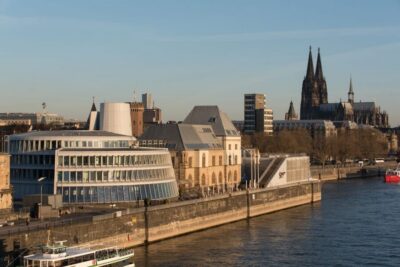

Chocolate Workshop in Chocolate Museum w/ Tasting
Read our review →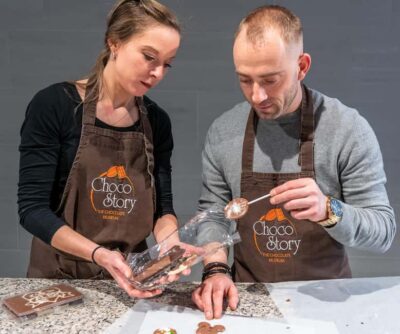
Choco-Story Chocolate Museum Guided Tour w/Tastings
Read our review →
Browse the lists this tour appears in