
Review · FRANCE
Divine Pairings: Wines & Chocolate Spheres in Saint-Émilion
Chocolate can make a serious wine visit more fun. At Château Palais Cardinal, you taste three estate wines with matching chocolate spheres, hear how the family estate makes its wine, and choose between a panoramic tower and a candlelit old cellar. I especially like the wine-filled chocolate pairings and the chance to see both modern vats and traditional barrels. The main point to check is timing: the activity is advertised as 30 minutes, but the described tour and tasting each take about 30 minutes.
This is a good-value stop in Saint-Émilion Grand Cru for anyone who wants more than a quick sip at a shop counter. The explanations sound like the strongest part, with Nathalie praising the wine quality and explanations, Aëlla highlighting the pleasant, professional staff, and Jasmin singling out guide Max and the chocolate spheres. At $14 per person, it is an easy add-on, though serious wine students may want a longer estate visit.
Key points at a glance
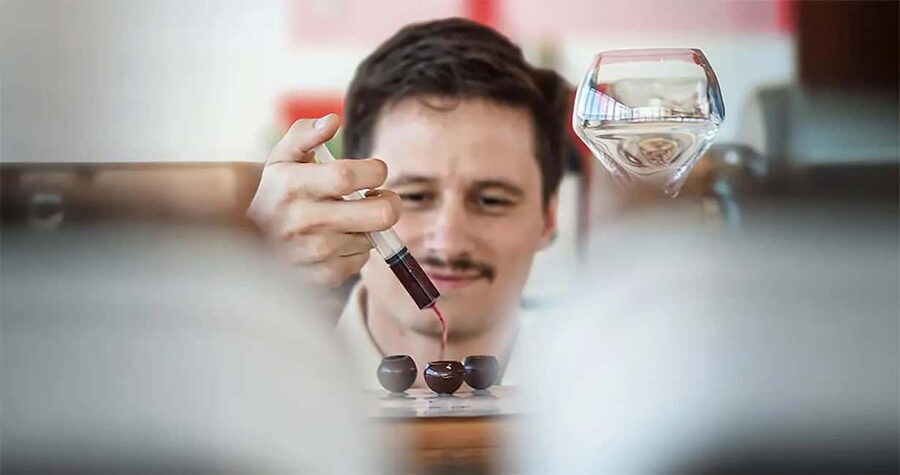
- Three estate wines with three chocolate spheres: Each artisanal chocolate sphere is topped or filled with one of the wines being tasted, giving you a playful way to compare flavors.
- Two very different tasting rooms: You may taste in a tower with a 360-degree vineyard view or in an old cellar with a wooden table, candles, and amphorae.
- A behind-the-scenes wine route: The guided portion moves from the vines to stainless steel vats, a barrel cellar, and a concrete vat.
- A family estate with broad holdings: Château Palais Cardinal farms 26 hectares in Saint-Émilion Grand Cru and another 4 hectares in Bordeaux.
- A small-group format: The experience is offered as a private group, with guidance in French, English, or Arabic.
- A lighthearted sensory challenge: The best noses can receive a free bottle during the sensory workshop, adding a bit of friendly competition.
Why this Saint-Émilion tasting is different
Saint-Émilion is full of wine stops, so the basic question is simple: why choose this one? The answer is the pairing. A standard château visit usually asks you to focus on color, aroma, structure, and finish. Here, chocolate gives you another way to notice what the wine is doing.
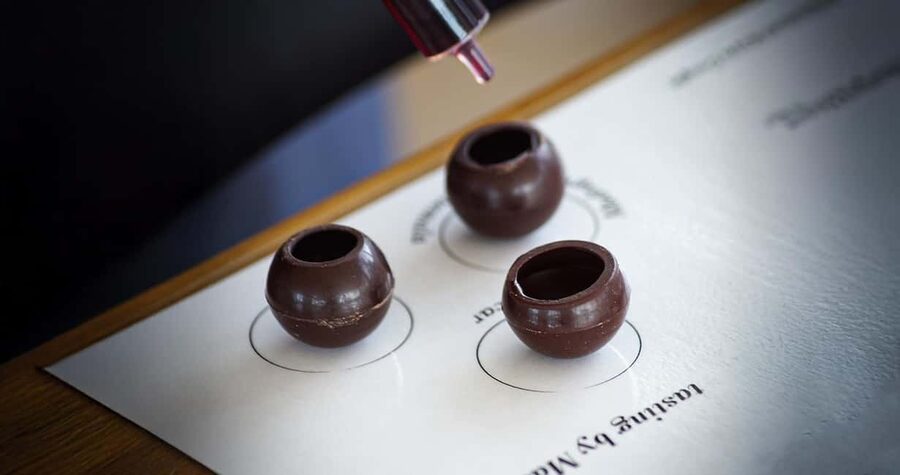
The three spheres are artisanal creations made with a local master chocolatier. They are designed around the three wines you taste, rather than served as a random dessert at the end. That matters. You can compare the wine on its own, then taste it with chocolate and notice how sweetness, texture, and cocoa change the experience.
I would not book this expecting a formal food course. It is a compact wine visit with a clever sweet accent. The appeal is its sense of surprise, especially if someone in your group likes chocolate more than technical wine talk.
The setting also gives the tasting some variety. The panoramic tower offers a wide view over the vineyards. The old cellar room gives you a warmer atmosphere, with candles, amphorae, and a large wooden table. You may not control which location is used, so treat the two rooms as a feature of the estate rather than a guaranteed choice.
More Wine and Chocolate Tours in France
- Passy-Grigny: Chocolate and Champagne Tasting Tour
★ 4.8 · 284 reviews - Libourne: Winery Tour with Wine and Chocolate Tasting
★ 4.9 · 74 reviews - tasting workshop of 6 to 8 wines with charcuterie chocolate cheese
★ 5.0 · 48 reviews
Starting among the vines
The visit begins at Château Palais Cardinal, in the southern part of the Saint-Émilion appellation. The estate works 26 hectares of Saint-Émilion Grand Cru vines, along with 4 hectares in Bordeaux. That scale gives the introduction some useful context: you are not simply tasting a label, you are hearing how a working family property handles a sizable vineyard operation.
The guide starts with the vines and explains the estate’s approach to tillage, grape varieties, and biodiversity. This is a good opening because it connects the wine in your glass to decisions made outdoors. Tillage affects how the soil is worked. Biodiversity points to the broader life around the vines. Grape varieties help explain why the finished wine has its particular character.
I like this part because it keeps the visit grounded. You are not asked to memorize a list of tasting terms before you know where the wine comes from. Instead, you get a short picture of how the family tries to produce wines described as elegant, sincere, and full of character.
The vineyard section is also where the visit may feel most practical for first-time wine visitors. If you know little about Saint-Émilion, you can ask basic questions without feeling out of place. If you already understand wine, the discussion of vineyard work and biodiversity gives you a better frame for the tasting that follows.
From stainless steel to oak and concrete
After the vines, the route moves through several cellar spaces. You see a modern stainless steel vat, a traditional barrel cellar, and a concrete vat. Each vessel reflects a different technical choice in the winemaking process.
Stainless steel suggests precise, modern handling. Barrels bring a traditional method and can affect the wine’s aroma and texture. Concrete offers another kind of vessel, with its own role in fermentation or aging. The guide explains how these choices help shape the style of the wines rather than presenting the equipment as decoration.
This is one of the most useful parts of the experience for you if wine cellars all look alike. A row of tanks can be hard to interpret on your own. Here, the guide connects the equipment to the wine, so the later tasting has a clearer purpose.
Keep your expectations in check. This is not advertised as a full technical winery course, and the experience is short. You will get an overview, not a detailed study of every stage from harvest to bottling. Still, the combination of stainless steel, barrels, and concrete makes the visit more concrete in the best sense. You can see the choices before you taste their result.
The wording about the estate tour also deserves attention. The included experience clearly has a guided visit through the vines and cellar areas, but a broader estate tour is listed as available through other packages. I would understand this offering as a focused introduction, not the château’s longest or most complete tour.
Three wines, three chocolate spheres
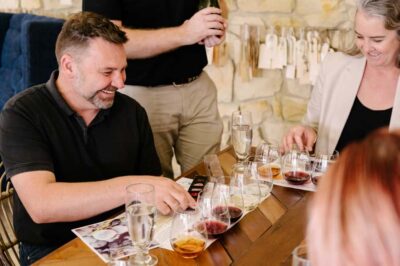
The tasting is the heart of the visit. You are offered three iconic vintages from the estate, presented by a team member. The staff explains the wines as you taste, so you are not left to guess why each glass is being served.
Alongside the wine come three artisanal chocolate spheres. The spheres are made with the wines you are tasting, through a collaboration with a local master chocolatier. This is more interesting than placing a square of chocolate beside a glass and calling it a pairing.
The format gives you a simple tasting exercise. First, notice the wine by itself. Then try the chocolate and wine together. The chocolate may soften certain edges, emphasize fruit, or make the wine seem rounder. You do not need advanced tasting skills to enjoy this comparison. The format works for curious beginners and for wine fans who enjoy unusual combinations.
The chocolate is also the most distinctive part of the experience. A conventional château tasting can blur together after several stops in Saint-Émilion. The wine-filled spheres give you a detail to remember, and they make the visit easier to enjoy as a shared activity with friends or family.
Jasmin, visiting from Germany, specifically praised the chocolate spheres and described the hospitality as memorable. That matches the structure of the tasting: it is designed to feel generous and social, not stiff or overly academic.
The three wines are called iconic vintages from the estate, but no individual labels or vintages are specified. If you want to compare particular years or learn about a specific bottle before buying, ask the team during the tasting. The shop allows purchases, so you can take home a bottle if one of the three suits your taste.
More Chocolate Pairings in France:
- Finca 18 Puerto Vallarta Tequila Tour + Chocolate Pairing
★ 5.0 · 393 reviews - Maltese Wine & Chocolate Pairing
★ 5.0 · 112 reviews - Malta: Wine and Chocolate Pairing Experience
★ 4.9 · 52 reviews - Bruges: Belgian Beer Tour with Chocolate Pairing
★ 4.4 · 32 reviews
Picking your tasting room
The setting can change the mood of the final half of the visit. In the panoramic tower, you get a 360-degree view of the vineyards while you taste. That is the natural choice if you want the broadest sense of place and a strong photo opportunity.
The old cellar room offers a different experience. It has a large wooden table, candles, and amphorae, creating a more intimate and atmospheric setting. It sounds well suited to a couple or a small private group that wants a quiet, cozy tasting.
I would not rank one room above the other. The tower is about views and daylight. The old cellar is about mood and texture. If the location is assigned on the day, the smart approach is to enjoy the room you receive rather than build your plans around a specific one.
The private-group format should make the visit feel more personal than a large public tasting. It also means the guide can likely keep the explanation closer to your pace, although the available information does not promise a custom tasting or a private room choice.
The sensory workshop and free bottle
One extra touch is a sensory workshop focused on the nose. The best noses can win a free bottle. That gives the visit a little game without turning it into a contest for wine experts only.
Smell is central to wine tasting, but many people find it difficult to describe aromas. A short sensory challenge can help you pay closer attention. You might identify fruit, spice, wood, or another aroma, but the available details do not specify the exact test or the scoring method.
Think of the bottle as a bonus, not part of the financial value you are guaranteed to receive. The guaranteed inclusions are the three wines, chocolate pairings, and wine presentation. If you win, you get a pleasant extra. If you do not, the tasting still works on its own.
Is $14 a good value?
At $14 per person, this is a strong price for a Saint-Émilion stop that includes three wines, three chocolate pairings, a guided vineyard and cellar introduction, and access to a distinctive tasting setting. The combination gives you more than a basic pour, while keeping the cost low enough to fit into a day of château visits.
The value depends partly on what you want from the visit. If you are looking for a long, detailed château tour, $14 does not buy that here. The estate’s full tour is associated with other packages, and the stated activity length is only 30 minutes.
There is also a timing issue. The activity information says 30 minutes, while the detailed plan describes 30 minutes of guided touring followed by 30 minutes of tasting. I would allow roughly an hour if your schedule allows, and confirm the starting time and expected duration before booking. That small check can prevent a rushed connection to another appointment.
For a couple of glasses of wine and a sweet pairing in a vineyard setting, the price is appealing. It is especially good for a first Saint-Émilion visit, when you want a clear introduction without committing to a costly meal or a long specialist program.
Who will enjoy this most
I would recommend this experience to you if you like wine but do not want a lecture-heavy visit. The guide-led cellar route gives you useful context, while the chocolate makes the tasting easy to approach.
It also suits couples, private groups, and mixed-interest parties. One person can focus on the winemaking, another can enjoy the chocolate, and everyone has a vineyard setting to share. The private-group format is helpful if your party includes people who prefer to ask questions at their own pace.
English, French, and Arabic guidance makes the visit accessible to a wider range of visitors. Wheelchair access is also listed, which is important if you need an accessible activity. Since the site includes vineyards and cellar areas, I would still confirm any specific mobility needs in advance.
The visit may be less satisfying for you if you want a full meal, a long cellar tour, or detailed information about individual vintages. It is a compact introduction with a creative pairing, not a full-day wine course.
The available feedback is consistently positive, though the sample is small. Nathalie praised the explanations and wine quality. Aëlla emphasized the educational value and the friendly, professional staff. Jasmin highlighted Max’s guidance, the chocolate spheres, and the hospitality. Those details point to the human side of the experience, which is often what makes a short tasting worthwhile.
Practical details before you book
The starting point is Château Palais Cardinal in Saint-Émilion. The visit is led by a live guide, with French, English, or Arabic available. It is offered for a private group, and the shop is available if you want to purchase wine after tasting.
You can cancel up to 24 hours ahead for a full refund, and you can reserve now while paying later. Those terms are useful if your Saint-Émilion day depends on weather, transport, or a changing château schedule.
Some content may be shown in its original language, so ask the team if you need a full explanation in your preferred language. Also confirm the start time, especially because the stated 30-minute duration does not fully match the two-part schedule described for the experience.
Should you book Château Palais Cardinal?
I would book this if you want an affordable, memorable wine stop with a clear guide-led introduction and an unusual food pairing. The three wines and three chocolate spheres are the reason to choose it over a plain tasting, while the tower or old cellar gives the final part a sense of place.
I would skip it only if your priority is a long estate tour, a full meal, or detailed vintage-by-vintage study. For most visitors building a day around Saint-Émilion wine, $14 is a sensible price for an hour or so of explanation, tasting, and chocolate, provided you confirm the timing before you go.
FAQ
How long does the Château Palais Cardinal experience last?
The activity is listed as lasting 30 minutes. Its detailed schedule describes a 30-minute guided tour followed by a 30-minute guided tasting, so confirm the expected duration when choosing your start time.
How many wines will I taste?
You will taste three wines from Château Palais Cardinal.
What food is included with the wine?
The tasting includes three artisanal chocolate spheres paired with the wines. The spheres are made through a collaboration with a local master chocolatier.
Where does the tasting take place?
The tasting may take place in a panoramic tower with a 360-degree vineyard view or in an old cellar room with a wooden table, candles, and amphorae.
What languages are available?
The live guide is available in French, English, and Arabic.
Is the experience wheelchair accessible?
Yes. The activity is listed as wheelchair accessible.
Just added around France
- Wine and Chocolate experience★ 4.6 · 3 reviews
- Private Wine and Chocolate Tasting Experience★ 4.4 · 3 reviews
- Wine and chocolat tasting at Chablis.★ 4.9 · 5 reviews
- Trio Chocolaté – Tour en français – Champagne Passy-Grigny★ 5.0 · 5 reviews
- Private Wine and Chocolate Tasting in Paris★ 4.5 · 4 reviews
- Paris Sweet & Chocolate Family Treasure Hunt★ 5.0 · 37 reviews
- Molded Bonbons Chocolate making class in Paris (collective)★ 4.5 · 20 reviews
- Paris Saint-Germain Private Tasting Tour with Chocolate plus Pastries & Macaron★ 5.0 · 10 reviews
Chocolate Pairing Experiences, compared.

St. Augustine Distillery: A Bourbon & Chocolate Pairing
Read our review →
Nashville: Whiskey or Wine and Chocolate Pairing Experience
Read our review →
Discover Brussels beer world with a chocolate pairing by a young local
Read our review →
Browse the lists this tour appears in