
Review · BELGIUM
Discover authentic Ghent with historian & taste the best chocolate
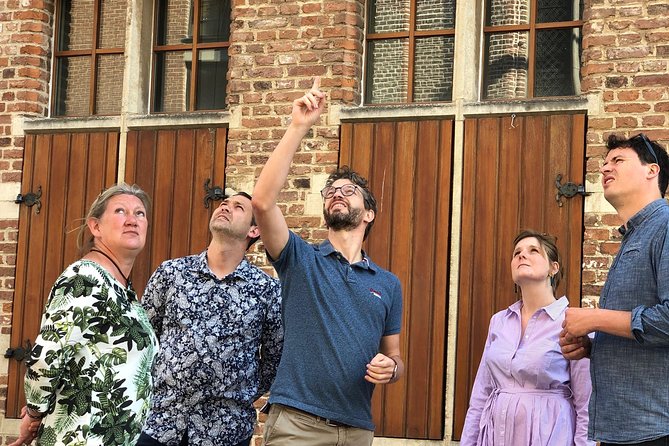
Ghent reveals itself one story at a time. This two-hour walk links the city’s main sights with the economic, political, religious, and cultural forces that shaped them, guided by Wim, a local historian and teacher who clearly enjoys bringing his hometown to life. I like the way the route connects famous places instead of treating them as isolated photo stops. I also like the small chocolate break, which adds a tasty local touch without turning the tour into a candy-shopping trip.
The main consideration is that chocolate plays a supporting role, not the leading one. If you want two hours of tastings, this is not the right choice. At $42.05 per person, the price makes the most sense if you want a compact introduction to old Ghent, personal stories, and a small-group walk rather than a dedicated food tour.
Key points at a glance
- Wim’s local storytelling: A historian and teacher leads the walk, with stories about Ghent’s rulers, rebels, buildings, and strange legends.
- A full old-city route: In about two hours, you pass Sint-Baafsplein, St. Bavo’s Cathedral, the Town Hall, Korenmarkt, Gravensteen, and the Graslei and Korenlei.
- Chocolate with limits: The chocolate stop is a pleasant refresher, but the tour is mainly about the city’s past.
- Small group size: The experience accepts no more than 15 people, which should make questions and conversation easier.
- A useful first look at Ghent: The route ends at St. Michael’s Bridge, close to the city’s most photogenic waterfront views.
- Clear cancellation terms: You can cancel for a full refund up to 24 hours before the start time.
Why this two-hour walk works for first-time visitors
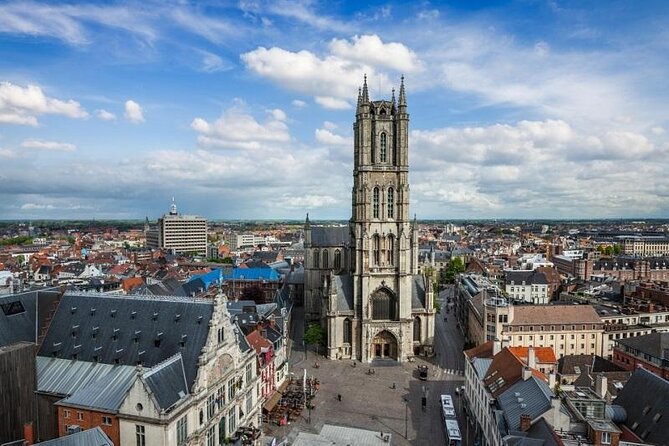
Ghent can feel confusing at first. Its medieval center has towers, canals, churches, guild houses, castles, and grand civic buildings packed into a walkable area. Without context, it is easy to admire the façades and miss the conflicts, trade, religion, and politics behind them.
This tour gives you a framework. At the opening square, Wim explains how four forces shaped Ghent: money, government, faith, and culture. That is a useful start because the rest of the walk keeps returning to those themes.
The group meets in front of the white statue in the middle of Sint-Baafsplein. Pay close attention to that wording. A past booking problem arose when a participant and the guide failed to find one another, with each side giving a different account of what happened. The practical lesson is simple: arrive at the exact statue, keep your phone available, and check any messages from the operator before the walk begins.
The tour is offered in English and comes with a mobile ticket. It is booked, on average, 24 days ahead, so I would not leave it until the last moment if your dates in Ghent are fixed.
A few more chocolate tours around Ghent worth a look
- Ghent: Belgian Chocolate Walking Tour with Tastings
★ 4.9 · 259 reviews - Brussels: Bruges & Ghent Tour w/ Cruise & Chocolate Tasting
★ 4.2 · 144 reviews - Ghent: Famous Belgian Chocolate Walking Tour with Tastings
★ 5.0 · 131 reviews
Sint-Baafsplein starts with the whole story
The first 20 minutes take place on Sint-Baafsplein, one of the best possible classrooms in Ghent. The square lets Wim introduce the city before narrowing in on individual monuments.
You learn how the square reflects Ghent’s economic, political, cultural, and religious development. That broad approach matters. Instead of memorizing dates, you begin to see why such a small area could hold so much power.
This is also where you can judge the guide’s style. Wim has been described as warm, professional, and very comfortable telling stories about the city he has called home for many years. His background as a historian and teacher helps explain why the walk puts events and buildings into context rather than simply pointing out details.
The opening section may feel less visual than the later stops, especially if you want to start taking photographs right away. Give it time. The information here makes the later churches, towers, and guild buildings easier to understand.
St. Bavo’s Cathedral and the Van Eyck connection
The next stop is St. Bavo’s Cathedral, where you spend about 10 minutes walking around the building and discussing its construction and art. The visit is exterior rather than a full indoor cathedral tour, and admission is not included because no ticket is required for this stop.
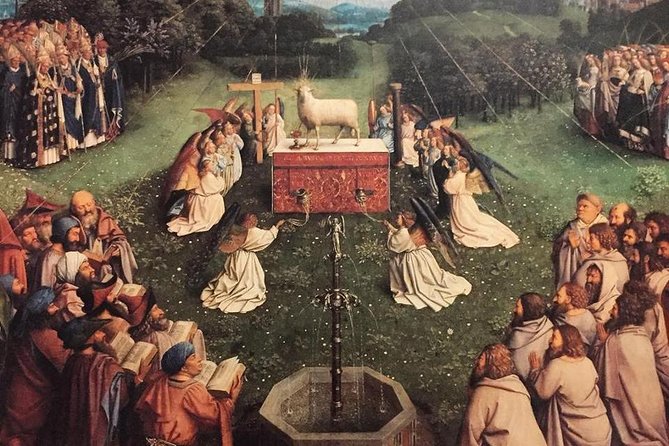
The cathedral matters for more than its size. Its building history reflects the long process of creating and changing major religious buildings. Wim also introduces its important art treasure, giving you a sense of why the cathedral is one of Ghent’s central cultural landmarks.
At nearby Maaseikplein, the focus shifts to the Van Eyck brothers. The short stop asks you to look at their image and consider whether it resembles them. That sounds playful, but it fits the tone of the walk: historical figures become people rather than names in a textbook.
Do not expect a long art lecture here. The Van Eyck stop lasts about five minutes. It works best as a quick bridge between architecture, portraiture, and Ghent’s place in European art.
Castles, villains, and the Scheldt
At Geeraard de Duivelsteen, also known as the Castle of Gerald the Devil, the story becomes darker and more theatrical. Along the Scheldt, Wim brings in both the Vikings and Geeraard De Duivel, whose name gives the building its memorable English nickname.
The five-minute stop is brief, but it adds a touch of legend to a route otherwise filled with civic and religious history. Ghent is not presented as a polished collection of pretty buildings. It is a city of threats, power struggles, and people who wanted to control the river and the town.
At Hoogpoort, the focus returns to architecture. You look at buildings dating from the 13th century and consider what their age means. The point is not simply that they are old. Their survival helps you picture the scale and wealth of medieval Ghent.
These quick stops can feel rushed if you want detailed architectural analysis at each one. The benefit is coverage. You see many important places without spending the entire morning in one square.
Same place, a different sort of tasting:
- A Taste of Ghent: Beer & Chocolate with storytelling by a local
★ 5.0 · 77 reviews - Ghent: Guided City Tour with Chocolate Tastings
★ 4.8 · 36 reviews - Charlie’s Private Chocolate Tour (Ghent)
★ 5.0 · 34 reviews - Chocolate history workshop Ghent
★ 5.0 · 34 reviews
The Town Hall and the story of the noose bearers
Ghent Town Hall offers one of the strongest political stories on the route. The building took centuries to construct, and the explanation turns toward Emperor Charles V and the revolt of the people of Ghent against him.
That conflict helps explain the city’s nickname, noose bearers. The nickname is tied to the punishment and humiliation imposed on rebellious citizens. It is an excellent example of how a short piece of local history can change the way you see a city.
The Town Hall stop lasts about 10 minutes, longer than most of the route’s smaller pauses. That gives Wim room to explain the connection between architecture, authority, and civic defiance.
You also stop at Stadshal, the modern city hall. It is described as Ghent’s most contested building, and part of the fun is learning its nickname. This creates a useful contrast: the old Town Hall shows centuries of political change, while Stadshal demonstrates that arguments over public architecture did not end in the Middle Ages.
Korenmarkt and the old meat market
At Korenmarkt, the route turns toward the city’s commercial past. The houses here reach back roughly 800 years, and some carry mysterious inscriptions. Look up as you walk. In Ghent, details on a façade may tell you more than a grand monument does.
Korenmarkt is also a good place to understand the value of a guide. A quick photo stop gives you a beautiful square. A story about an inscription, a building’s original purpose, or the people who used it gives the square meaning.
The next stop, Het Groot Vleeshuis, explains how medieval butchers protected meat quality before refrigeration. The answer was cooperation: butchers worked together in one building.
This is a practical piece of urban history. Food safety, trade rules, and professional organization shaped the city just as much as kings and cathedrals did. I like this stop because it takes the story away from rulers and puts it in the daily business of ordinary workers.
Gravensteen brings the power struggle into view
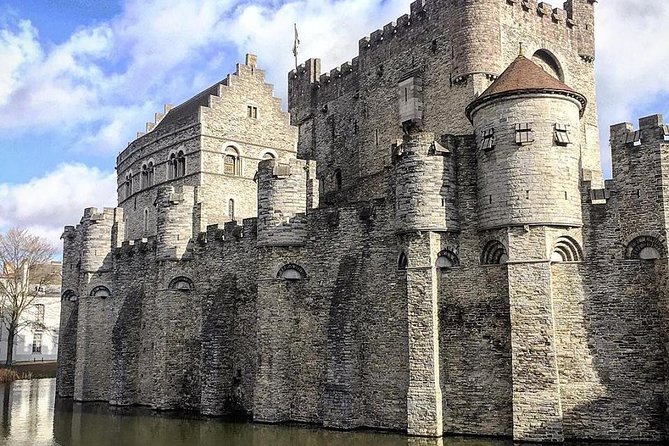
Gravensteen, the Castle of the Counts, gives the tour its most obvious medieval fortress. The count of Flanders built it to show strength to the people of Ghent. That purpose is important. The castle was not only a defensive structure. It was also a message.
The five-minute stop is an outside introduction rather than a full castle visit. If you want to explore the interior, its rooms, and its displays, you would need separate time and likely a separate admission. For a short city walk, the exterior explanation gives you the political reason for its presence.
The route does not treat Gravensteen as a fairy-tale prop. It places the castle inside the uneasy relationship between the count and the city. That makes the fortress more interesting than a simple photograph beside a stone wall.
St. Veerleplein and the final waterfront walk
At St. Veerleplein, you search for Neptune, seahorses, and unusual dolphins. This is another short detail-based stop, the sort of moment that rewards a slow glance at sculptures and façades.
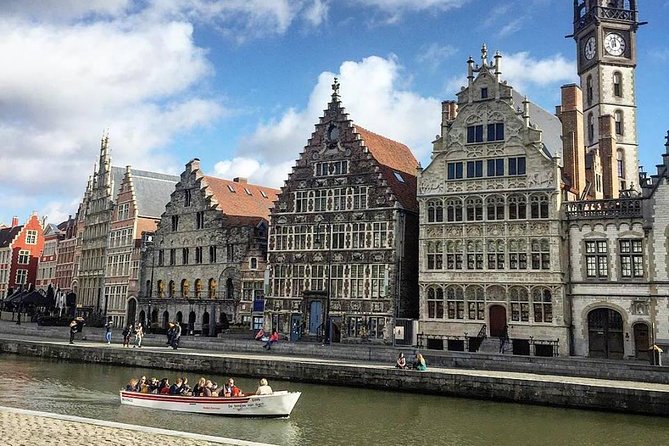
The walk then reaches Graslei and Korenlei, the waterfront stretch many people consider the highlight of old Ghent. This is where the route’s different themes come together. The harbor was a workplace for skippers for centuries, but it was also a place to find food, drink, and entertainment.
The view is especially effective at the end of a history walk. You have already heard about trade, buildings, civic power, and daily work. Now you can look across the water and picture the harbor as a working part of the city rather than just a scenic postcard.
The tour finishes at St. Michael’s Bridge. That is a practical ending because it gives you a strong orientation point and easy access to the waterfront area. It also leaves you well placed for your own photographs and further wandering.
How much chocolate do you actually get?
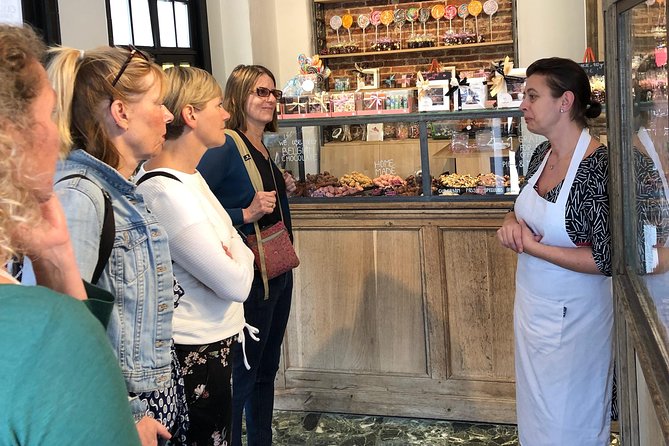
The chocolate element is a small tasting break with a chocolatier. It gives you a chance to sample good local chocolate and pause during the walk, but it is not a full tasting menu.
One person enjoyed the chocolates but wanted more. Another suggested that the chocolatier stop could last longer. Those comments are useful because they set the right expectation: treat the chocolate as a bonus, not the reason to book.
I think the balance works for people who want culture first. A little chocolate makes the walk more relaxed, and the stop adds a taste of Belgian food culture without taking over the itinerary. If you are choosing between this and a dedicated chocolate tour, choose this only if the city history matters more to you.
Group size, pace, and physical demands
The maximum group size is 15 people. That is small enough for a guide to answer questions and keep the group together, though the experience can still feel different depending on the final number.
The walking route covers 12 stops in about two hours. Many stops last only five minutes, while Sint-Baafsplein receives 20 minutes and St. Bavo’s Cathedral and the Town Hall receive about 10 minutes each. Expect a steady city walk with frequent pauses, not a slow visit inside every monument.
Most people can participate, and service animals are allowed. The tour is near public transportation. The supplied details do not specify the exact amount of seating, the surface conditions, or the distance in kilometers, so you should be prepared for ordinary old-city walking and standing.
English is the only stated language. If you need another language, this experience may not suit you.
Is $42.05 good value?
At $42.05, I would judge the price against the guide’s role rather than the number of sights. You are paying for a two-hour explanation of Ghent, a compact route through major landmarks, a small chocolate experience, and the chance to ask questions in a group capped at 15.
That is fair value if you are new to Ghent and want a useful orientation early in your visit. It can help you decide which places deserve a longer return visit, such as St. Bavo’s Cathedral or Gravensteen.
The value is weaker if you already know the old center well or mainly want food. The chocolate portion is limited, and most of the stops are exterior introductions. You are buying context and storytelling, not entry tickets or an extended tasting.
The overall rating is 4.8 out of 5, with 97 percent of participants recommending the experience. The strongest praise focuses on Wim’s enthusiasm, preparation, easy manner, and ability to make the city’s past enjoyable. That matches the tour’s design: the guide is the main attraction.
Who should book it?
Book this walk if you want to understand why Ghent looks the way it does. It suits first-time visitors, history fans, architecture lovers, and anyone who prefers a local guide’s explanation to a self-guided checklist.
It is also a good choice if your time is short. Two hours gives you a broad look at the old center without consuming an entire day. The route includes the city’s major visual anchors, from the cathedral and Town Hall to Gravensteen and the Graslei.
Skip it if your priority is a long chocolate tasting, indoor access to every monument, or a very slow photography walk. You should also arrive early at the white statue on Sint-Baafsplein, since meeting-point confusion can ruin a short tour.
The free cancellation policy allows a full refund when you cancel at least 24 hours before the start time. Changes or cancellations inside that window are not accepted, and the experience requires a minimum number of participants. If the operator cancels for that reason, you are offered another date or experience, or a full refund.
FAQ
How long does the Ghent tour last?
The experience lasts about two hours.
Where does the tour begin?
It begins at Sint-Baafsplein in Ghent, in front of the white statue in the middle of the square.
Where does the tour end?
The walk ends at St. Michael’s Bridge on Sint-Michielshelling.
Is the tour offered in English?
Yes. English is the stated language for the experience.
How many people can join the group?
The tour has a maximum of 15 participants.
Can I cancel for a full refund?
Yes. You can cancel at least 24 hours before the start time for a full refund. Cancellations or changes made less than 24 hours before the start time are not accepted.
Just added around Ghent
- Charlie’s Private Chocolate Tour (Ghent)★ 5.0 · 34 reviews
- Ghent Chocolate Tasting and Sightseeing Tour★ 5.0 · 21 reviews
- Private Chocolate Experience in Ghent★ 5.0 · 31 reviews
- Chocolate and Jenever (Belgian Gin)Tasting in Ghent★ 5.0 · 2 reviews
- Chocolate history workshop Ghent★ 5.0 · 34 reviews
- Private Chocolate Tasting Experience in Ghent★ 4.6 · 7 reviews
- Ghent: Belgian Chocolate Making Workshop with Beer Tasting★ 4.3 · 15 reviews
- Ghent: Guided City Tour with Chocolate Tastings★ 4.8 · 36 reviews
Chocolate Tours, compared.
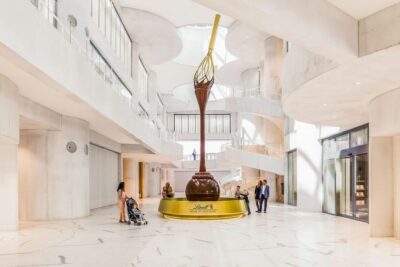

Choco-Story Brussels: Chocolate Museum Entrance with Tasting
Read our review →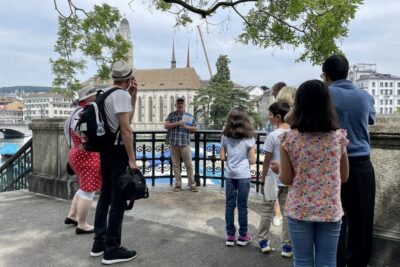
City Tour, Cruise, and Lindt Home of Chocolate Visit
Read our review →
The Chocolatarium Chocolate Tour Experience in Edinburgh
Read our review →
Award-Winning Geneva Chocolate &Old Town Tour with Boat Ride (3h)
Read our review →
Yarra Valley Wine, Gin, Whisky and Chocolate Tour
Read our review →
4×4 Dominican Adventure with Chocolate and Coffee Tasting
Read our review →
Browse the lists this tour appears in