
Review · PERU
Chocolate Workshop in Cusco with Premium Organic Cacao
Chocolate tastes better with a view. This two-and-a-half-hour class gives you a relaxed evening activity in central Cusco, with hands-on instruction, local cacao, and plenty of sweets to carry home. You make Belgian-style pralines and mendiants using 100% organic Chuncho cacao from the Sacred Valley.
I like the personal instruction, especially since guides such as David, Abelardo, Randy, and Titch are repeatedly praised for their humor, patience, and clear teaching. I also like the sunset setting above Cusco, which turns a simple cooking class into a pleasant way to spend the early evening. The main consideration is that this is a chocolate-making class using prepared chocolate, not a full lesson in roasting and grinding cacao beans.
Key points before you book
- You make a generous amount: Prepare around 21 pralines and 10 mendiants, then pack them in a personalized box.
- The cacao is local and organic: The workshop uses Chuncho cacao from the Sacred Valley, an area known for fine cacao production.
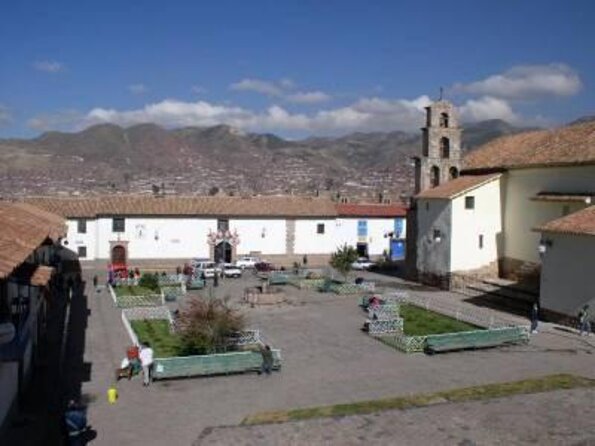
- The 5:00 pm timing works well: You may catch the Cusco skyline around sunset while making chocolate.
- The class is genuinely hands-on: You choose fillings, prepare ganache, and make your own hot chocolate.
- The group stays fairly small: A maximum of 15 people allows for direct help from the instructor.
- It suits older children: Adults and children aged 12 and above can join.
Why this chocolate class fits a Cusco evening
Cusco has no shortage of major sights, ruins, and long day trips. After a few busy days, I like the idea of an activity that asks less of your legs and still gives you a taste of local culture.
The class takes place at C. Pasñapakana 133, in the heart of Cusco. It begins at 5:00 pm and finishes back at the same meeting point after about two and a half hours. That timing makes it useful on a day when you have returned from sightseeing but still want an evening plan.
The setting is part of the appeal. Several people describe the view over Cusco as one of the best parts, particularly as daylight fades. One person even treated the workshop as a sunset viewing activity with chocolate attached. That is a fair description. You are not simply standing at a workbench in a closed room. You can look out over the city while your chocolate sets.
The experience has earned a 4.9 rating from 75 reviews, with 99 percent recommending it. Those numbers do not guarantee a perfect class every time, but they match the consistent themes: friendly instructors, good chocolate, a pleasant venue, and a relaxed mood.
More Chocolate Making Workshops in the world:
- Vienna: Chocolate Workshop in Chocolate Museum w/ Tasting
★ 4.5 · 1,802 reviews - Brussels: Belgian Chocolate Making Workshop with Tastings
★ 4.7 · 1,629 reviews - Brussels: 2.5-Hour Belgian Chocolate Making Workshop
★ 4.8 · 933 reviews
Chuncho cacao from the Sacred Valley
The ingredient story gives this class more purpose than a standard candy-making session. You work with Chuncho cacao, an organic cacao from the Sacred Valley of the Incas in the Cusco region.
The workshop presents chocolate in both a local and Belgian context. The cacao comes from Peru, while the praline and mendiant techniques follow Belgian style. That pairing gives you a useful sense of how a regional ingredient can be shaped by a European confectionery tradition.
Before the practical work begins, you learn about the history and culture of chocolate. The information provided does not promise a visit to a cacao farm or a detailed agricultural lesson, so you should not book this expecting a bean-to-bar factory tour.
That distinction matters. One participant specifically noted that the class involved melting chocolate and making truffles and other treats, rather than processing raw cacao beans. I see this as a small but important point. The workshop is about making finished chocolates, not learning every stage from cacao pod to finished bar.
What happens during the 5:00 pm workshop
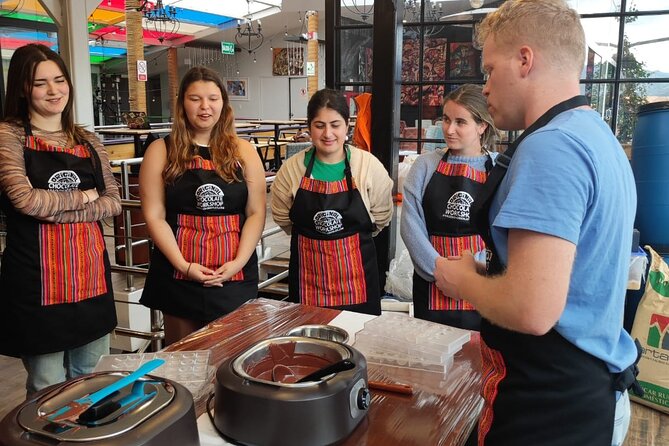
The class starts with an introduction to chocolate and the local cacao used in the recipes. Your instructor then guides you through the main steps. The emphasis is on doing the work yourself, rather than watching a demonstration from a distance.
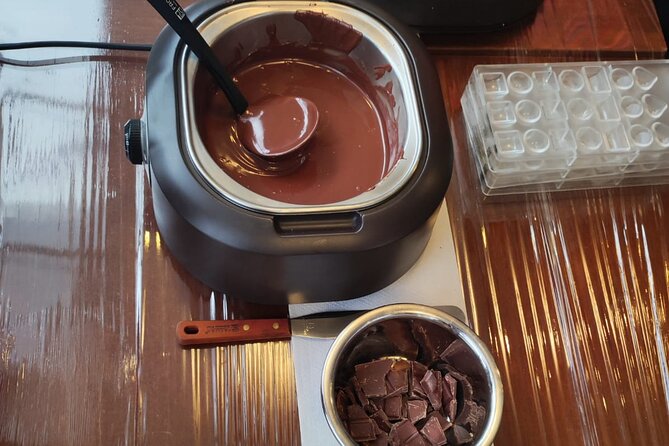
You learn how to make ganache, the smooth chocolate filling used in many bonbons. You also prepare hot chocolate, using leftover chocolate and other ingredients from the session. The hot drink is more than a free extra. It gives you another way to taste the cacao and lets you see how the same ingredient behaves in a drink rather than a set confection.
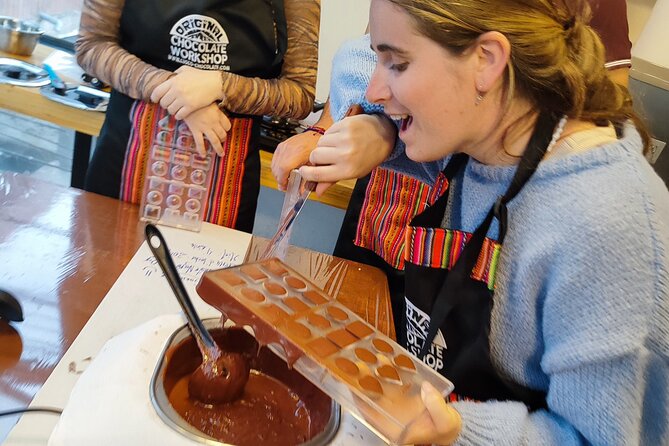
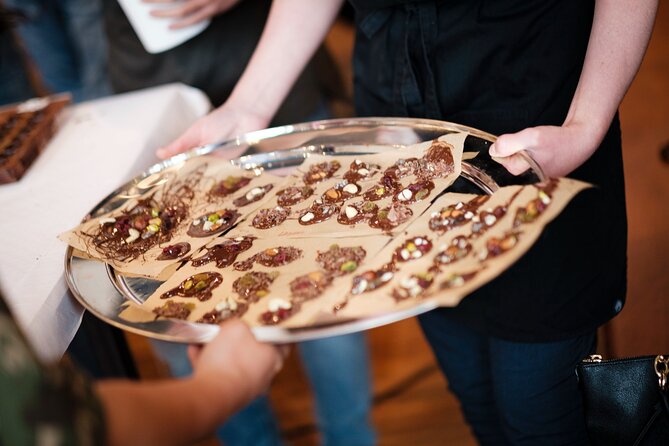
The main project is the pralines. You make around 21 of them, using fillings and toppings selected from the options available. You also prepare about 10 mendiants, the flat chocolate discs traditionally finished with nuts, dried fruit, or other toppings.
The choice of fillings is one of the better features of the class. You might use homemade local jams, local nuts, organic nuts, coconut flakes, or dried fruits. The exact choices can vary, but the wide selection lets you make a box that feels personal rather than identical to everyone else’s.
The instructor helps with each stage. David is described as funny and clear, while Abelardo is praised for being patient, engaging, and trained in Belgium. Other sessions have been led by Randy, Titch, Damaso, Avi, and Erika. The names suggest that staffing can vary, but the teaching style has generally been a strong part of the experience.
The pralines and mendiants you take home
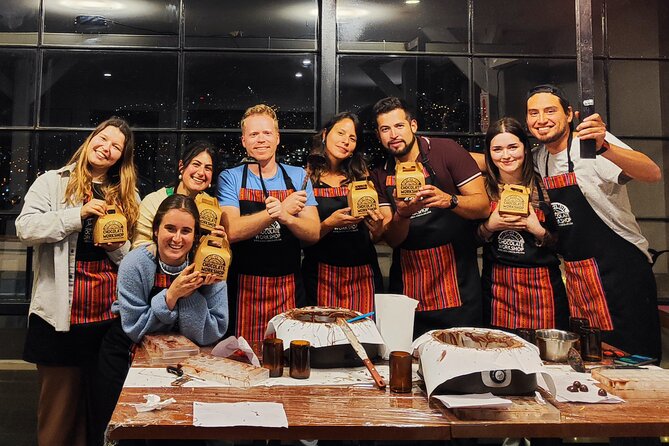
The final quantity is generous for a two-and-a-half-hour activity. Around 21 pralines and 10 mendiants give you enough to sample several combinations and still have something to share.
At the end, you receive a personalized box for your chocolates. This makes the class more useful than an activity where the finished product must be eaten immediately. You can take the box back to your accommodation or share it with family and friends.
The box also gives the experience a clear ending. You have learned a few techniques, made decisions about fillings, tasted your own work, and left with a physical reminder of the evening.
Do not expect every piece to look like it came from a professional pastry shop. You are making them yourself, and part of the fun is seeing how they turn out. The satisfaction comes from the process as much as from perfect shapes.
A few more chocolate tours around the world worth a look
- Lindt Home of Chocolate Museum Entry Ticket
★ 4.7 · 9,329 reviews - Choco-Story Brussels: Chocolate Museum Entrance with Tasting
★ 4.3 · 4,883 reviews - Zurich: City Tour, Cruise, and Lindt Home of Chocolate Visit
★ 4.5 · 4,624 reviews - The Chocolatarium Chocolate Tour Experience in Edinburgh
★ 5.0 · 4,322 reviews
How much value does the $45 price offer?
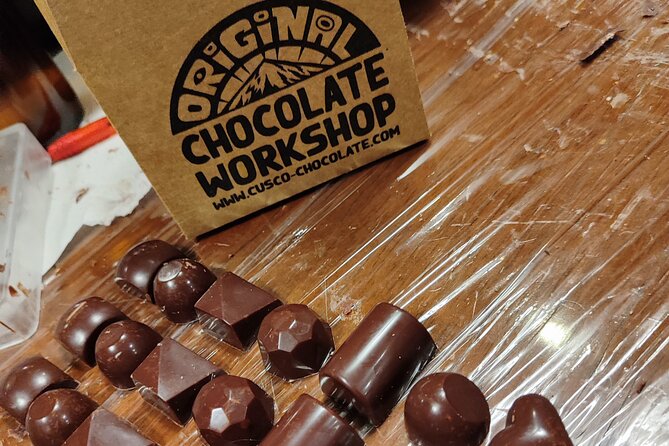
At $45 per person, this is not the cheapest way to eat chocolate in Cusco. You could buy plenty of local sweets for far less. The price makes more sense when you count the full experience: two and a half hours of instruction, a hot chocolate, roughly 31 finished pieces, a box, and an evening view over the city.
The class also offers personal attention, with no more than 15 people. A full group could still feel active and social, but it should not be so large that you are left watching from the back. The smaller format is especially useful when you need help with ganache, fillings, or shaping.
I would judge the value by asking what you want from your evening. If you only want to eat chocolate, $45 is high. If you want a light cultural activity, something creative, and a substantial edible souvenir, the price is reasonable.
The value is strongest for couples, families with older children, and solo visitors who want an easy way to meet people. The relaxed format also makes it a good choice for the first part of a Cusco stay, when a long day at altitude may not sound appealing.
A good activity while adjusting to Cusco
Cusco sits at high altitude, and many people prefer to avoid an exhausting schedule on their first day or two. This workshop lets you stay in the city and keep moving at a gentle pace.
That does not mean you should treat it as a medical solution for altitude adjustment. It is simply a lower-effort option compared with a full-day excursion or a steep walking tour. You can sit, work with your hands, drink hot chocolate, and enjoy the view.
The class also gives you something social to do without requiring a large time commitment. Solo visitors have enjoyed sessions with only a few participants, while families and couples have found the group setting friendly. The mood appears casual rather than formal.
If you have spent the day visiting churches, markets, or museums, the chocolate class changes the pace. You still learn something about Cusco and Peru, but through food and conversation rather than another guided walk.
Who should book this experience?
I would recommend the workshop to you if you like food-based activities, want a break from ruins and museums, or enjoy making something with your hands.
It is particularly well suited to:
- Couples looking for an easy evening date
- Families with children aged 12 or older
- Solo visitors who enjoy small-group activities
- Chocolate fans who want to try Peruvian cacao
- Anyone seeking a relaxed activity during the first days in Cusco
- Visitors who like edible souvenirs more than ordinary gifts
The class is less suitable if you want a serious professional pastry course. It also may disappoint you if your main goal is to see cacao beans roasted, fermented, or ground from scratch. The class begins with chocolate prepared for confectionery work.
You should also consider your schedule. The meeting point is in Cusco, and the activity ends there, so you need to make your own way to and from C. Pasñapakana 133. The venue is near public transportation, and service animals are allowed.
Small details that make the evening better
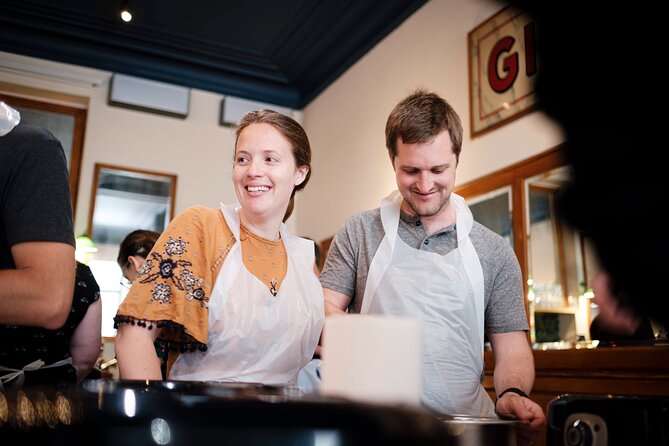
Try to arrive ready for an active class, not just a tasting. You will be working with fillings and chocolate, so the experience is more enjoyable when you are willing to experiment.
Ask your instructor for ideas after the class. One of the advertised benefits is the chance to request local tips and recommendations, and the instructors are well placed to suggest ways to spend the rest of your evening.
The view deserves attention, too. If the sky is clear, the 5:00 pm start may give you changing light over Cusco while you work. You should not assume the sunset will look the same every day, but the timing is well chosen for that possibility.
Group size can vary up to the stated maximum of 15. Some sessions may feel lively, while others may be quite small. A smaller class can mean more direct help, while a fuller class may bring more conversation and energy.
The cancellation terms are simple: you can receive a full refund if you cancel at least 24 hours before the start time. Changes or cancellations inside that window are not accepted for a refund. The activity also requires a minimum number of participants, so if the provider cancels for that reason, you receive a different option or a full refund.
Is the Cusco Chocolate Workshop worth booking?
Yes, I would book it if you want a relaxed, social Cusco activity with a clear local ingredient story and plenty of chocolate to take away.
The strongest reasons are the hands-on format, the Chuncho cacao from the Sacred Valley, and the view over Cusco at sunset. The instructors, including David and Abelardo, are a major part of the appeal, with humor and patient guidance helping the class feel informal rather than stiff.
Just keep your expectations accurate. This is a confectionery workshop, not a cacao-bean processing tour. If you understand that, the $45 price buys a pleasant evening, a useful introduction to Peruvian cacao, a hot chocolate, and a personalized box full of your own creations.
FAQ
Where does the chocolate workshop take place?
The workshop takes place at C. Pasñapakana 133, Cusco 08000, Peru, and the activity ends back at the meeting point.
What time does the workshop start?
The stated start time is 5:00 pm.
How long does the experience last?
The workshop lasts approximately two hours and 30 minutes.
What kind of chocolate will I make?
You will make Belgian-style pralines and mendiants, and you will learn how to prepare ganache and hot chocolate.
How many chocolates can I take home?
You will make around 21 pralines and 10 mendiants. A personalized box is provided for taking your creations home.
Is the workshop suitable for children?
The workshop is available to adults and children aged 12 and older.
Can I cancel for a full refund?
Yes. You can cancel at least 24 hours before the local start time for a full refund. Cancellations or changes made less than 24 hours before the start time are not refunded or accepted.
Just added around the world
- Lindt Chocolate Museum with Cruise Transfer from Zurich★ 4.6 · 7 reviews
- Zagreb: Lake Bled and Ljubljana Day Tour with Chocolate Gift★ 5.0 · 26 reviews
- Zurich: Chocolate Tasting and Walking Tour with a Local★ 4.2 · 13 reviews
- Zurich Open-top Tour and Chocolate and Cheese Countryside★ 3.5 · 11 reviews
- Wine and Chocolate experience★ 4.6 · 3 reviews
- York: Introduction to Chocolate Making Experience★ 4.9 · 10 reviews
- Zaandijk-Near Zaanse Schans Chocolate making demo & tasting★ 4.8 · 13 reviews
- Private Wine and Chocolate Tasting Experience★ 4.4 · 3 reviews
Chocolate Making Workshops, compared.
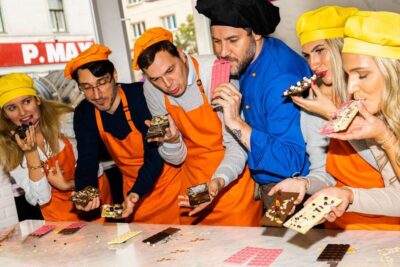
Chocolate Workshop in Chocolate Museum w/ Tasting
Read our review →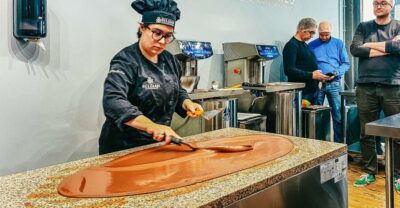
Belgian Chocolate Making Workshop with Tastings
Read our review →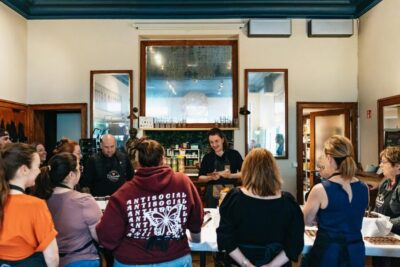
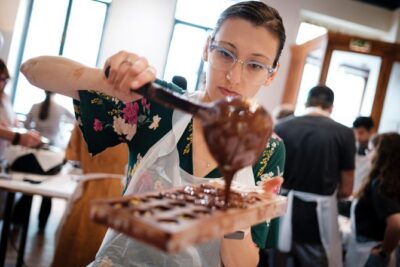
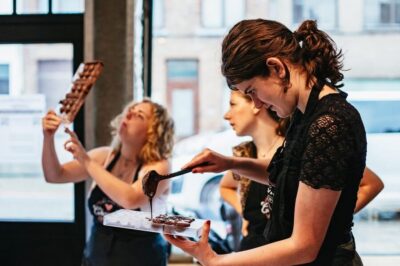
Belgian Praline and Mendiants Chocolate Workshop
Read our review →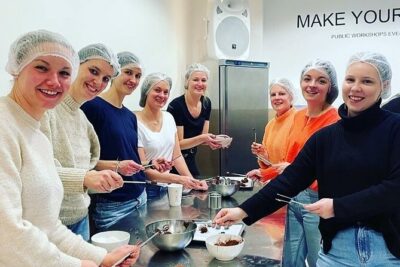
1.5h Belgian Chocolate Workshop in Brussels (bean to bar)
Read our review →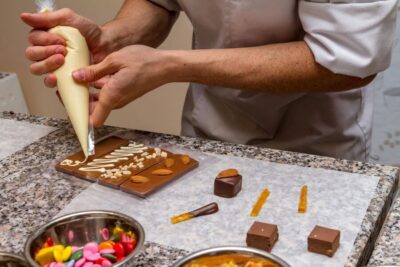
45-minute Chocolate Making Workshop at Choco-Story
Read our review →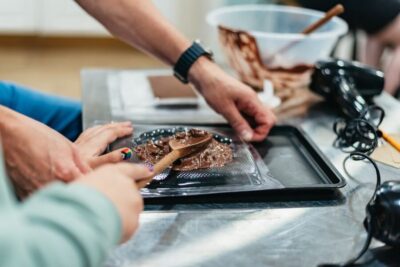
Chocolate Bar Making Workshop at York Cocoa Works
Read our review →Browse the lists this tour appears in