
Review · GUATEMALA
Chocolate workshop; gastronomic experience of cocoa.
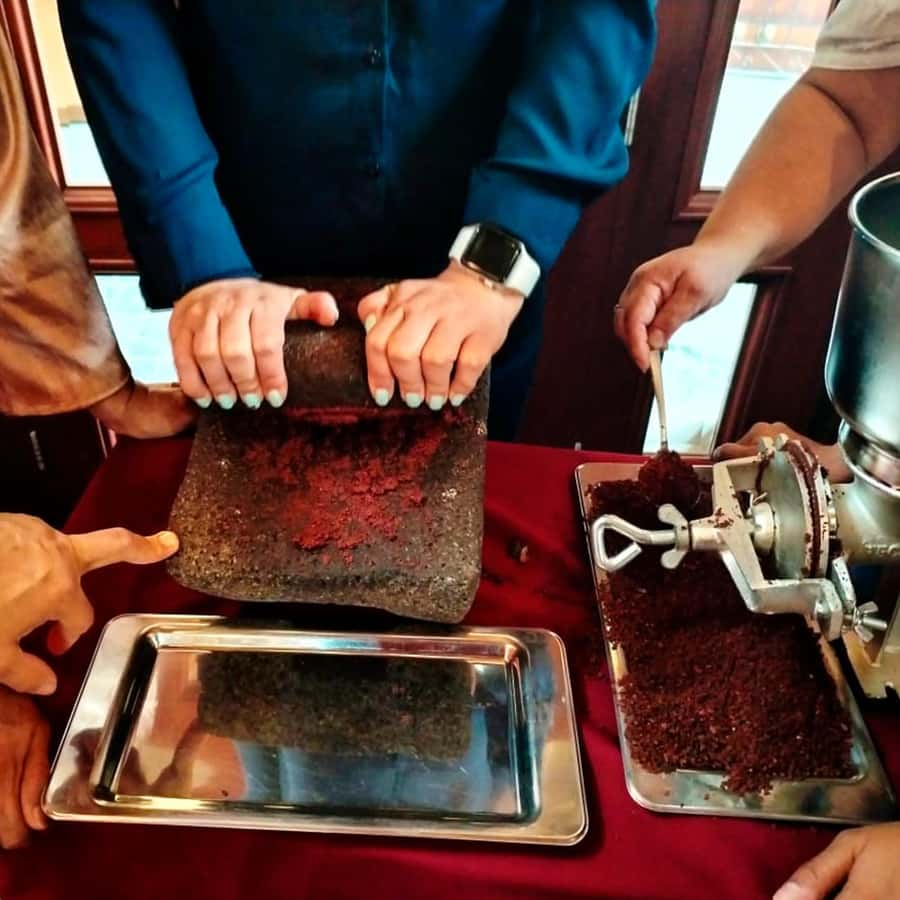
Chocolate starts with a little work. This Antigua Guatemala cocoa workshop turns Guatemalan aroma cocoa into a hands-on food experience, taking you from Mayan cocoa traditions through roasting, shelling, grinding, and shaping your own chocolate bar. I like the full bean-to-bar process, and I like that the class gives you something useful to take home rather than only a quick tasting. The main point to consider is language: instruction is in Spanish, though patient guides, written information, and Google Translate have helped non-Spanish speakers follow along.
The workshop costs $32 per person and lasts about 1.5 hours. That is a fair price for the tastings, materials, private-group format, and chocolate bar you make yourself. Children under seven cannot participate, and the class is best for anyone who enjoys food experiences with a little hands-on mess.
Quick takeaways for your chocolate stop in Antigua
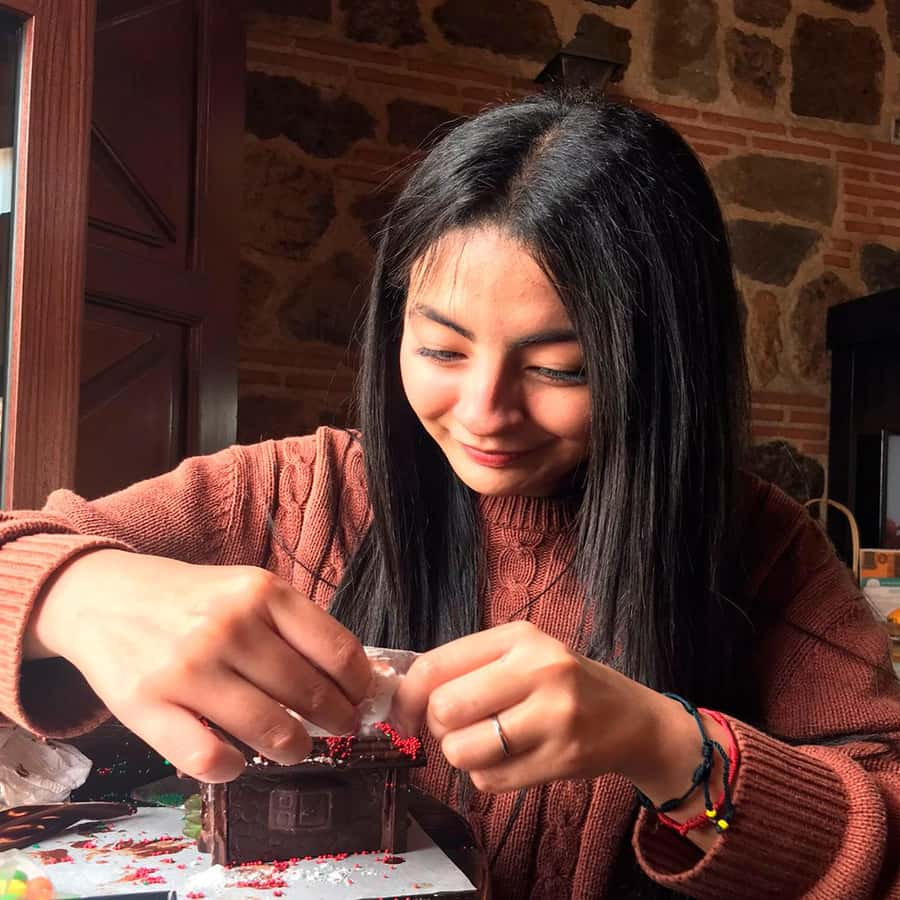
- Roast, shell, grind, and shape your own cocoa: You take part in each major step instead of simply watching a demonstration.
- Learn why cocoa mattered to the Maya: The opening lesson connects the food in your hands with its earlier cultural uses and importance.
- Taste cocoa through several stages: Your five senses become part of the class as the flavor and aroma change during processing.
- Take home your own bar: The final chocolate is made by you, with no preservatives according to one participant’s description.
- Meet near Antigua’s Central Park: The mustard-colored house at 6a Avenida Norte 6 is one block from the park and marked by a stuffed bear at the door.
- Expect Spanish instruction: The class is private and wheelchair accessible, but you should arrange translation help if you need detailed instruction in English.
Starting at 6a Avenida Norte 6
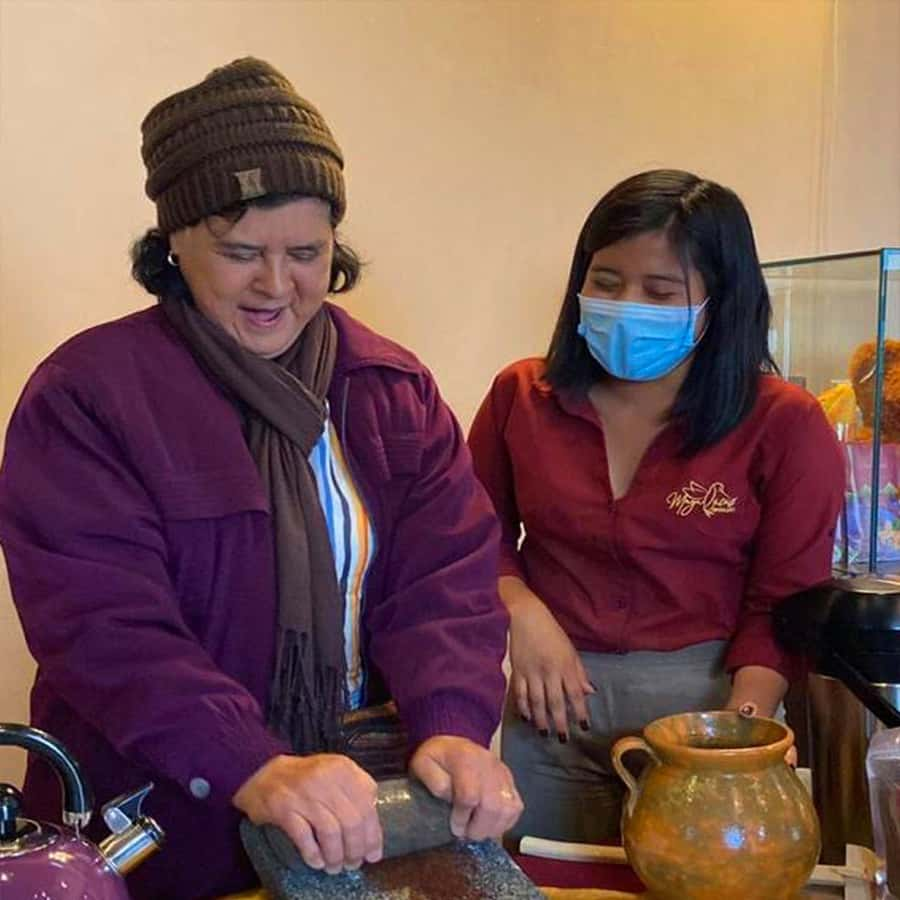
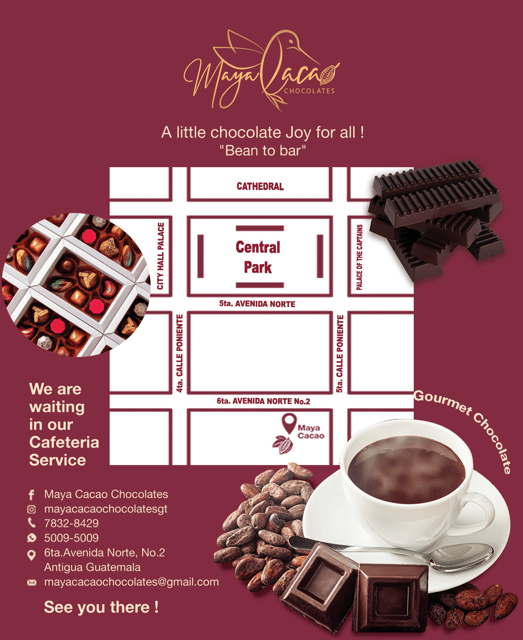
The meeting point is easy to place once you know what to look for. Maya Cacao Chocolates is one block from Antigua Guatemala’s Central Park, on 6a Avenida Norte. Find the mustard-colored house and look for the stuffed bear at the entrance. That bear serves as the welcoming sign, which is far more useful than a small plaque you could miss while walking.
The central location matters because you can fit the workshop into a day of exploring Antigua without arranging a separate ride. You should still allow a few extra minutes to find the exact doorway, since one participant specifically found the directions in need of improvement. If you use a map application, enter the full address rather than relying only on the business name.
The workshop is listed as a private group. That gives the class a more personal feel than a large demonstration, and it should make it easier to ask questions or get help with the roasting and grinding. The supplied information does not state the maximum group size, so I would not assume that private means one-on-one.
More Chocolate Making Workshops in the world:
- Vienna: Chocolate Workshop in Chocolate Museum w/ Tasting
★ 4.5 · 1,802 reviews - Brussels: Belgian Chocolate Making Workshop with Tastings
★ 4.7 · 1,629 reviews - Brussels: 2.5-Hour Belgian Chocolate Making Workshop
★ 4.8 · 933 reviews
The Mayan story behind the cocoa
The class begins with cocoa in the time of the Maya. You learn about its origin, importance, and uses before handling the beans yourself. This opening gives the food some context, since cocoa in Guatemala is more than a sweet ingredient at the end of a meal.
I like this approach because it puts the practical work in order. You first understand why cocoa mattered, then you see how a plain bean changes through heat, pressure, and preparation. The lesson is not presented as a separate museum lecture. It leads directly into the tasting and making.
The supplied information does not give a precise list of Mayan uses, so you should expect a general introduction rather than a detailed archaeology class. If you want an extended history lesson, this may feel brief. If you want enough background to make the food in front of you more meaningful, the format should work well.
Using all five senses at the tasting table
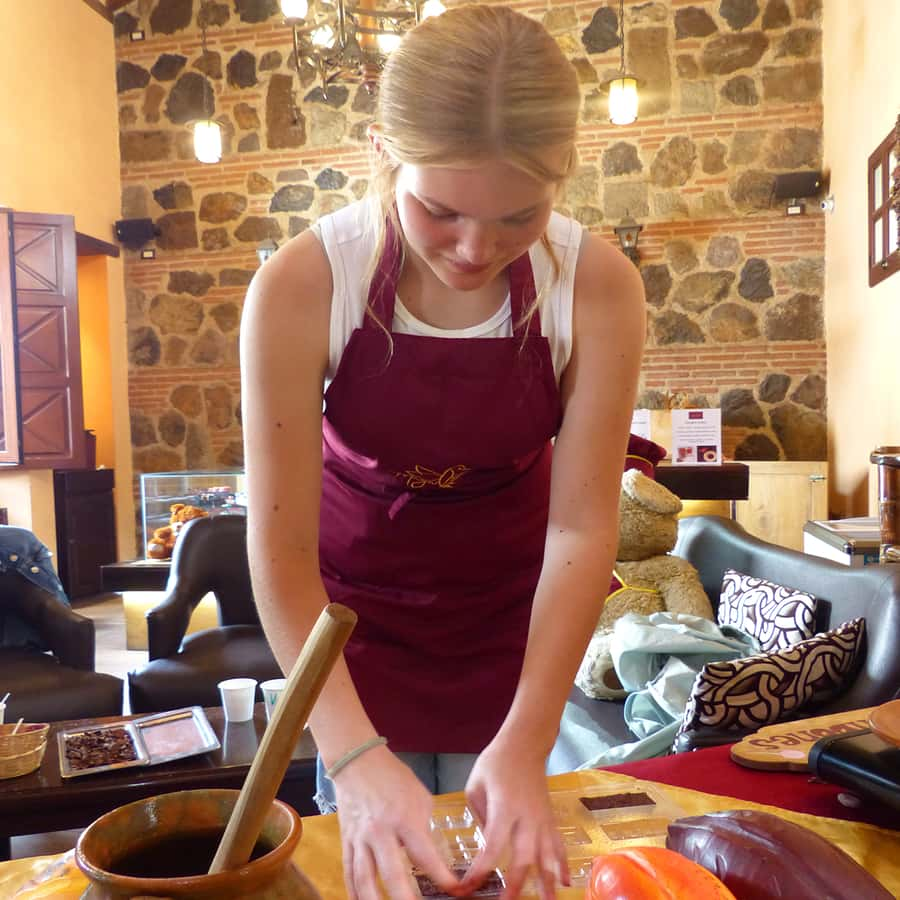
The next stage asks you to pay attention to aroma and flavor as cocoa moves through different processes. That is an important part of the experience. Cocoa beans do not taste exactly the same before and after roasting, shelling, or grinding, and the class lets you notice those changes rather than treating chocolate as one fixed flavor.
You are encouraged to use sight, smell, taste, touch, and hearing as you work. The aroma is a central part of the class, and the experience is designed around Guatemalan aroma cocoa in several forms. For food lovers, this is the best reason to book. You are not merely eating a finished sweet. You are comparing the raw material with what it becomes.
The tastings and materials are included in the price, so you do not need to budget extra for the core activity. The exact tasting menu is not specified, and the information does not state how many samples you receive. I would expect a guided tasting connected to the preparation steps, not a large dessert spread.
Roasting the beans yourself
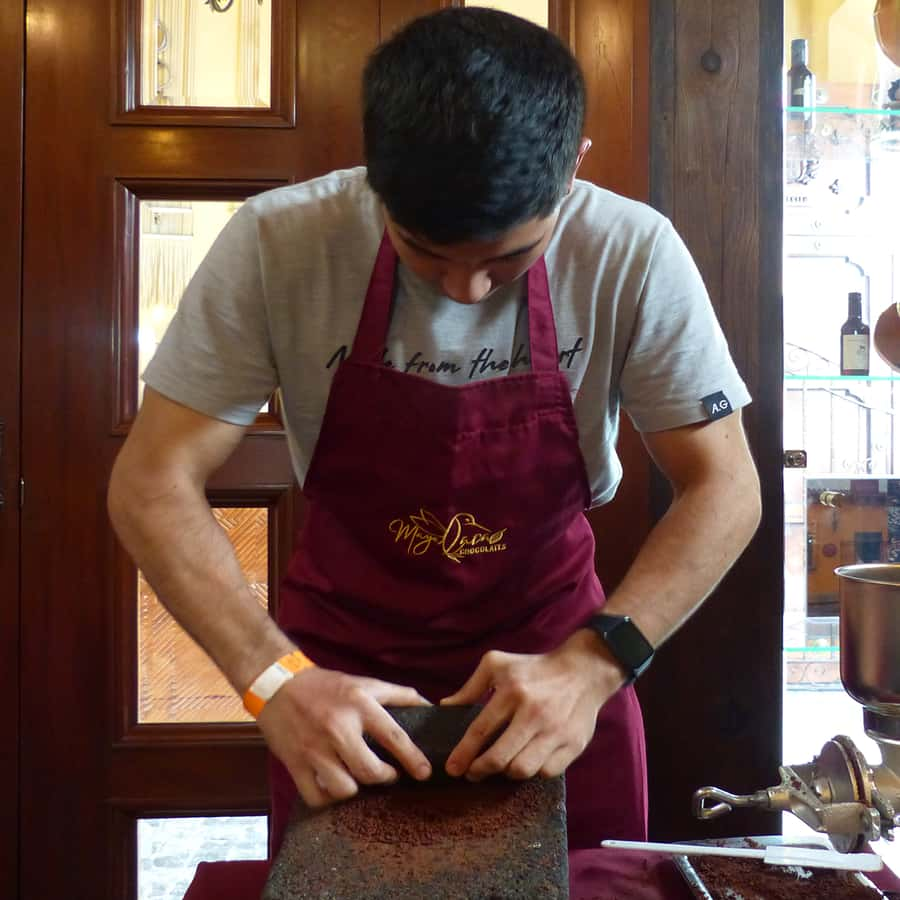
Roasting is where the beans begin to change in a noticeable way. The class teaches you how to roast your own cocoa, giving you a direct role in one of the most important preparation stages.
This is useful because it shows that chocolate does not appear by magic after harvesting. Heat helps bring out the aroma and changes the character of the bean. You will want to pay attention to the guide’s directions here, since roasting is a process where timing and handling matter.
The available details do not specify the equipment or heat source, so I would avoid arriving with a fixed idea of a particular method. The value comes from taking part and sensing the change, not from mastering commercial chocolate production in one short class.
A few more chocolate tours around the world worth a look
- Lindt Home of Chocolate Museum Entry Ticket
★ 4.7 · 9,329 reviews - Choco-Story Brussels: Chocolate Museum Entrance with Tasting
★ 4.3 · 4,883 reviews - Zurich: City Tour, Cruise, and Lindt Home of Chocolate Visit
★ 4.5 · 4,624 reviews - The Chocolatarium Chocolate Tour Experience in Edinburgh
★ 5.0 · 4,322 reviews
Shelling the cocoa by hand
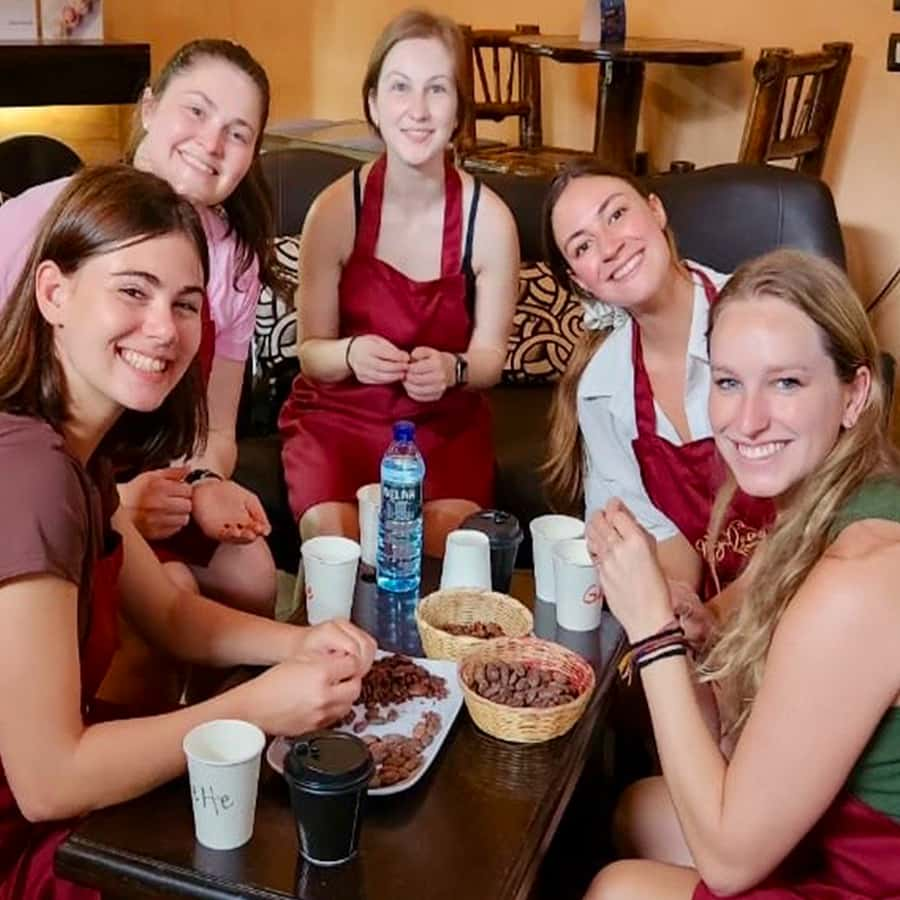
After roasting, you learn to shell the beans. This step separates the outer husk from the part used for grinding. It is simple, physical work, but it gives you a better sense of how much preparation comes before a smooth chocolate bar.
I like this part because it keeps the workshop grounded. You are not just pressing a button on a machine. You handle the bean, see its texture, and help prepare it for the next stage.
A class with hands-on steps can be more satisfying for families and couples than a talk where you sit still throughout. Children under seven are not allowed, however, so this is not an activity for families with very young children. Older children who can follow directions may find the process interesting, though the supplied details do not specify a recommended upper or lower age beyond that restriction.
Grinding toward a finished chocolate
Once the beans are roasted and shelled, you grind your cocoa. This is the point when the separate pieces start becoming something recognizable as chocolate.
The grinding stage helps you understand texture and flavor. Cocoa has a strong character before it reaches the smooth form most people expect from a bar. You get to see how the raw material is worked down and prepared for shaping.
The class is short enough to fit into a busy day in Antigua, but it is not a rushed five-minute sample. The workshop portion lasts about 1.5 hours, which gives enough time for instruction, tasting, and the main preparation steps. The listing describes the activity as valid for one day, but the actual class time is the more useful planning detail.
Shaping your own chocolate bar
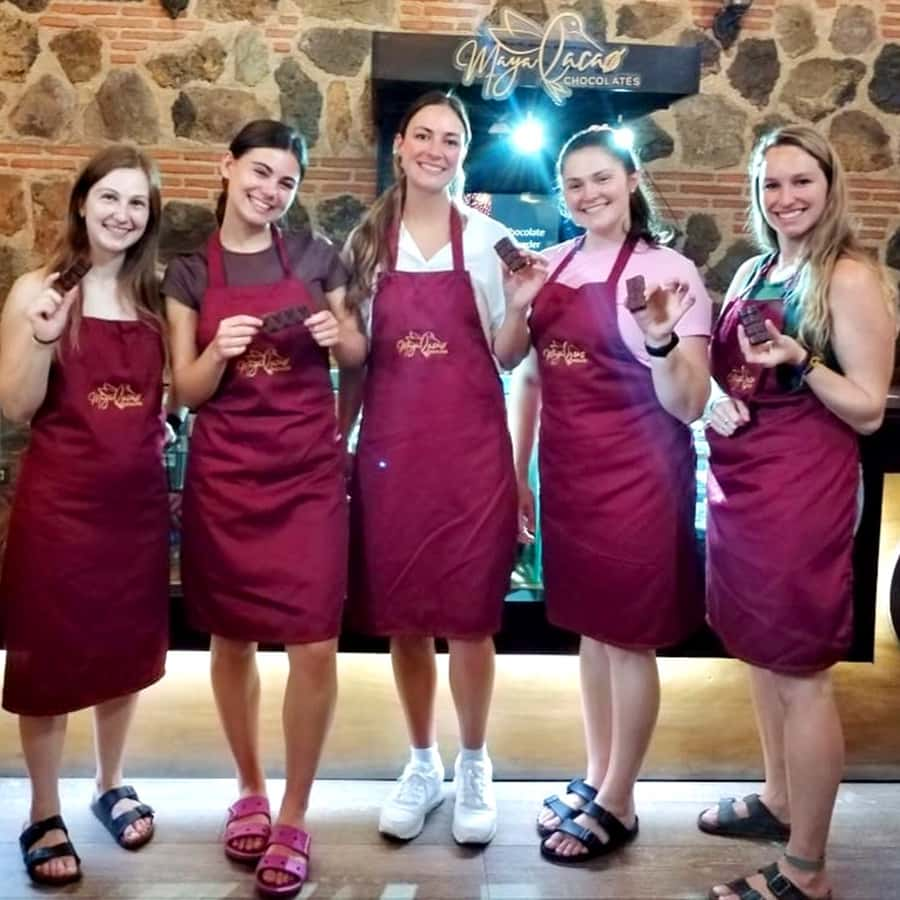
The final reward is a chocolate bar made by you. You take it home with the flavor and aroma of Guatemalan cocoa, along with the memory of the work that went into it.
This makes the $32 price easier to justify. You receive the activity, the tastings, the supplies, and a physical result. Many food workshops end when you leave the table. Here, you leave with something connected to the process.
One participant described the chocolate as high quality, very tasty, and made without preservatives. That is a useful detail, though you should not assume that every possible product in the store follows the same formula. Your handmade bar is the main takeaway from the class.
The format also works well as a family activity for children over seven, as long as everyone is comfortable with a hands-on food class. Couples and small private groups should enjoy the shared task, especially if one person likes tasting while the other likes making.
The Spanish-language question
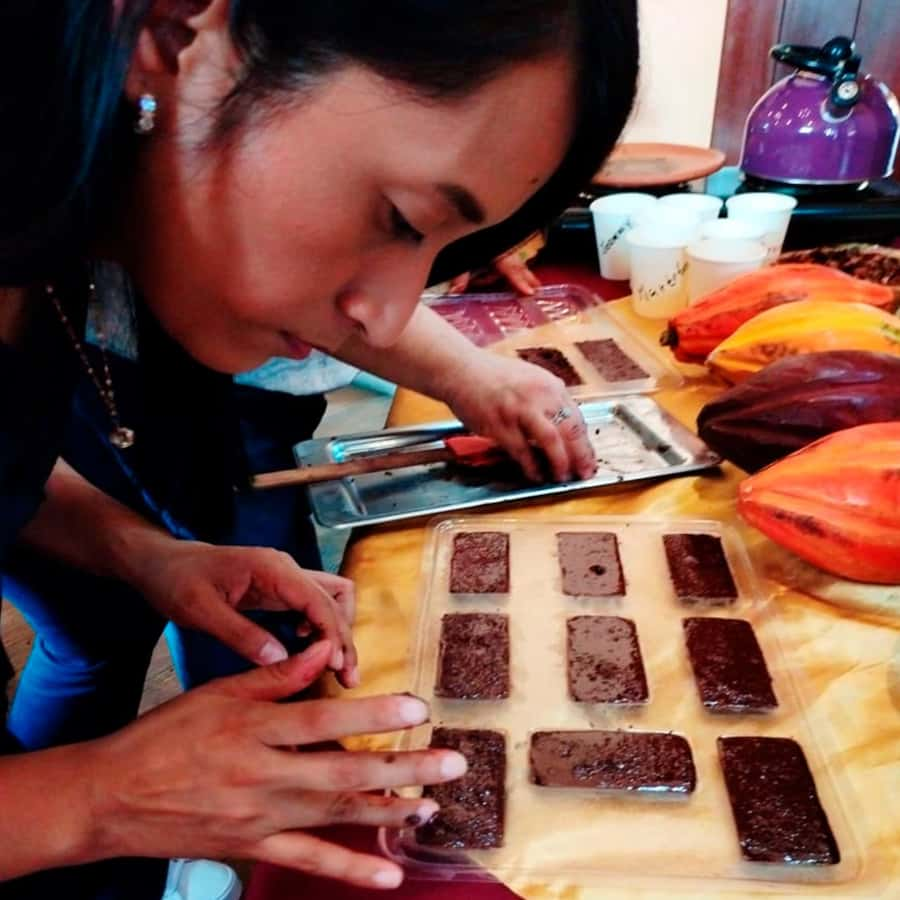
Instruction is in Spanish. This is the biggest practical limitation for English-speaking visitors, especially because roasting, shelling, and grinding are easier to enjoy when you understand each direction.
Still, language need not end the plan. Ingrid helped a family whose members did not speak Spanish by using patience and interactive explanations. Andrea also guided a couple with limited Spanish, and they managed with Google Translate and written information. Those examples suggest that the staff can make a real effort to help.
I would still prepare before arriving. Download Spanish and English language files in your translation app, bring your phone charged, and tell the host at the start if you need repeated explanations. Simple demonstrations may be enough for some steps, but you should not count on full English instruction.
Bea is also described as especially kind and willing to expand her explanations as needed. The guide you meet may vary, but the named instructors show a pattern of patient, personal teaching. Spanish speakers will get the smoothest experience, while non-Spanish speakers should be ready to use translation tools.
Price, time, and what you receive
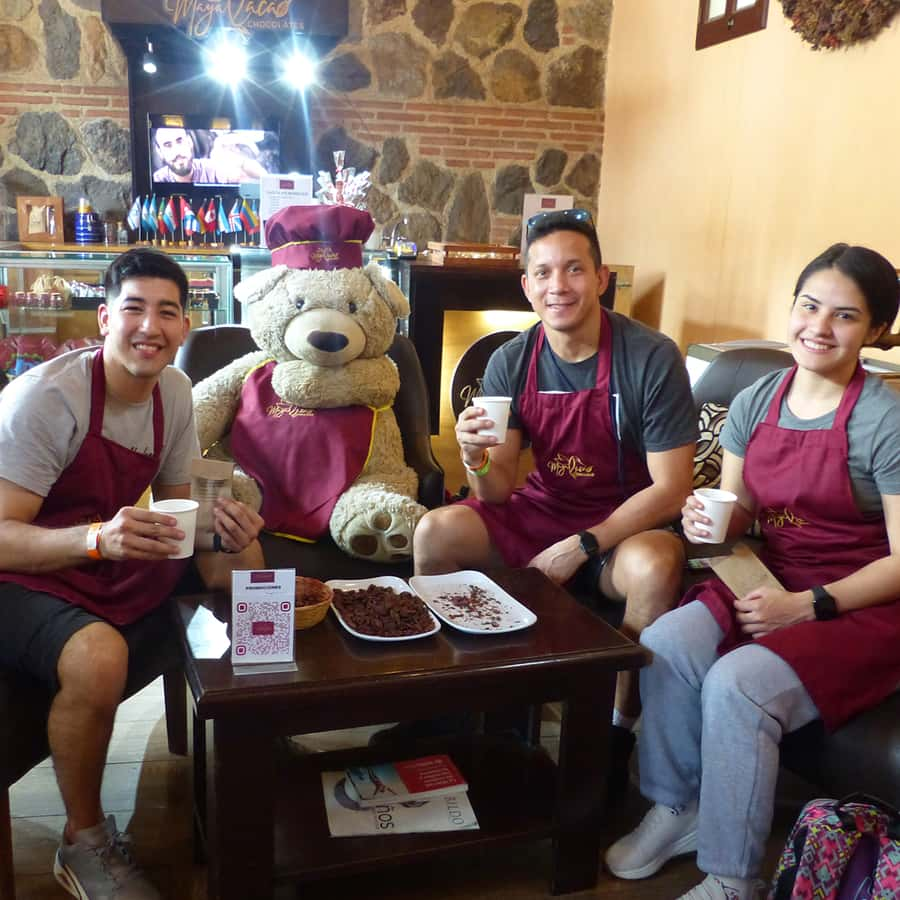
At $32 per person, the workshop sits in a reasonable range for a private, food-based activity in Antigua. You are paying for more than a sample: materials, tastings, instruction, and your own chocolate bar are included.
The price is strongest for people who value participation. If you only want to taste Guatemalan chocolate, buying a bar in the store may take less time and cost less. If you want to understand the work behind the flavor, the class offers better value.
The workshop lasts approximately 1.5 hours, so it fits neatly between sightseeing plans. You should not treat the stated one-day validity as a full-day activity. It refers to the date on which you attend, while the hands-on class itself takes about an hour and a half.
A 5 percent discount is available across the store, giving you a small reason to browse after class. The information does not state whether the discount applies to every item or to special products, so ask at the shop before shopping with a fixed expectation.
Accessibility and planning details
The experience is wheelchair accessible, which makes it a practical choice for visitors looking for an accessible food activity. The information does not describe the doorway, table height, restroom, or exact layout, so you may want to confirm any specific mobility needs before booking.
Cancellation is flexible up to 24 hours before the activity for a full refund. You can also reserve now and pay later, which helps if your Antigua schedule is still changing. These details are useful when you are arranging several day trips and do not want to commit all your funds at once.
The group is private, but the exact number of participants is not given. Ask if you need a particular group arrangement. The class is not suitable for children under seven, and Spanish is the listed language.
Who should book this chocolate class?
I would choose this activity if you enjoy food preparation, local ingredients, and short cultural lessons. It gives you a better understanding of cocoa than a standard tasting, yet it does not demand a full day.
It is especially suitable for:
- Families with children aged seven and older
- Couples looking for a shared activity in Antigua
- Food lovers who want to make something by hand
- Visitors who enjoy taking home an edible souvenir
- Spanish speakers seeking a personal private class
- English speakers willing to use translation tools
I would think twice if you want a polished English-language presentation, a long technical lesson, or a large selection of chocolate desserts. The workshop is practical and personal, not a formal culinary school course.
Should you book Maya Cacao Chocolates?
Yes, if you want to understand Guatemalan cocoa by handling it yourself. The strongest parts are the complete process, the five-senses tasting, the private format, and the chocolate bar you take home. Patient instructors such as Ingrid, Andrea, and Bea also make the Spanish-language setting less intimidating.
Book with realistic expectations. Allow about 1.5 hours, find the mustard-colored house near Central Park, and prepare a translation app if you do not speak Spanish. At $32, the class is good value for a hands-on cultural food experience, especially when you would rather make your souvenir than simply buy one.
FAQ
Where does the chocolate workshop take place?
It takes place at 6a Avenida Norte 6 in Antigua Guatemala, in the Sacatepéquez Department. The house is one block from Central Park, mustard-colored, and marked by a stuffed bear at the door.
How long does the workshop last?
The workshop lasts about 1.5 hours. It is listed as valid for one day, but the actual hands-on class is approximately an hour and a half.
What does the $32 price include?
The price includes materials, tastings, and the chocolate bar you make yourself.
Is the workshop taught in English?
The listed language is Spanish. Non-Spanish speakers have used Google Translate and written information to follow the class, and guides have helped with patient explanations.
Can children join the workshop?
Children under seven are not suitable for the activity. The supplied information does not give a specific upper age limit.
Can I cancel or pay later?
You can cancel up to 24 hours in advance for a full refund. You can also reserve your place and pay later, keeping your plans flexible.
Just added around the world
- Lindt Chocolate Museum with Cruise Transfer from Zurich★ 4.6 · 7 reviews
- Zurich Open-top Tour and Chocolate and Cheese Countryside★ 3.5 · 11 reviews
- Zagreb: Lake Bled and Ljubljana Day Tour with Chocolate Gift★ 5.0 · 26 reviews
- Zurich: Chocolate Tasting and Walking Tour with a Local★ 4.2 · 13 reviews
- Wine and Chocolate experience★ 4.6 · 3 reviews
- York: Introduction to Chocolate Making Experience★ 4.9 · 10 reviews
- Zaandijk-Near Zaanse Schans Chocolate making demo & tasting★ 4.8 · 13 reviews
- Private Wine and Chocolate Tasting Experience★ 4.4 · 3 reviews
Chocolate Making Workshops, compared.
Chocolate Workshop in Chocolate Museum w/ Tasting
Read our review →
Belgian Chocolate Making Workshop with Tastings
Read our review →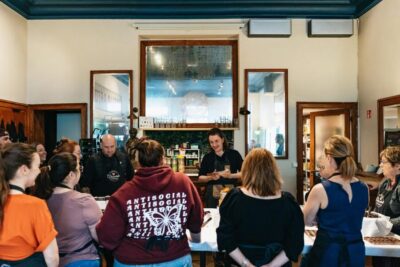
Belgian Praline and Mendiants Chocolate Workshop
Read our review →
1.5h Belgian Chocolate Workshop in Brussels (bean to bar)
Read our review →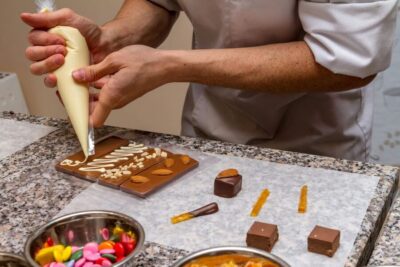
45-minute Chocolate Making Workshop at Choco-Story
Read our review →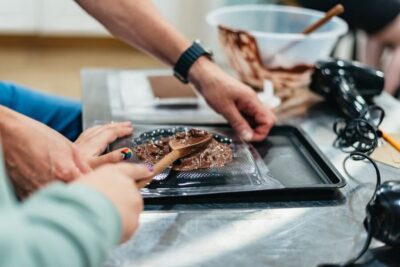
Chocolate Bar Making Workshop at York Cocoa Works
Read our review →Browse the lists this tour appears in