
Review · HONDURAS
Chocolate Making Class at the Roatan Chocolate Factory in West End
Chocolate tastes better when you make it. This private class in West End combines a factory tour with hands-on chocolate making, Honduran cacao lessons, organic samples, and port transfers. I especially like the chance to learn how chocolate is made from scratch and the thoughtful link between cacao, local jobs, and rainforest protection. The main consideration is timing: cruise passengers need to coordinate carefully so the class and return transfer fit their ship’s schedule.
At $105 per person, this is not a quick tasting stop. You are paying for private transportation, a private class, guided instruction, factory admission, samples, and chocolate to take home. The class usually lasts about two to three hours, with the factory portion listed at around two hours.
Five things to know before you book
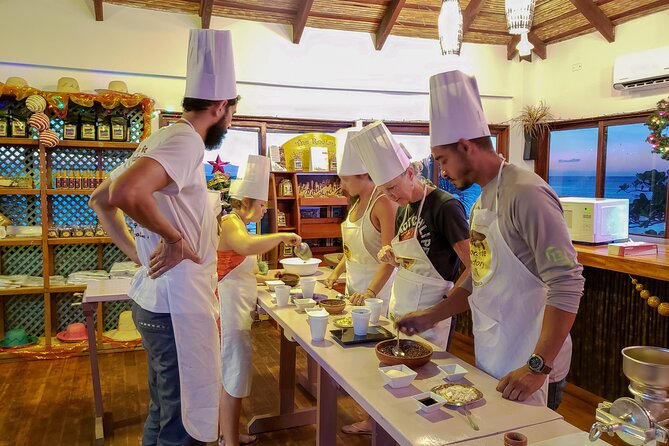
- Your class is private: Only your group participates, which makes it easier to ask questions and work at a comfortable pace.
- Dani may be your teacher: He is praised for clear communication, chocolate knowledge, and personal attention before and during the class.
- You make chocolate from scratch: The lesson covers the path from cacao bean to finished bar, not just decorating premade candy.
- Cruise transfers are included: Air-conditioned private transportation can pick you up at the port and return you with time to spare if the schedule is arranged in advance.
- The class has a purpose beyond dessert: You learn how chocolate can support local jobs, ethical sourcing, and rainforest protection.
- The setting is West End: After class, the central location puts you within about five minutes of a beach and places to eat, according to one booking experience.
Why this class feels different from a standard tasting
Many chocolate stops ask you to sample a few pieces, hear a short explanation, and move on. This experience gives you a role in the process. You handle the chocolate, follow the stages of production, and create a bar that you can bring home.
That hands-on approach matters because cacao can feel abstract when it is presented only as a finished product. Here, the lesson connects the raw ingredient with Honduran agriculture, Mayan culture, conservation, and the work done at the factory. You are not simply buying a souvenir. You are learning why the product matters in Roatan.
I also like the local focus. The class presents chocolate as part of Honduras’s economy and as a way to encourage responsible production. The conservation message includes helping protect the rainforest through chocolate, and the instruction includes a warning that ethical sourcing matters because cacao production can be tied to serious labor abuses, including human trafficking.
That gives the class more weight than a purely sugary afternoon. You still get plenty of chocolate, but you also leave with a better sense of the decisions behind the label.
More Chocolate Making Workshops in the world:
- Vienna: Chocolate Workshop in Chocolate Museum w/ Tasting
★ 4.5 · 1,802 reviews - Brussels: Belgian Chocolate Making Workshop with Tastings
★ 4.7 · 1,629 reviews - Brussels: 2.5-Hour Belgian Chocolate Making Workshop
★ 4.8 · 933 reviews
Starting with private pickup in Roatan
The package includes private transportation in an air-conditioned vehicle, along with transfers from the cruise port. This is a useful feature in Roatan, where getting across the island can take planning and a cruise day leaves little room for missed connections.
If you are arriving by ship, contact the operator early with your arrival and departure times. Classes are scheduled according to availability and usually begin around 2:00 pm, but the start can be adjusted to fit the booking. The factory needs to avoid periods when it is too busy, so your exact time is not necessarily automatic.
The operator can also pick you up before the class and arrange sightseeing or another activity first. One booking paired the chocolate class with ziplining, and the guide helped coordinate the activity and transportation. That option can turn the class into part of a fuller day on Roatan, though you should ask for a precise schedule before committing to extra plans.
The private setup is especially useful if you are traveling as a couple or family. You do not need to match the pace of a large group, and the teacher can focus on your questions. It also makes the trip back to the ship easier to manage than arranging separate taxis.
Inside the Roatan Chocolate Factory
The visit begins with a tour of the Roatan Chocolate Factory in West End. The factory tour is included, so you can see where the lesson takes place before settling into the practical work.
The central theme is bean to bar. You learn how Honduran cacao becomes chocolate, with an explanation of the history and cultural role of chocolate. The class also covers chocolate’s place in Mayan culture, which gives the ingredient a local and regional context rather than treating it as a generic sweet.
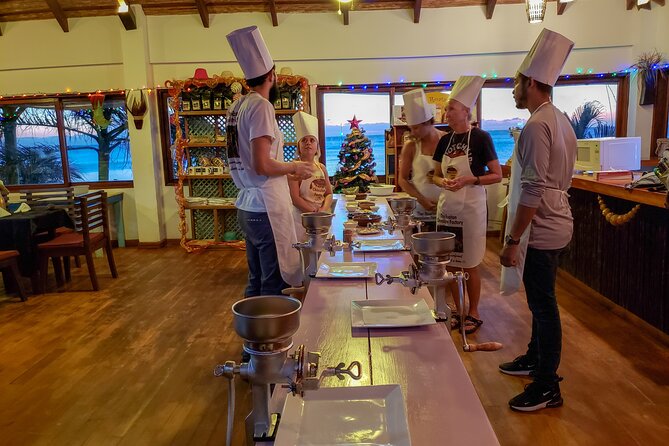
The factory setting gives the discussion a practical edge. Instead of hearing only a broad explanation, you can connect the talk with the production around you. The exact sequence may vary with the day’s schedule and factory activity, but expect an introduction to cacao, an explanation of chocolate making, guided preparation, and time for tasting.
The free samples are made with 100 percent Honduran organic chocolate. That is a useful part of the visit because you can compare the finished product while learning how it is produced. Food and drinks beyond the included chocolate are not part of the price, so plan to buy or arrange anything else you want separately.
Making your own Honduran chocolate bar
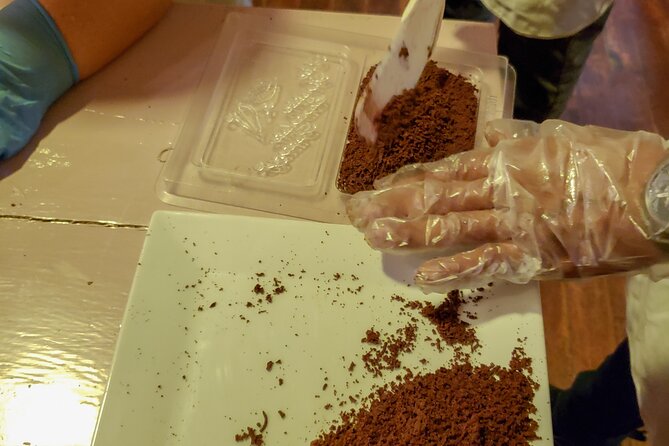
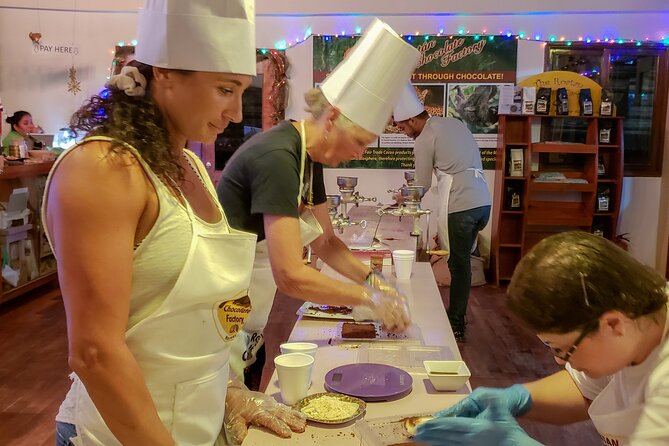
The hands-on portion is the heart of the experience. You are guided through the process of making chocolate and then create your own bar to take home. Beginners are welcome, and the class is designed to be family-friendly.
The practical appeal is simple: you do not need prior candy-making skills. The instructor walks you through the work, and you get the fun of shaping a personal treat rather than receiving a factory-made souvenir.
The class has also included three handmade bars for some participants, although the supplied details do not promise a fixed number for every booking. Your safest expectation is that you will take your own chocolate creations home.
This is a good choice for families because children can take part in a real activity instead of spending the whole visit listening to a lecture. Adults should enjoy it for the same reason. The lesson is educational, but it does not lose sight of the fact that chocolate making should be fun.
Dani receives repeated praise for his teaching style and communication. He may contact you after booking to confirm the details and make sure the class is engaging for your group. His role goes beyond explaining the recipe. He also discusses the history of chocolate, sustainable production, Honduran culture, and ethical buying.
That personal teaching is one of the strongest reasons to choose this class over a short factory stop. You can ask about the cacao, the local economy, and the decisions involved in production instead of simply following a fixed presentation.
More Chocolate Factory Tours in the world:
- Lindt Home of Chocolate Museum Entry Ticket
★ 4.7 · 9,329 reviews - Zurich: City Tour, Cruise, and Lindt Home of Chocolate Visit
★ 4.5 · 4,624 reviews - Zurich Sights: Cruise, Lindt Chocolate and optional FIFA Ticket
★ 4.0 · 1,028 reviews - Full-Day Tour: Concord Waterfall, Chocolate Factory, Rum Distillery, Grand Etang
★ 5.0 · 871 reviews
The conservation and ethical sourcing lesson
The rainforest message is not an unrelated add-on. The class explains how chocolate can help support conservation, giving you a reason to think about where cacao comes from after you return home.
You also receive guidance about ethical chocolate sourcing. The point is not that every chocolate product has the same supply chain. The point is that the label and source matter, and buying responsibly can support better conditions for the people who grow and produce cacao.
This section may be especially meaningful if you want your shore excursion to connect with local life. Roatan is often sold through beaches and water activities, but the chocolate class offers another view of the island: small-scale production, local enterprise, education, and environmental concerns.
The class does not turn into a formal conservation tour. Chocolate remains the focus. Still, the discussion gives your souvenir a stronger connection to the place where you bought it.
What the $105 price includes
At $105 per person, the experience costs more than a simple factory visit or an independent chocolate purchase. The value comes from the combination of several services:
- Private transportation
- Air-conditioned vehicle
- Port pickup and return arrangements
- Private instruction
- Factory tour
- Chocolate sampling
- Hands-on chocolate making
- Chocolate creations to take home
For a cruise passenger, the transportation has real value. You avoid arranging a separate ride across Roatan and can work with the operator to build a return plan. For a family or small group, private instruction may also justify the extra cost because the class is not shared with strangers.
The price is less compelling if you only want to taste chocolate for a few minutes. It is also less attractive if you are already paying for several other activities and do not care about the history, conservation, or production lesson.
Food and drinks are not included. You should budget separately if you want something beyond the chocolate samples, especially if you plan to spend more time in West End before or after class.
How long you should allow
The factory activity is listed at about two hours, while the overall experience is described as two to three hours. Add transfer time, especially if you are being collected from a cruise port.
Cruise passengers should not treat the class start time as a casual suggestion. Tell the operator your ship schedule before booking, and confirm the pickup and return details. The operator has arranged transportation that got a group back to its ship with plenty of time to spare, but that success depends on planning and traffic conditions.
If you are staying on Roatan rather than visiting for the day, the schedule is easier. You can usually work around the class’s available starting time and spend extra time in West End afterward. The central location makes it practical to combine the activity with beach time or a meal.
Who will enjoy this experience most
I would choose this class for several types of visitors:
- Families who want a practical, food-based activity
- Couples looking for a private experience
- Cruise passengers who want transfers included
- People interested in Honduran culture and Mayan chocolate traditions
- Visitors who prefer local production to a standard shopping stop
- Anyone who likes bringing home an edible souvenir they made themselves
It is also a good fit if you want an activity that does not depend on strenuous exercise. Most people can participate, and service animals are allowed. The experience is near public transportation, though the included private transfer is more useful for those arriving from the cruise port.
I would think twice if you dislike scheduled activities, have very little time in port, or want a full day at the beach. The class is focused and educational, not a broad island tour. You may be able to add sightseeing, but that needs to be arranged in advance.
Booking, cancellations, and practical planning
Confirmation is provided when you book. Since classes are scheduled around availability and the factory’s workload, early planning is sensible. The experience is booked an average of 59 days ahead, which suggests that popular dates can fill well before arrival.
You can cancel for a full refund up to 24 hours before the start time. Cancellations or changes made less than 24 hours before the experience are not accepted for a refund, and the cutoff uses Roatan’s local time.
The class is private, but the price is listed per person. Before booking, confirm the number of people in your party, the pickup location, the start time, and the expected return time if you are on a cruise.
Should you book the Roatan chocolate class?
Book it if you want more than a tasting. The best parts are the private format, the clear teaching from Dani, the bean-to-bar work, and the connection between chocolate, Honduran culture, conservation, and ethical sourcing.
The $105 cost makes sense when you use the included transfers and value the personal instruction. It is a particularly practical choice for a cruise stop because the operator can arrange port pickup and return. Just leave enough time and confirm the schedule carefully.
Skip it if your main goal is a quick snack or a long beach day. For everyone else, this is a warm, useful, and distinctly local way to spend two to three hours in West End, with a handmade souvenir that will not sit forgotten in a drawer.
FAQ
Where does the chocolate-making class take place?
The class takes place at the Roatan Chocolate Factory in West End, Roatan, Honduras.
How long does the experience last?
The experience lasts approximately two to three hours. The factory portion is listed at about two hours.
What time does the class usually start?
Classes usually start around 2:00 pm, but the schedule depends on availability and your needs.
Is transportation included?
Yes. The experience includes private transportation in an air-conditioned vehicle, including port transfer arrangements.
Is the class private?
Yes. Only your group participates in the private tour and activity.
Do I get to take chocolate home?
Yes. You make your own chocolate creation and take it home with you.
Are chocolate samples included?
Yes. Chocolate sampling is included, including samples of 100 percent Honduran organic chocolate.
Is the class suitable for beginners and families?
Yes. Beginners are welcome, and the experience is described as family-friendly.
What is the cancellation policy?
You can cancel at least 24 hours before the start time for a full refund. Cancellations or changes made less than 24 hours before the start time are not accepted for a refund.
Just added around the world
- Lindt Chocolate Museum with Cruise Transfer from Zurich★ 4.6 · 7 reviews
- Zurich: Chocolate Tasting and Walking Tour with a Local★ 4.2 · 13 reviews
- Zurich Open-top Tour and Chocolate and Cheese Countryside★ 3.5 · 11 reviews
- Zagreb: Lake Bled and Ljubljana Day Tour with Chocolate Gift★ 5.0 · 26 reviews
- Wine and Chocolate experience★ 4.6 · 3 reviews
- York: Introduction to Chocolate Making Experience★ 4.9 · 10 reviews
- Zaandijk-Near Zaanse Schans Chocolate making demo & tasting★ 4.8 · 13 reviews
- Private Wine and Chocolate Tasting Experience★ 4.4 · 3 reviews
Chocolate Making Workshops, compared.

Chocolate Workshop in Chocolate Museum w/ Tasting
Read our review →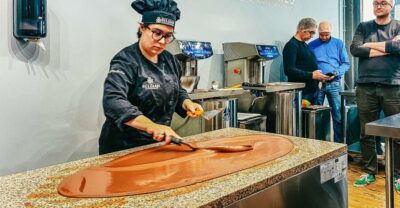
Belgian Chocolate Making Workshop with Tastings
Read our review →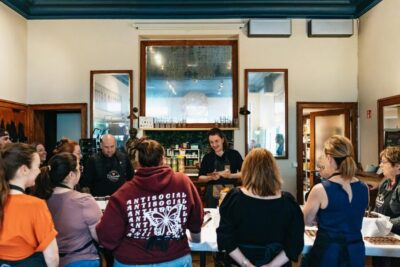
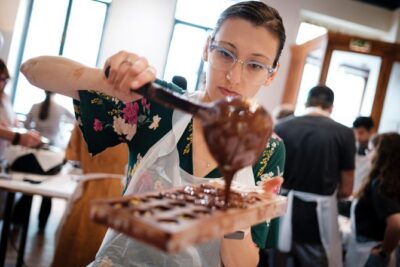
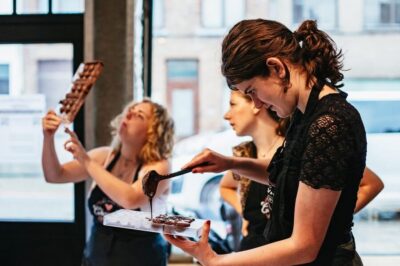
Belgian Praline and Mendiants Chocolate Workshop
Read our review →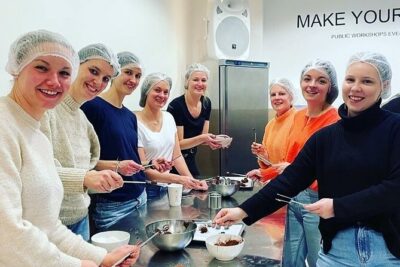
1.5h Belgian Chocolate Workshop in Brussels (bean to bar)
Read our review →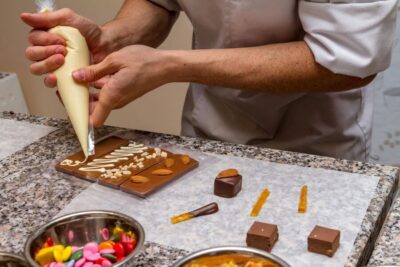
45-minute Chocolate Making Workshop at Choco-Story
Read our review →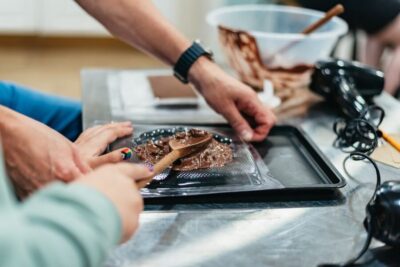
Chocolate Bar Making Workshop at York Cocoa Works
Read our review →Browse the lists this tour appears in