
Review · COSTA RICA
Chocolate Experience by Bribri Indigenous Culture
More than chocolate awaits. This half-day outing from Limón brings you into a Bribri community for lessons in culture, plants, cacao, and daily life. I especially like the hands-on chocolate making and the chance to learn with a guide who may be Bribri himself, including Ariel or Tamara. The main consideration is physical: the walk to the cacao area can be steeper than the phrase short hike suggests.
You spend about five to six hours on the outing, with roughly three hours in the Bribri area and another 45 minutes at Cataratas Bribri Talamanca. Small groups of up to nine keep the visit personal, while pickup makes the day easier if you are staying around Limón.
This is not a quick tasting stop. You will see how cacao becomes chocolate, learn about Bribri beliefs and medicinal plants, and meet people connected to the community. The waterfall adds a cheerful finish, though you should bring walking shoes, insect repellent, water, and a swimsuit.
Key things to know before you go
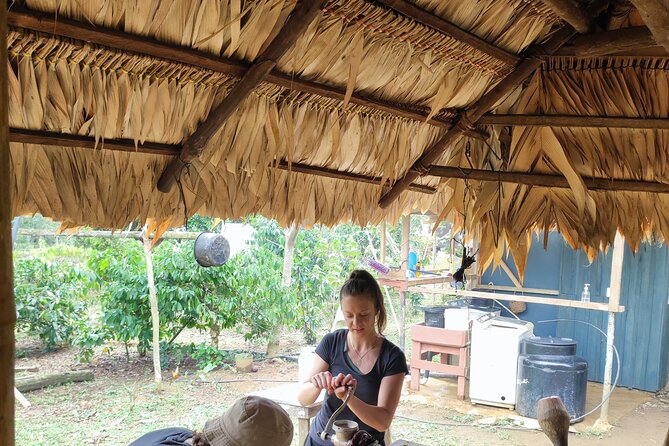
- You make your own chocolate: Learn the process from cacao to finished pieces, with a chance to take part instead of simply watching.
- The cultural visit is the main event: Guides explain Bribri language, daily life, community traditions, and cosmovision.
- The route includes a real walk: Reaching the cacao farm can involve a short but demanding uphill return.
- The waterfall is part of the outing: Swim in the natural pool at Cataratas Bribri Talamanca for about 45 minutes.
- The group stays small: A maximum of nine people allows more questions and a calmer visit with the host family.
- Plan for a full half-day: Pickup, road time, the village visit, chocolate lesson, and waterfall make this longer than a standard food tour.
Why this Bribri visit is about much more than cacao
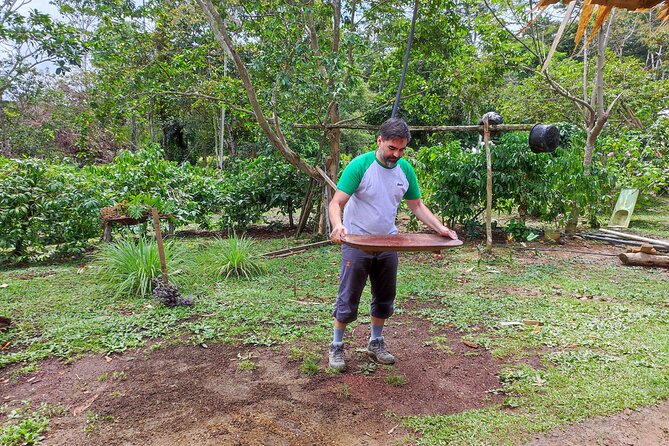
Chocolate is the easy headline, but it is not the whole reason to book this outing. The stronger appeal is the chance to hear about Bribri life from someone with a close connection to the community.
Your guide explains how people live far from larger towns, including both the benefits and limits of that choice. You may learn about the Bribri language, family and community life, traditional beliefs, and the Bribri view of the natural world. The discussion of cosmovision gives the visit more depth than a standard demonstration of roasting beans.
I like this approach because it treats chocolate as part of a living culture rather than as a product on a souvenir shelf. You are not just shown a finished bar. You follow a food with social, agricultural, and cultural meaning.
The experience also includes lessons about herbs, fruit, and plants used for medicine. Guides such as Ariel have been praised for explaining these subjects during the walk, pointing out useful plants and edible fruit along the way. Do not expect a formal botany class, but you should have plenty to ask about if plants and traditional remedies interest you.
A few more chocolate tours around the world worth a look
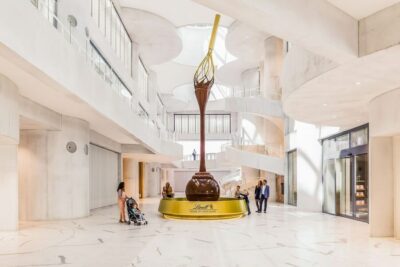
- Lindt Home of Chocolate Museum Entry Ticket
★ 4.7 · 9,329 reviews - Choco-Story Brussels: Chocolate Museum Entrance with Tasting
★ 4.3 · 4,883 reviews - Zurich: City Tour, Cruise, and Lindt Home of Chocolate Visit
★ 4.5 · 4,624 reviews
Meeting the guide and entering the community
Pickup is offered, and the guide accompanies you from the start of the outing. This matters because the road journey and arrival are part of the orientation. A guide such as Ariel can explain the area, the Bribri people, their language, and their way of life before you reach the community.
Tamara has also led this experience, with a reputation for adapting the pace to a small group and helping with practical matters beyond the tour itself. If you are assigned Ariel or Tamara, expect the quality of the day to depend heavily on conversation. Ask questions. The more curious you are, the more useful the visit becomes.
At the village or family property, you should expect a warm welcome and a personal setting rather than a large visitor center. Some accounts describe meeting members of the family and seeing how they live. Children may find the social side especially rewarding, since there can be opportunities to interact with local children as well as take part in the food lesson.
That personal setting is a strength, but it also means you should arrive with respect and patience. This is a community visit, not a staged theme-park attraction. Listen carefully, avoid treating people or homes as photo props, and follow the guide’s lead about pictures.
The walk to the cacao area
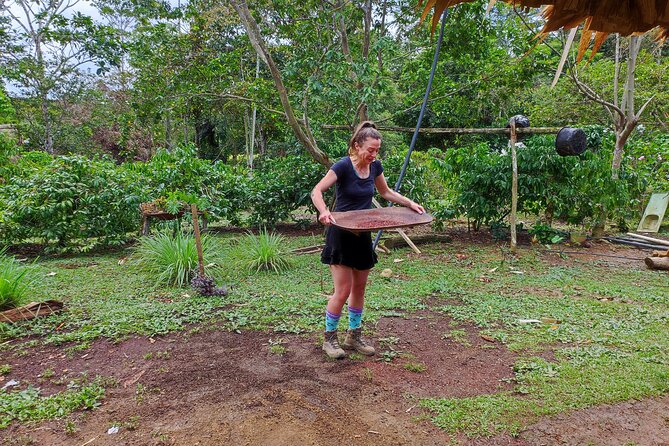
The walk is where the outing becomes more active. The route may take you through the surrounding area toward the cacao farm, with the guide explaining plants, fruit, herbs, and the natural setting along the way.
Descriptions of the hike vary in tone, but the practical message is clear: do not wear casual sandals if you expect to walk comfortably. One person found the return from the cacao farm harder than expected. You may not need serious hiking gear, yet sturdy shoes with a good grip are a smart choice.
The route can be rewarding for people who enjoy seeing where ingredients come from. Instead of discussing cacao only in abstract terms, you get closer to the farm and the work behind the finished food. You might also spot wildlife. One family saw a sloth during the walk, though sightings are never guaranteed.
The terrain is an important limitation for families with very young children or anyone who has trouble on uneven or sloped paths. A family with children as young as 18 months enjoyed the outing, but the physical demands still deserve attention. Ask about the pace before setting out if mobility is a concern.
Making chocolate from cacao to a finished treat
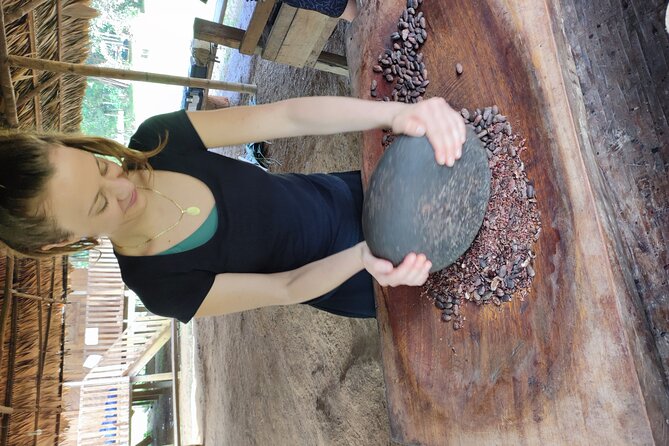
The chocolate lesson is the most active part of the cultural visit. Your guide explains the steps involved in turning cacao into chocolate, then gives you a chance to work through the process yourself.
The exact order and tools may vary, but the lesson follows the path from cacao seed toward chocolate and hot chocolate. You will not simply sample a polished confection. You will handle the process and make your own chocolate pieces.
That hands-on format works well for families. Teenagers can take the process seriously, younger children can help with the practical steps, and adults get a better sense of the labor behind something usually bought in a shop. The activity also gives the conversation a natural focus, so the cultural information does not feel like a long lecture.
The work is part of the charm. If you want a quick gourmet tasting with immaculate presentation, this may not be your ideal chocolate outing. If you enjoy learning by doing, it offers better value than a passive sample session.
Some accounts also describe a meal or refreshments during the visit. Since the advertised details focus on the chocolate lesson rather than a guaranteed menu, confirm meal arrangements if food planning is important to you. Bring water for the walk regardless.
Same place, a different sort of tasting:
- The Chocolatarium Chocolate Tour Experience in Edinburgh
★ 5.0 · 4,322 reviews - Award-Winning Geneva Chocolate &Old Town Tour with Boat Ride (3h)
★ 5.0 · 3,721 reviews - Melbourne: Yarra Valley Wine, Gin, Whisky and Chocolate Tour
★ 5.0 · 3,667 reviews - 4×4 Dominican Adventure with Chocolate and Coffee Tasting
★ 5.0 · 2,920 reviews
Bribri culture, language, plants, and cosmovision
The cultural teaching is the most valuable part of the price. You learn about Bribri customs and language, how the community lives, and the advantages and disadvantages of staying far from major towns.
The discussion of medicinal plants adds a practical layer. You might see herbs or fruit growing in the area and hear how they are used. This connects the forest and farm to daily life in a way that a museum display cannot.
The explanation of Bribri cosmovision is another reason this outing feels different from a regular food activity. It introduces a way of understanding people, nature, and community that may be unfamiliar to you. Listen for the links between the beliefs being explained and the work you see around you.
I appreciate that the outing does not present Bribri life as a frozen relic. The information includes both older traditions and present-day realities. That balance matters. You get a better sense of a living community facing ordinary choices, not a simplified picture designed only for tourists.
The waterfall finish at Cataratas Bribri Talamanca
After the cultural portion, the outing continues to Cataratas Bribri Talamanca. You have about 45 minutes to enjoy the natural pool, swim, and cool off under the falling water.
This is a good ending after the walk and chocolate work. The pool offers a chance to relax, and the waterfall creates some of the day’s best photo opportunities. Bring a swimsuit and a towel if you want to swim, and keep in mind that wet clothing can make the ride home less comfortable.
The waterfall is refreshing, but it should not be the sole reason you book. The visit is relatively short compared with the Bribri portion, and conditions can affect how enjoyable swimming is. The tour requires good weather, so heavy rain can change the schedule or lead to cancellation.
Use care around the water. The supplied details do not promise lifeguards, changing rooms, or specific swimming facilities, so do not assume a fully equipped beach setting. Think of it as a natural stop added to a cultural day.
Is $95 a fair price?
At $95 per person, this is not a bargain basement outing, but the price can make sense if you value access, guiding, and a small group. You are paying for several connected parts: pickup, transport, a guide, a community visit, cultural interpretation, a cacao lesson, chocolate making, and the waterfall stop.
The group limit of nine helps the value. A guide can answer questions and adjust the pace more easily than on a bus tour with dozens of people. You also get a more direct connection to the host family and the setting.
The price is less compelling if your only goal is to eat chocolate or swim at a waterfall. You could likely find simpler versions of either activity elsewhere. This outing earns its cost through the combination of culture, food, walking, and personal contact.
It is commonly booked about nine days ahead, so do not leave it until the last minute if your Costa Rica schedule is tight. Confirmation normally arrives when you book, although bookings made within eight hours of departure are confirmed as soon as possible and depend on availability.
Who will enjoy this outing most?
I would recommend it most strongly to people who like food with a story attached. You should enjoy conversation, outdoor walking, and learning about another way of life. The day also suits families, especially those whose children enjoy making things rather than sitting through a long talk.
It is a good fit for:
- Families with school-age children or teenagers
- Couples interested in culture and local food
- People who prefer small groups to large coach tours
- Visitors who want a waterfall stop without booking a separate full-day trip
- Anyone curious about plants, traditional remedies, and cacao production
You may want to choose another activity if you dislike uneven paths, humid outdoor conditions, or hands-on work. The walk is not described as extreme, but the return from the cacao farm can be tiring. This is also not the right choice if you want a tightly scripted show with constant entertainment.
Service animals are allowed, and the activity is listed as suitable for most people. Still, the walk and natural setting mean you should consider your own mobility and comfort before booking.
Practical preparation for a better day
Wear shoes suitable for a short trail, not just town walking. Pack insect repellent, drinking water, a swimsuit, and clothes that can handle heat, humidity, or a little mud.
A small day bag is useful for keeping these items together. If you plan to swim, bring a way to carry wet clothing. Cameras and phones are welcome for photos, but use common sense around the waterfall and ask before photographing people in the community.
Bring questions. Ask how cacao is grown, what the plants are used for, how the language fits into daily life, and what it is like to live far from larger towns. A curious attitude will give you far more than simply following the steps.
The activity has a maximum of nine participants, but the exact feel may depend on who books that day. A small family group can feel almost private, while a full group may be more social. Either way, the limited size is a useful feature.
Cancellation and weather considerations
The booking is non-refundable and cannot be changed for personal reasons, so make sure your schedule is firm before paying. If poor weather cancels the outing, you are offered another date or a full refund.
The experience also requires a minimum number of participants. If that minimum is not met, you are offered another date or experience, or a full refund. Those terms make travel insurance or a flexible wider itinerary worth considering, especially during a short stay.
Should you book the Bribri chocolate experience?
Book it if you want culture first, chocolate second. The strongest parts are the personal guide, the contact with a Bribri family and community, the plant and language lessons, and the chance to make chocolate instead of merely tasting it.
I would skip it if you want an easy, polished food demonstration or if a steep return walk would make the day uncomfortable. For everyone else, the $95 price is reasonable for a small-group outing that combines a meaningful cultural visit, hands-on cacao work, and a waterfall swim.
Pack good shoes, insect repellent, water, and a swimsuit. Then give yourself time to listen. That is where this outing earns its place on a Limón itinerary.
FAQ
Where does the Chocolate Experience by Bribri Indigenous Culture take place?
It takes place in the Limón area of Costa Rica, with a visit to a Bribri indigenous community and a waterfall at Cataratas Bribri Talamanca.
How long does the experience last?
The full outing lasts approximately five to six hours. The Bribri portion takes about three hours, and the waterfall stop lasts about 45 minutes, with additional time for transport and transitions.
How much does the experience cost?
The listed price is $95 per person.
Is pickup available?
Yes. Pickup is offered as part of the experience.
How many people can join the tour?
The activity has a maximum of nine participants.
Will I get to make chocolate?
Yes. You learn about the chocolate-making process and have the opportunity to make your own chocolate pieces.
Can I swim at the waterfall?
Yes. At Cataratas Bribri Talamanca, you can swim in the natural pool and enjoy a refreshing shower beneath the waterfall.
What happens if bad weather cancels the experience?
If poor weather causes a cancellation, you are offered a different date or a full refund.
Just added around the world
- Lindt Chocolate Museum with Cruise Transfer from Zurich★ 4.6 · 7 reviews
- Zagreb: Lake Bled and Ljubljana Day Tour with Chocolate Gift★ 5.0 · 26 reviews
- Zurich: Chocolate Tasting and Walking Tour with a Local★ 4.2 · 13 reviews
- Zurich Open-top Tour and Chocolate and Cheese Countryside★ 3.5 · 11 reviews
- Wine and Chocolate experience★ 4.6 · 3 reviews
- York: Introduction to Chocolate Making Experience★ 4.9 · 10 reviews
- Zaandijk-Near Zaanse Schans Chocolate making demo & tasting★ 4.8 · 13 reviews
- Private Wine and Chocolate Tasting Experience★ 4.4 · 3 reviews
Chocolate Tours, compared.
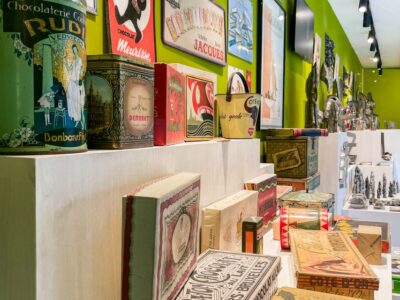
Choco-Story Brussels: Chocolate Museum Entrance with Tasting
Read our review →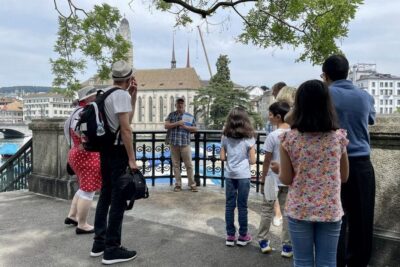
City Tour, Cruise, and Lindt Home of Chocolate Visit
Read our review →
The Chocolatarium Chocolate Tour Experience in Edinburgh
Read our review →
Award-Winning Geneva Chocolate &Old Town Tour with Boat Ride (3h)
Read our review →
Yarra Valley Wine, Gin, Whisky and Chocolate Tour
Read our review →
4×4 Dominican Adventure with Chocolate and Coffee Tasting
Read our review →
Browse the lists this tour appears in