Review · BELGIUM
Secrets of Bruges: Walking Tour With a Chocolate and Waffle Bite
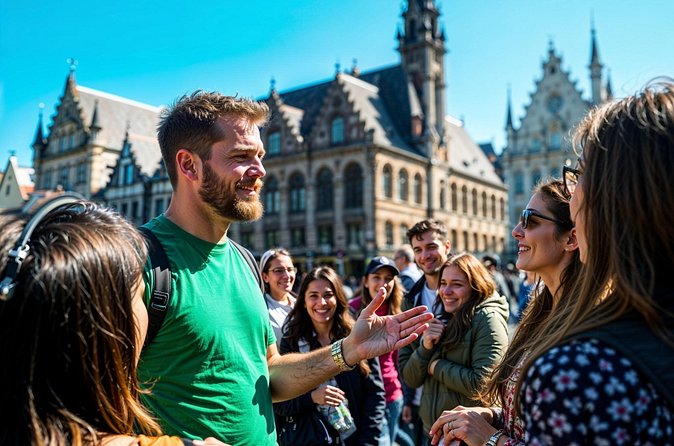
Bruges rewards slow walking. This two-hour English tour turns its squares, canals, churches, and old buildings into a connected story, with chocolate and waffle bites along the way. I like the lively storytelling, especially from guides such as Steve and Artur, and I like that the route finishes near a brewery, giving you an easy place to continue exploring.
The listed price of $3.61 per person makes this remarkable value if that rate is available for your date. The main consideration is style: this is more of a funny, participatory storytelling walk than a quiet academic lecture. One guide’s jokes may not suit every taste, and the group can reach 24 people.
Key things to know before you book
- The route covers Bruges essentials: You see the Belfort, Market Square, Burg Square, canals, the Church of Our Lady, Saint John’s Hospital, the fish market, and the old brewery district.
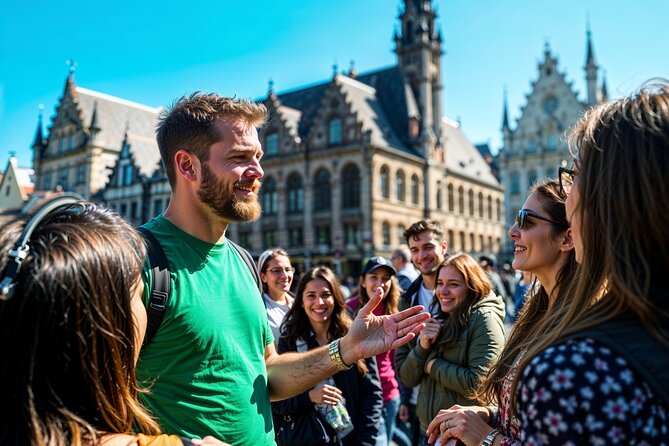
- Storytelling is the main attraction: Steve, Artur, Gosia, and other guides are praised for humor, local connections, and bringing history to life.
- Chocolate and waffle bites are included: The tastings are small, but they also help you learn where to return for more.
- The finish is convenient: The walk ends at De Halve Maan Brewery, about 10 minutes on foot from the starting point.
- Families can do well here: The interactive stories and humor have held the attention of children and teenagers.
- Expect a public walking tour: It lasts about two hours, uses a mobile ticket, and may include up to 24 people.
A lively first look at Bruges
Bruges can feel almost too pretty at first. The canals, stepped roofs, church towers, and polished squares seem arranged for a postcard. A good guide helps you get past the picture and understand how the city worked, who held power, and why these buildings ended up here.
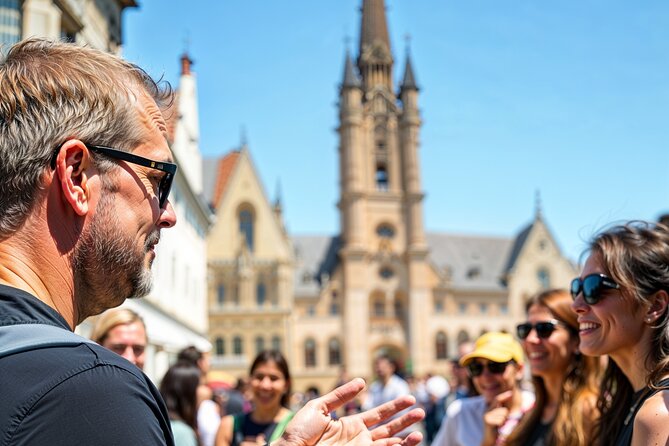
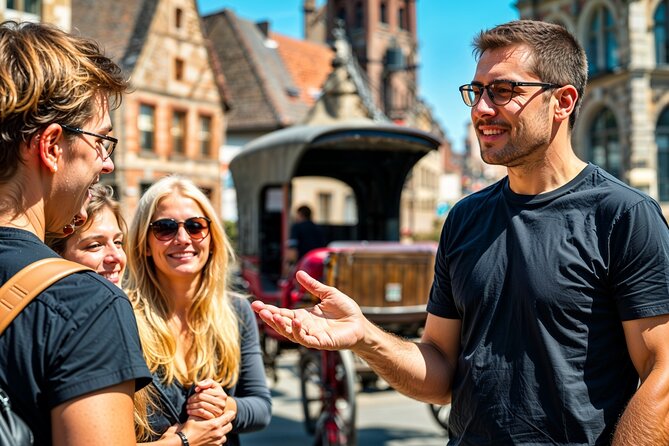
That is where this walk earns its keep. Steve is praised for his warmth, humor, local contacts, and ability to talk with the group rather than at it. Artur is described as a natural storyteller, while Gosia brings plenty of energy. The guides appear to have room to shape the walk in their own style, so your experience may depend on who leads it.
You should expect stories, questions, jokes, and a little audience participation. This can make a two-hour history walk far easier to remember, especially when you are traveling with children. It also means the tour may feel less formal than a traditional historical lecture.
The meeting point is Market Square, or Markt, in central Bruges. The mobile ticket is useful, and confirmation arrives when you book. The tour is offered in English and is close to public transportation, though the walk itself is on foot.
More Chocolate Walking Tours in Belgium
- Bruges: History, Chocolate and Beer Walking Tour
★ 4.9 · 65 reviews - Bruges: Walking Tour with Hot Chocolate & Chocolate Tasting
★ 3.2 · 28 reviews - Walking Tour with Hot Chocolate and Chocolate Tasting
★ 3.0 · 5 reviews
Belfort Tower and the first view of Market Square
The Belfort, or Belfry of Bruges, is the natural place to begin. You learn when and why the tower was built, which gives the city a useful starting point. This was not simply a decorative church tower. It represented civic power, public authority, and the ability of the town to guard its records and valuables.
You do not need to climb the tower for this tour. The focus is on its place in Bruges and its meaning, not on an interior visit. If you plan to climb later, ask your guide for practical advice, but do not assume that the tour ticket includes tower admission.
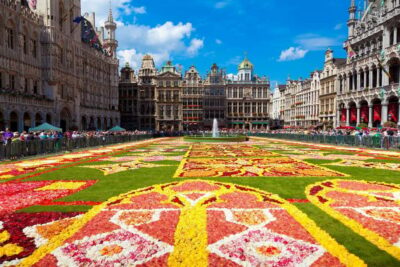
Market Square gives the guide a broad outdoor classroom. Look around before the storytelling begins. The square gathers ornate façades, the Belfort, and the historic center in one compact view. It is also a useful place to understand how Bruges presents itself today: beautiful, busy, and heavily shaped by its past.
The guide also points out one of the square’s most attractive buildings and explains what occupied the site before it. That detail matters because it shifts your attention from façades to change. Bruges is not a frozen medieval set. Buildings were altered, replaced, and repurposed over time.
Historium and the many faces of Burg Square
The Historium Museum comes next as a natural question: is it worth visiting? The walk does not simply push you toward another ticket. Instead, you get context that can help you decide if the museum fits your schedule and interests.
If you enjoy reconstructed scenes and a more staged look at Bruges, the Historium may appeal to you. If you prefer walking outdoors and hearing a guide connect real buildings with local stories, this tour may already provide enough history for your first visit. Your guide can help you judge how much more time to spend inside.
Burg Square is one of the strongest parts of the route. It brings several architectural styles together, and the guide explains whether the square always looked this way and what it is used for now. That question is more useful than a simple list of dates. You learn to notice how civic, religious, and administrative buildings share one small space.
The square also shows how Bruges has been reshaped for modern public life. It remains a place for movement, gathering, sightseeing, and city business, not just a monument to the past.
Blood, power, and the old fish market
One of Bruges’ oldest questions concerns the blood said to be kept at the Basilica of the Holy Blood. The tour asks whether it is real, then uses the question to explain belief, pilgrimage, and the role of religious objects in the city.
You should not expect a scientific investigation or a long interior visit unless the route allows it. The value is in hearing how a story can shape a place for centuries. The subject also adds a darker and more human note to Bruges, where faith, politics, and public ceremony often overlap.
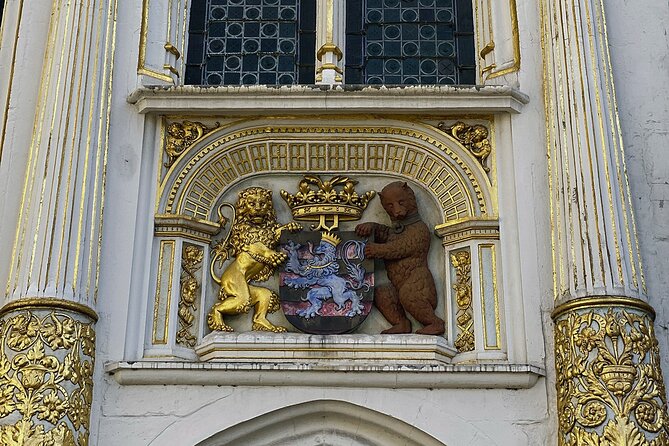
The Brugse Vrije follows with its Renaissance façade. This building helps explain civic power in Bruges and gives you another chance to compare architectural styles. The guide’s job here is not merely to name the building. It is to explain what authority looked like in stone and decoration.
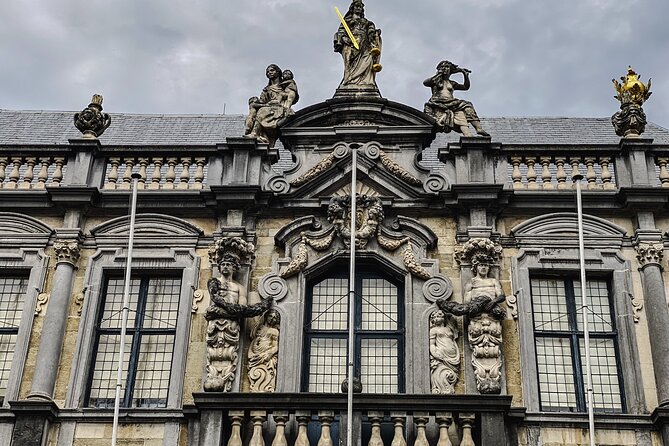
Then comes the old sixteenth-century fish market. This is the sort of stop you might walk past without help. It connects the city to daily trade, food, work, and public commerce. Bruges can seem like a place made only for beautiful views, but the fish market reminds you that ordinary business kept the city alive.
More Pastry and Chocolate Tours in Belgium
- Across Bruges History Equals Fun with chocolate and waffle sample
★ 5.0 · 34 reviews - Brussels: Historical Tour with Chocolate & Waffle Tasting
★ 4.8 · 1,206 reviews - Brussels: Historical Walking Tour with Chocolate & Waffle Tasting
★ 5.0 · 1,165 reviews - Brussels Walking and Tasting Tour (Beers,Chocolates&Fries/Waffle)
★ 5.0 · 929 reviews
The square that looks terrible, then beautiful
One stop is introduced as the most horrible square in Bruges. That teasing description is part of the tour’s tone. The point is to make you look again and decide whether the place is ugly, beautiful, or simply changed by time and use.
This is a useful lesson for exploring the city on your own. Not every corner has the polished charm of Market Square. Some spaces reveal repairs, mixed styles, practical buildings, or modern intrusions. A good guide helps you see those differences instead of treating them as failures.
I like this kind of stop because it keeps the walk from becoming a parade of perfect façades. Bruges is easier to understand when you see both its showpiece architecture and its less tidy edges.
Canals, bridges, and the stories beneath them
The romantic canals are one of the tour’s visual highlights. From the water’s edge, Bruges becomes quieter and more intimate. You get a better sense of why the city is associated with bridges, reflections, narrow streets, and water routes.
The walk includes the Bridge of Love and the Bridge of Dead, names that invite a story rather than a photograph alone. The contrast gives the guide room to explain how legends and local memory become part of a city’s identity.
Do not expect a boat ride. The experience is a walking tour, so you see the canals from the streets and bridges. That is a benefit if you want to keep moving through the center and avoid adding another paid activity to your day.
This section also gives you a good chance to ask about places to return later. Bruges looks different when the streets are quieter, and the canals are often worth revisiting after the group has dispersed.
Gruut, the House of Gruut, and a touch of drama
The reference to Luis of the House of Gruut sounds like something from a medieval drama, and that is part of the fun. The guide uses names, families, and local power struggles to make the past feel less like a list of rulers.
These stories help you connect Bruges with the people who shaped it. They also suit the tour’s style: memorable characters, surprising details, and a little theatrical energy.
You may especially enjoy this section if you like history delivered through personalities. If you prefer dates, documents, and a strict sequence of events, you may find the storytelling loose. The tour openly leans toward narrative, so it is best chosen for atmosphere and connection rather than a formal lesson.
Church of Our Lady and Saint John’s Hospital
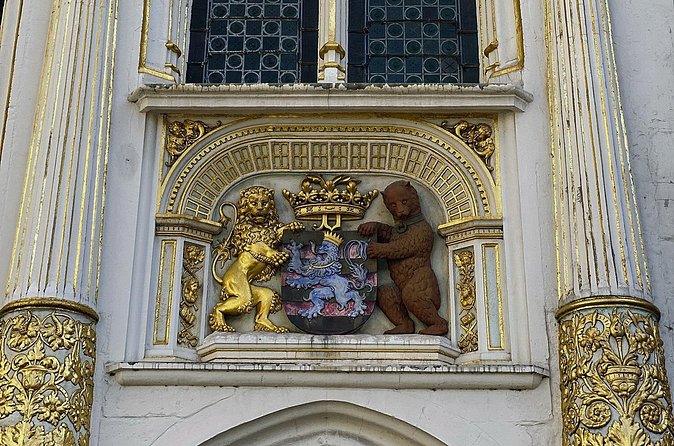
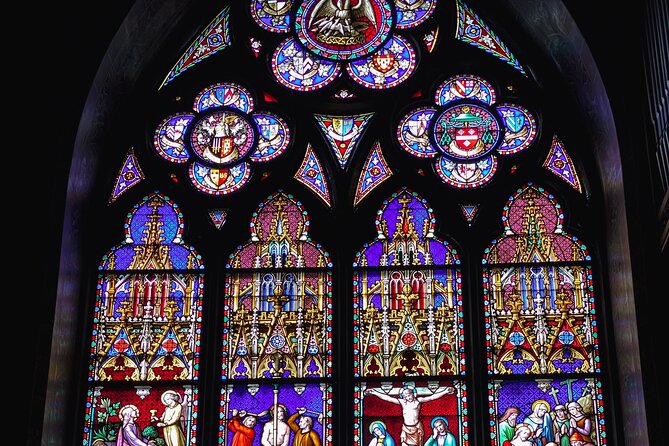
The Church of Our Lady gives the route one of its grandest sights. The guide explains why its tower was once described as the tallest building in the world. That claim needs historical context, and the story helps you understand how medieval cities measured status through towers, churches, and technical achievement.
The church is also a reminder that Bruges was once an important center of wealth and craft. Even if you do not enter, the exterior gives you plenty to discuss. If you want a detailed look inside, ask about the best time to return, since this walking tour does not promise a full church visit.
Nearby, Saint John’s Hospital is presented as the oldest medieval hospital. This stop adds social history to the route. Instead of focusing only on merchants and rulers, you get a sense of how the city cared for sick people and how institutions developed around religion and charity.
A hospital building can tell you a lot about medieval life. It reflects illness, poverty, faith, medicine, and the need for organized care. That makes this one of the more meaningful stops for anyone who wants more than pretty architecture.
Chocolate, waffles, and the useful part of tasting
The included chocolate and waffle bites are small, but they add a welcome sensory break. You get to sample local treats without committing to a full café stop, and the guide can point you toward places worth revisiting.
That practical advice may be more useful than the bite itself. Bruges has plenty of chocolate and waffle shops, but quality and style vary. The tour helps you narrow the choices, and one family specifically enjoyed learning where to return for recommended waffles and chocolates.
The tastings are not a meal. Have breakfast or lunch plans in place, especially if you are joining the walk around midday. Think of the food as a sample and a local orientation, not a food tour.
The tasting also helps keep younger participants interested. Children and teenagers may not remember every architectural term, but they are likely to remember a chocolate stop and a good story about Shrek or another playful reference.
Finishing at De Halve Maan Brewery
The tour ends at Huisbrouwerij De Halve Maan, on Walplein. This is a smart finish because the brewery is an easy place to continue your Bruges afternoon, and the end point is about a 10-minute straight walk from Market Square.
The tour does not state that a brewery visit or beer tasting is included. You should treat De Halve Maan as the ending location, not as part of the paid tour unless your booking details say otherwise.
Even without going inside, the finish works well. You end near Saint John’s Hospital, the Church of Our Lady, and other central sights. You can stop for a drink, eat nearby, or keep walking through the city without needing another transfer.
Price, group size, and overall value
At the listed price of $3.61 per person, this is unusually inexpensive for a guided two-hour walk that includes an English-speaking guide and admission fee. The exact price can vary by date or booking conditions, so check the current amount before you pay. Still, the value is strong if you want orientation, stories, and a few food samples at a very low cost.
The maximum group size is 24. That is not a private walk, and you may occasionally stand in a cluster near a busy square. A smaller group can feel more personal, while a full group may make questions and conversation harder.
The tour has a 96 percent recommendation rate and a 4.9 rating from 27 ratings, which suggests a consistently positive experience, though the sample is not large. The strongest praise centers on humor, storytelling, local insight, family appeal, and the guides’ ability to keep people engaged.
There is one clear caution. One participant felt the guide’s self-promoting humor and stereotypes took space away from history and culture. That criticism is worth taking seriously because the provider describes the walk as storytelling rather than a formal history lecture. If you want exact chronology and restrained commentary, choose a more academic option.
Who should book this Bruges walk?
I would choose this tour for a first morning or afternoon in Bruges. It gives you a map in your head, introduces major sights, and leaves you near a brewery and several central attractions.
It is especially suitable for:
- Families with older children and teenagers
- First-time visitors who want city orientation
- People who remember stories better than dates
- Travelers who enjoy humor and audience participation
- Anyone looking for very low-cost sightseeing
- Visitors who want chocolate and waffle recommendations
I would be more cautious if you dislike group tours, strong guide personalities, or jokes mixed with history. The experience depends heavily on the individual guide. Steve is praised for local connections and accuracy, Artur for charisma and storytelling, and Gosia for enthusiasm, but the tone may vary.
You should also wear comfortable shoes and check the weather. The walk is outdoors, and one account describes a rainy spell during which Steve offered an umbrella. That was kind, but you should still bring your own rain layer rather than depend on luck.
Free cancellation is available until 24 hours before the start time. Changes or cancellations inside that window are not refundable, and gratuities are not included. Service animals are allowed, and the operator says most people can participate.
Should you book it?
Book this walk if you want Bruges explained with warmth, humor, and local color rather than delivered as a formal lecture. The route covers the city’s essential sights, the food samples are a pleasant extra, and the ending near De Halve Maan Brewery is practical.
Skip it if you want a private guide, a quiet architectural survey, or a tightly academic account of Bruges. For everyone else, especially families and first-time visitors, the low price and strong storytelling make this a smart way to get oriented before exploring the city on your own.
FAQ
Where does the Bruges walking tour start?
It starts at Market Square, or Markt, in Bruges, Belgium.
Where does the tour end?
It ends at Huisbrouwerij De Halve Maan, at Walplein 26. The end point is about a 10-minute walk in a straight line from the starting point.
How long does the tour last?
The walking tour lasts approximately two hours.
What language is the tour offered in?
The tour is offered in English and includes an English-speaking guide.
Are chocolate and waffles included?
Yes. The experience includes a chocolate and waffle bite. The tastings are samples, not a full meal.
How many people can join the tour?
The maximum group size is 24 people.
Is the tour suitable for most people?
The operator states that most people can participate. Service animals are also allowed, and the meeting area is near public transportation.
Can I cancel for a full refund?
Yes, if you cancel at least 24 hours before the local start time. Cancellations or changes made less than 24 hours before the start time are not refunded.
More Chocolate Walking Tours in Bruges
- Bruges Beer and Chocolate Walking Tour
★ 4.5 · 3 reviews - Brussels Chocolate Walking Tour and Workshop
★ 4.5 · 885 reviews - Chocolate Flavors Walking Tour of Geneva
★ 4.9 · 670 reviews - Dresden: Guided Walking Tour and Chocolate Museum Ticket
★ 4.5 · 479 reviews
More Pastry and Chocolate Tours in Bruges
- Paris French Sweets Tasting Tour with Pastries and Chocolates
★ 4.5 · 947 reviews - Brussels Chocolate Beer Waffle and Belgian Whiskey All-in-One (Small Group) Tour
★ 5.0 · 551 reviews - Saint-Germain: Gourmet Chocolate & Pastry Walking Food Tour
★ 4.8 · 495 reviews - Paris Chocolate, Macaron & Pastry Food Tour: 10 Gourmet Tastings
★ 5.0 · 339 reviews
Just added around Bruges
- Private Belgian Chocolate Tour in Bruges★ 5.0 · 19 reviews
- Walking Tour with Hot Chocolate and Chocolate Tasting★ 3.0 · 5 reviews
- Evening Delights: Bruges Tour with Beer & Chocolate★ 4.0 · 4 reviews
- Private Bruges’ Iconic Sites and Chocolate Tasting Tour★ 5.0 · 8 reviews
- Across Bruges History Equals Fun with chocolate and waffle sample★ 5.0 · 34 reviews
- Authentic and Complete Bruges, with Local Guide and Chocolate★ 5.0 · 12 reviews
- Bruges Beer Tour with chocolate pairing by a young local★ 5.0 · 13 reviews
- Private: Discover Bruges beers & brewery with chocolate pairing by a young local★ 5.0 · 3 reviews
Pastry & Dessert Tours, compared.
Historical Tour with Chocolate & Waffle Tasting
Read our review →
Historical Walking Tour with Chocolate & Waffle Tasting
Read our review →
Paris French Sweets Tasting Tour with Pastries and Chocolates
Read our review →
Brussels Walking and Tasting Tour (Beers,Chocolates&Fries/Waffle)
Read our review →
Brussels Chocolate Beer Waffle and Belgian Whiskey All-in-One (Small Group) Tour
Read our review →
Saint-Germain: Gourmet Chocolate & Pastry Walking Food Tour
Read our review →
Paris Chocolate, Macaron & Pastry Food Tour: 10 Gourmet Tastings
Read our review →