
Review · FRANCE
Trio Chocolaté – Tour en français – Champagne Passy-Grigny
Champagne and chocolate make a fine team. At Champagne DOM CAUDRON in Passy-Grigny, you get a compact look at Champagne production, from an early village press to a modern vat house, followed by three Champagne and chocolate pairings. The visit is especially appealing if you want local wine culture without committing to a half-day cellar tour.
I like the way the tour connects old winemaking equipment with modern production. I also like the clear, friendly explanations praised in the feedback, which should help beginners follow the process without feeling lost. The main drawback is simple: the visit is in French, so you need enough French to follow the guide or attend with someone who can translate.
The experience lasts only 45 minutes, making it easy to fit into a day in the Marne Valley. You will see the roots of the house, learn about the grape varieties used in Champagne, and finish with three Champagnes paired with three chocolates. At $31 per person, the value rests less on the length of the tour and more on the focused tasting and the chance to connect Champagne with the village where this house began.
Key points at a glance
- A 1929 village story: Priest Aimé Caudron brought the winemakers of Passy-Grigny together, helping create the cooperative tradition linked with the Meunier grape.
- Old and new presses: The visit shows how pressing grapes has changed, giving you a direct link between early vineyard work and current production.
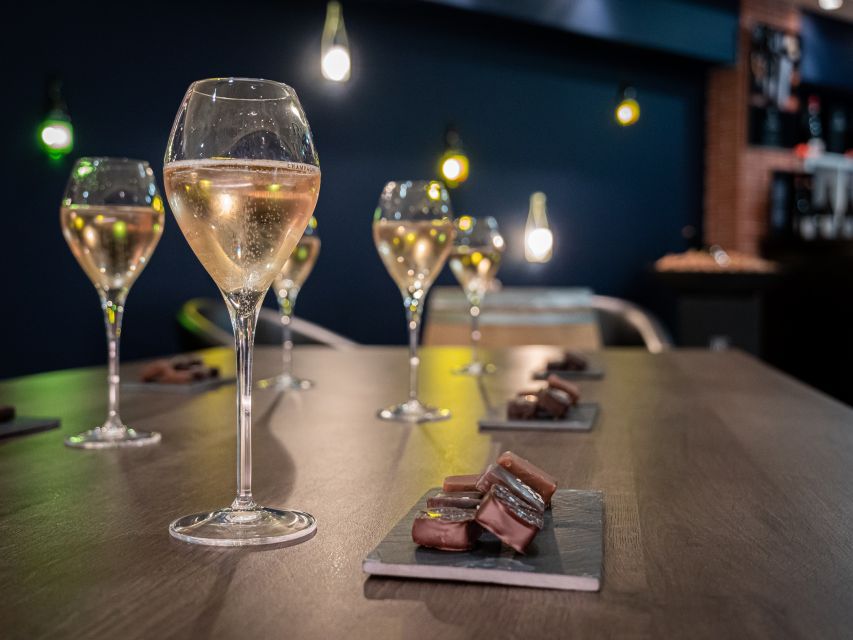
- Three Champagne and chocolate pairings: The tasting is not just a glass at the end. You receive three different Champagnes with three different chocolates.
- A short 45-minute format: This suits a busy day of sightseeing or a quick stop in the Marne Valley.
- French-language explanations: The guide is live and the tour is conducted in French, an important point to check before booking.
- A cool winery visit: The production area is kept at about 12 degrees Celsius, so bring a jacket even if the day outside is warm.
Arriving in Passy-Grigny and meeting the Caudron story
Passy-Grigny is a village in the heart of the Marne Valley. This setting matters because the tour is tied to local growers rather than presented as a generic Champagne lesson. You are learning about a house with roots in this particular village, its vineyards, and the people who organized local production.
The story begins with Aimé Caudron, a priest who saw promise in the village’s winemakers. In 1929, he gathered them together and helped create the foundation for what became known as Meunier. That detail gives the visit a human starting point. Champagne is often presented through grand labels and polished cellars, but here the story begins with a village community and a practical idea.
I find this kind of background useful because it explains why a Champagne house exists in the first place. Before bottles, tasting rooms, and tourism, there were growers working with grapes and deciding how to protect their future. You do not need specialist wine knowledge to appreciate that part of the visit.
The tour is short, so the guide cannot spend long on every detail. Still, the 1929 story gives the rest of the visit a clear thread: local people, local grapes, and the move from early equipment to present-day production.
More Wine and Chocolate Tours in France
- Passy-Grigny: Chocolate and Champagne Tasting Tour
★ 4.8 · 284 reviews - Libourne: Winery Tour with Wine and Chocolate Tasting
★ 4.9 · 74 reviews - tasting workshop of 6 to 8 wines with charcuterie chocolate cheese
★ 5.0 · 48 reviews
Seeing how grapes become Champagne
The main educational part of the visit focuses on how Champagne is made. You will learn about the production process and the grape varieties used in the elaboration of Champagne. The experience is designed for both newcomers and people who already know something about sparkling wine.
That balance is important. If you are new to Champagne, the tour gives you a basic framework before the tasting. You can listen for the connection between grape varieties, pressing, fermentation, and the finished drink. If you already enjoy Champagne, the equipment and local history give you something more specific than a simple tasting bar.
The explanations are one of the strongest parts of the experience. The feedback describes them as very clear, and the guide as friendly and enthusiastic. That combination should make the tour feel approachable rather than formal. You will not be left with a pile of technical terms and no idea how they fit together.
The French-language format changes the experience for some people. If you understand French, you can follow the guide directly and ask questions when appropriate. If your French is limited, the visual side of the tour, including the presses and vat house, will still help, but the finer points of the explanation may be difficult to catch.
I would treat the language as a real booking decision, not a minor footnote. This is a guided visit, not a self-directed display. Much of the value comes from the spoken explanation, so basic French ability will make a clear difference.
From the first press to the modern vat house
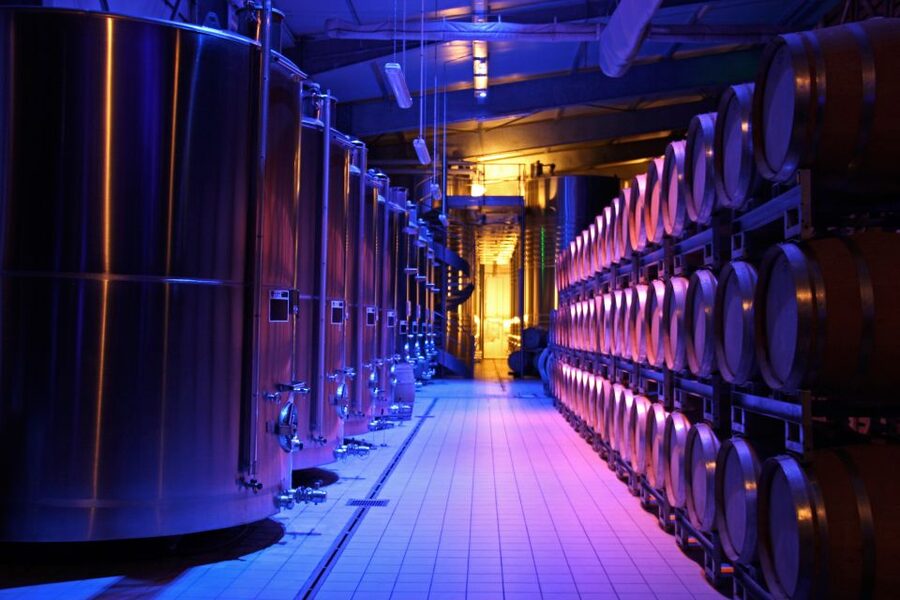
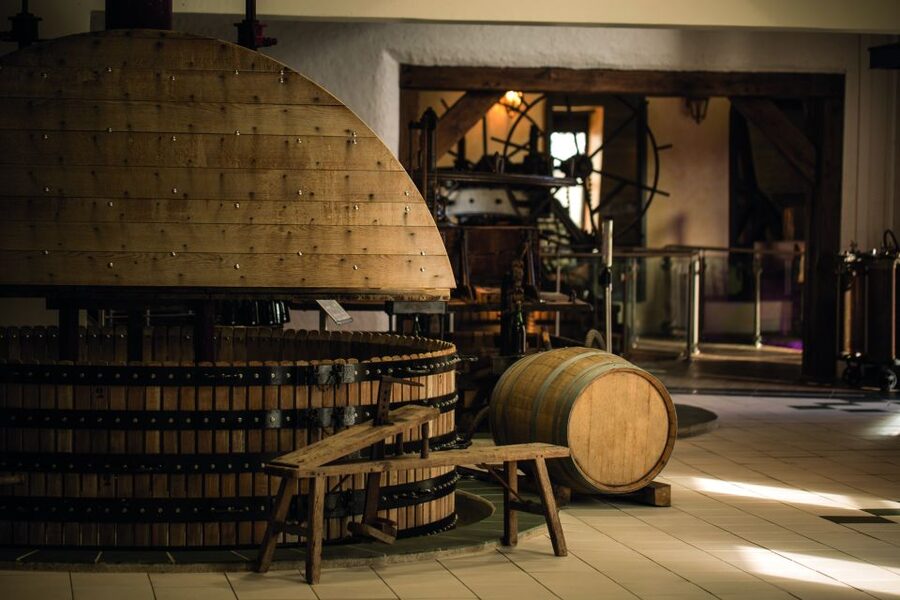
One of the most useful details is the contrast between the Passy-Grigny vine growers’ first press and the current modern vat house. You get to see how the physical work of Champagne production has changed over time.
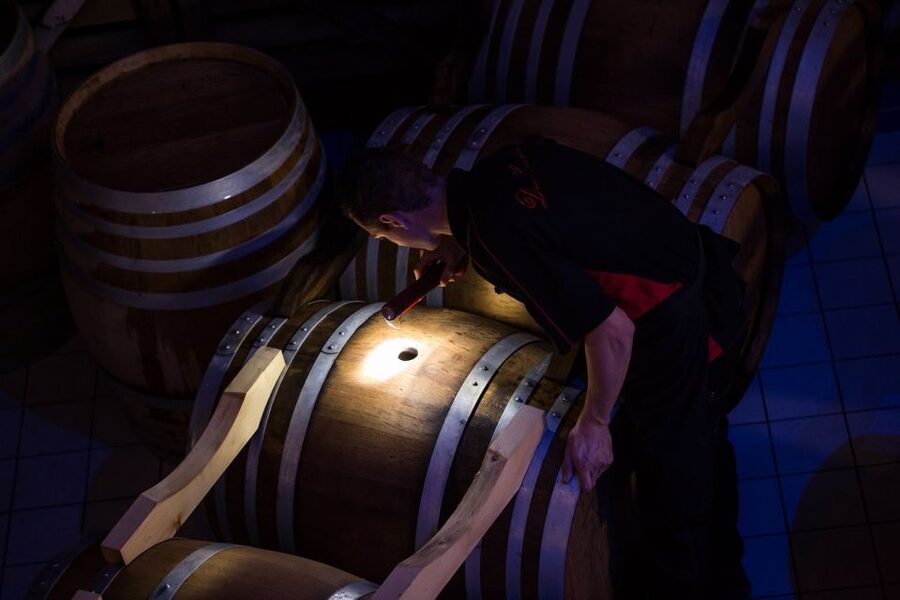
The old press represents the early stage of the village’s winemaking story. It gives you a concrete object to look at rather than only a date or a paragraph about the past. You can picture how the growers began working together and how much production depended on equipment that was far more direct and labor-intensive.
The modern vat house shows the current side of the process. It is a reminder that Champagne is not made only through tradition. Present-day production needs controlled spaces and updated equipment, and the house continues to work within that modern setting.
This old-versus-new comparison is especially helpful for anyone who finds wine explanations too abstract. Instead of hearing only about methods, you see the tools connected to them. The visit does not promise a long technical workshop, but it gives you a solid visual sense of how a small village wine operation developed.
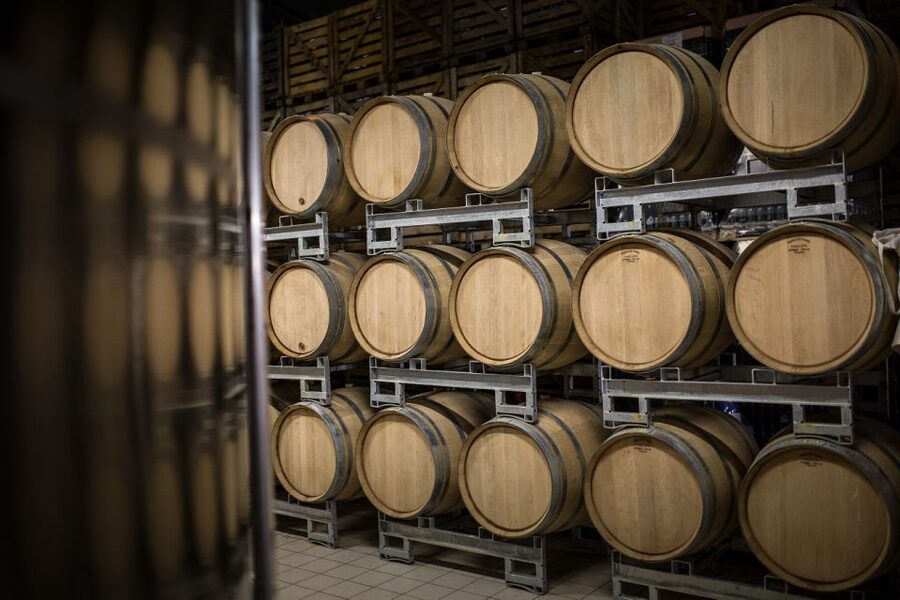
The winery temperature is around 12 degrees Celsius. That is cool enough to feel brisk, so wear a jacket. This is practical advice worth taking seriously. A cold production area can make a short visit less comfortable if you arrive dressed only for summer weather.
The material provided does not specify every room you will enter or every step of the production process you will see. I would not expect a full cellar tour or a lengthy technical demonstration in 45 minutes. Think of this as a concise introduction that uses key equipment and the production area to explain the bigger picture.
Understanding Champagne grape varieties
The guide also introduces the grape varieties used to make Champagne. This is a useful part of the visit because many people recognize Champagne by its name but know little about the grapes behind it.
The tour has a particular connection with Meunier, thanks to the history of Aimé Caudron and the growers of Passy-Grigny. That gives the grape more importance here than it might receive in a general Champagne overview. You can place Meunier within the local story instead of treating it as one item in a long list.
You should listen for how the different varieties contribute to Champagne. The tour is meant to explain the grapes used in production, while the final tasting gives you a chance to experience the finished wines. Even in a short format, that pairing of explanation and tasting can make the information easier to remember.
This is also where I would keep your expectations sensible. The supplied details do not identify the exact Champagne cuvées or explain the precise differences between the three pours. You will taste three different Champagnes, but you should not assume that a full technical tasting sheet or detailed vintage comparison is included.
The strength of the format is its simplicity. First learn what goes into Champagne, then taste examples with food. That makes it a good choice if you want an introduction rather than a serious wine course.
Same place, a different sort of tasting:
- Paris: Entrance Ticket to the Chocolate Museum
★ 4.1 · 1,105 reviews - Paris French Sweets Tasting Tour with Pastries and Chocolates
★ 4.5 · 947 reviews - A Morning in Paris Food Tour: Croissants, Baguettes & Chocolate
★ 5.0 · 556 reviews - Saint-Germain: Gourmet Chocolate & Pastry Walking Food Tour
★ 4.8 · 495 reviews
Three chocolates, three Champagnes
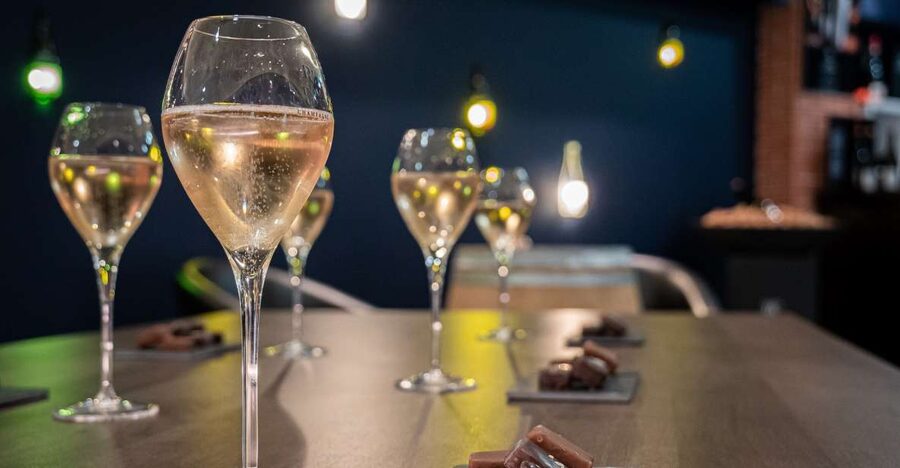
The tour ends with its most tempting feature: three different Champagnes paired with three different chocolates. This is more thoughtful than simply handing you one glass and sending you on your way.
A pairing lets you compare how the chocolate changes your impression of each Champagne. You may notice differences in sweetness, texture, acidity, or finish as you move from one combination to the next. The point is not to turn you into a professional taster in a few minutes. It is to give you a pleasant, practical way to pay attention to what is in your glass.
I like that the tasting follows the production explanation. You first learn about the house, the grape varieties, and the equipment. Then you have a reason to focus on the wine. Without that context, a tasting can become a quick drink. With it, the three pours feel like the payoff to the visit.
The chocolate also makes the experience friendly for people who are not fully confident with wine tasting. You can use the food as a comparison point and talk about what you like without needing specialized vocabulary. It is a relaxed way to end a short educational tour.
The exact chocolates and Champagne styles are not specified, so you should not book this expecting a particular label, vintage, or chocolate brand. The confirmed format is three pairings, and that is enough to make the tasting more varied than a single sample.
The tasting may also be the strongest reason to choose this tour over a longer production visit. If you want a quick cultural stop with a clear activity at the end, the format works well. If your main goal is an in-depth study of Champagne making, 45 minutes will feel brief.
Is $31 a fair price for 45 minutes?
At $31 per person, this is not a bargain basement tasting. You are paying for a guided visit, the production explanation, access to the old and modern equipment, and three Champagne and chocolate pairings.
The price makes the most sense if you value the combination. A simple drink at a bar would not give you the village history, the presses, or the explanation of grape varieties. A longer wine tour might offer more detail, but it would also take more time. Here, you get a compact experience that can fit into a larger day in the Marne Valley.
For me, the value is strongest for first-time Champagne visitors. You receive enough background to understand what you are tasting, and the chocolate pairings add a bit of pleasure without requiring a large time commitment. The positive feedback about clear explanations and a friendly, enthusiastic guide also supports the idea that the human side of the tour matters.
The value is weaker if you already know the Champagne process well and want rare bottles, extensive cellar access, or a long guided discussion. The available information does not promise a large tasting, a private session, or a detailed comparison of specific vintages.
You can also reserve now and pay later, which helps if your route through the region is still changing. Free cancellation is available up to 24 hours before the visit for a full refund. Those terms reduce the risk of booking a short stop too early in your itinerary.
Who will enjoy this visit most?
I would recommend this tour to several kinds of visitors:
- First-time Champagne drinkers who want a simple explanation before tasting.
- Couples and small groups looking for a short food-and-drink activity.
- Wine lovers who enjoy seeing the connection between older equipment and current production.
- French speakers who want a local-language tour in a village setting.
- People with a tight schedule who cannot spare several hours for a larger winery program.
It may be less suitable for you if you need an English-language guide. The tour is conducted in French, and that is not a detail you can easily work around because the explanations are central to the experience.
It is also not suitable for pregnant women, according to the activity information. Wheelchair access is available, which makes the visit more practical for people who need an accessible setting.
Families can decide based on the age and interests of the children, but the confirmed highlights center on Champagne production and tasting. The activity is not presented as a child-focused program.
Practical advice before you go
Wear a jacket. The winery is kept at approximately 12 degrees Celsius, and even a 45-minute visit can feel cold in a production area.
Plan around the starting time shown when you check availability. The experience lasts 45 minutes, but the available start times may shape how you arrange transport and meals in the area.
Arrive ready to listen in French. If you are not comfortable with the language, consider attending with someone who can help explain the guide’s comments. The tour’s clear explanations are a major part of its appeal, so understanding them will improve the experience.
Do not expect a long, open-ended tasting. The confirmed tasting consists of three Champagnes paired with three chocolates. That is enough for a useful comparison, but the visit remains a short introduction.
Finally, remember that the tour is connected to Champagne DOM CAUDRON and the village of Passy-Grigny. The local story is part of the point. You are not simply stopping for a drink. You are seeing how a community-based Champagne tradition developed from the growers of 1929 to a modern vat house.
Should you book Trio Chocolaté?
Book it if you want a short, well-organized introduction to Champagne with a local story and a pleasant tasting at the end. The old press, modern vat house, Meunier connection, and three chocolate pairings give the 45 minutes a clear shape.
The strongest reasons to go are the friendly, clear guiding style, the link to Passy-Grigny’s winemaking history, and the chance to compare three Champagnes with three chocolates. The main reasons to hesitate are the French-only format, the cool winery, and the limited length if you want serious technical detail.
For a first visit to the Marne Valley, I think the tour offers a sensible balance of learning and pleasure. Just bring a jacket, make sure French works for you, and treat the experience as a focused introduction rather than a full day of Champagne study.
FAQ
How long does the Trio Chocolaté tour last?
The tour lasts 45 minutes. Starting times are available when you check the schedule.
What language is the tour conducted in?
The live guided tour is conducted in French.
What is included in the experience?
The price includes the guided tour, a chocolate tasting, and a Champagne tasting.
How many Champagnes and chocolates are included?
You will taste three different Champagnes paired with three different chocolates.
Is the tour wheelchair accessible?
Yes, the experience is listed as wheelchair accessible.
What should I wear for the visit?
The winery is kept at about 12 degrees Celsius, so you should wear a jacket.
Can pregnant women take this tour?
The experience is listed as not suitable for pregnant women.
Can I cancel my booking?
Yes. You can cancel up to 24 hours in advance for a full refund. You can also reserve now and pay later.
Just added around France
- Wine and Chocolate experience★ 4.6 · 3 reviews
- Private Wine and Chocolate Tasting Experience★ 4.4 · 3 reviews
- Wine and chocolat tasting at Chablis.★ 4.9 · 5 reviews
- Private Wine and Chocolate Tasting in Paris★ 4.5 · 4 reviews
- Paris Sweet & Chocolate Family Treasure Hunt★ 5.0 · 37 reviews
- Molded Bonbons Chocolate making class in Paris (collective)★ 4.5 · 20 reviews
- Paris Saint-Germain Private Tasting Tour with Chocolate plus Pastries & Macaron★ 5.0 · 10 reviews
- Private Family Chocolate Making Class in Paris★ 5.0 · 16 reviews
Wine Tours, compared.
Yarra Valley Wine, Gin, Whisky and Chocolate Tour
Read our review →
Cálem Cellar with Chocolate, Cheese, and Wine Tasting
Read our review →
Passy-Grigny: Chocolate and Champagne Tasting Tour
Read our review →
Swan Valley Tour from Perth: Wine, Beer and Chocolate Tastings
Read our review →
Hunter Valley Wine Tour from the Hunter with Wine Craft Beer Cheese Chocolate
Read our review →
Napier: Afternoon Wine Tasting + visit Silky Oaks Chocolates
Read our review →Browse the lists this tour appears in