
Review · COSTA RICA
Chocolate Making and Tasting at a Local Factory in San José
Chocolate tells Costa Rica’s story. At Tapir Chocolates in San José, you taste cacao at nearly every stage, then turn it into your own bars with local fillings and toppings. I like the bean-to-bar lesson and the chance to bring home chocolates you made yourself. I also like the eco-friendly packaging, which makes the souvenir feel personal rather than store-bought. The main caution is group size: the experience is promoted as intimate, but one session reportedly had about 20 people, slowing down the hands-on work.
The workshop lasts about two hours and begins at 3:00 p.m. in Barrio Escalante, a pleasant area filled with restaurants and cafés. I would allow extra time to find Tapir Chocolates, since one person found the small operation difficult to locate. Mauricio is often the host, and his patient, friendly teaching has earned especially strong praise. Still, the bilingual format may feel distracting if Spanish and English are used at the same time.
Key Points Before You Book
- Taste cacao from fresh fruit to finished chocolate: You sample the fruit, seeds, nibs, cocoa powder, cocoa butter, drinks, and bars.
- Make two or more personal chocolates: The workshop includes molds, spatulas, machines, fillings, and toppings for your own creations.
- Expect a 3:00 p.m. start in Barrio Escalante: The activity begins and ends at Tapir Chocolates, with no private transportation included.
- Ask about group size before arrival: The experience is described in different places as having a maximum of 8 or 12 people, and one session was much larger.
- Design your own eco-friendly package: Boxes, paper, stickers, and other materials let you wrap the finished chocolates yourself.
- Budget $57.50 per person: The price makes the most sense if you value instruction, tastings, and a hands-on souvenir, not just a quick sample.
Starting with Cacao in Barrio Escalante
Tapir Chocolates is located at 10101 San José, in Barrio Escalante. This is a useful setting for a food-focused afternoon because you can pair the class with dinner or a drink nearby. The workshop itself ends where it begins, so you do not need to arrange a second pickup point.
The scheduled start is 3:00 p.m., and the activity lasts roughly two hours. That makes it an easy fit on an afternoon when you want something structured but do not want to spend the entire day on a tour. It also works nicely as a final San José activity before dinner, when you can continue exploring the neighborhood.
Finding the workshop may take a little attention. One person described it as a small operation that was difficult to locate, so I would not arrive at the last minute. Confirm the address before setting out, and leave enough time for public transportation or a short walk from your drop-off point.
Private transportation is not included. The meeting point is near public transportation, and the activity is also listed as allowing service animals. No special transportation arrangement is provided, so you are responsible for getting to Barrio Escalante and back.
More Chocolate Making Workshops in the world:
- Vienna: Chocolate Workshop in Chocolate Museum w/ Tasting
★ 4.5 · 1,802 reviews - Brussels: Belgian Chocolate Making Workshop with Tastings
★ 4.7 · 1,629 reviews - Brussels: 2.5-Hour Belgian Chocolate Making Workshop
★ 4.8 · 933 reviews
Tasting the Cacao Fruit Before the Chocolate
The first part of the class explains the history of cacao in the Americas. This is brief, but it gives the tasting a useful frame. Chocolate does not begin as a brown bar in a wrapper. It begins as a fruit, and much of the fun here comes from following the changes in taste and texture.
You start with fresh cacao fruit, an unusual sample that many chocolate classes skip. From there, you taste the seeds at different points in processing, followed by cacao nibs, cocoa powder, cocoa butter, chocolate drinks, and finished chocolate.
This sequence is the strongest part of the experience for me. It helps you connect familiar foods with the raw material behind them. Cocoa butter, for example, is easy to overlook when you see it listed as an ingredient, but tasting the separate cocoa products makes the manufacturing process easier to understand.
The tasting is not only a lesson in production. It also shows why chocolate can taste so different depending on how cacao is processed and how much cacao is used. You are not simply handed a sweet sample and told it is local. You get a step-by-step look at what changes along the way.
Water and snacks are included, which matters during a class that involves repeated tastings. The session includes a complete cocoa-bean-to-bar tasting, as well as a cacao drink. If you are bringing children, keep in mind that the tasting involves several less familiar forms of cacao before the sweet part begins.
Comparing Cocoa Concentrations
Once the raw ingredients have been introduced, the class moves into modern chocolate making. You taste chocolate with different cocoa concentrations before starting your own work.
This is a smart transition. It gives you a basic sense of how the cocoa percentage affects flavor before you choose what to use in your bars. You may find that a stronger chocolate suits one topping, while a sweeter base works better with a filling.
The class provides more than 15 fillings and toppings. The available ingredients are local options, though the supplied information does not list each one. That range gives you room to make different combinations rather than following a fixed recipe.
This is also where the group size matters most. With a small class, you can ask questions and get help as you handle the chocolate. Several sessions had only three people or felt almost private, which allowed the host to spend time with each person. One larger session, however, had at least 20 people and became slow during the bar-making stage.
There is a confusing difference in the advertised capacity. The experience is described as having a maximum of 8 people in its highlights, while the additional information gives a maximum of 12. Since one person also reported a much larger group, I would contact the operator before booking if personal attention is important to you.
Making Your Own Chocolate Bars
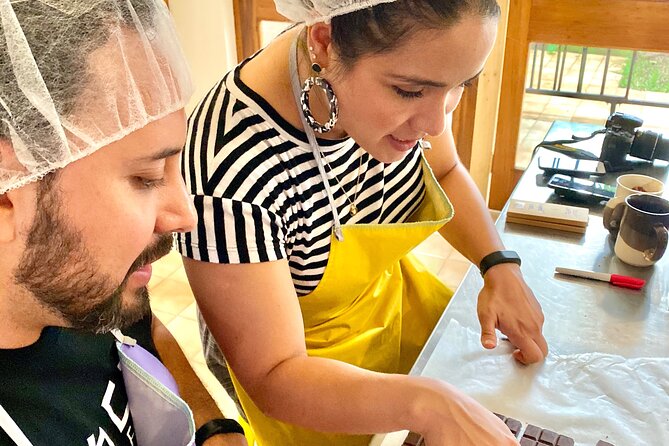
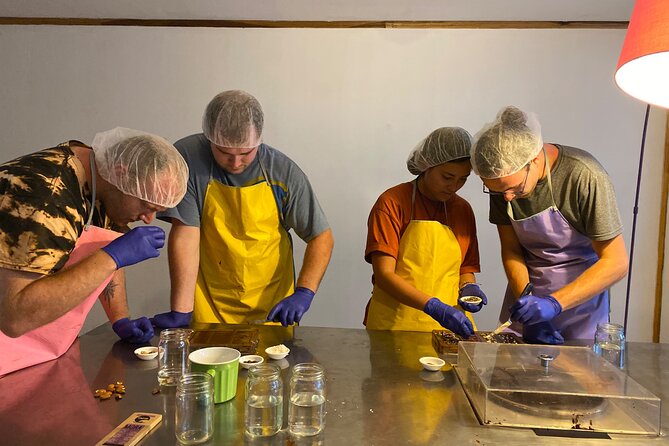
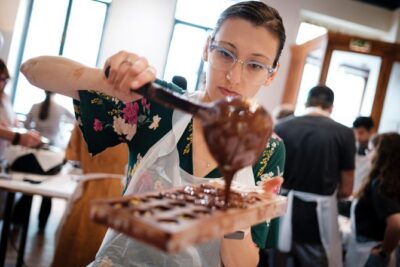
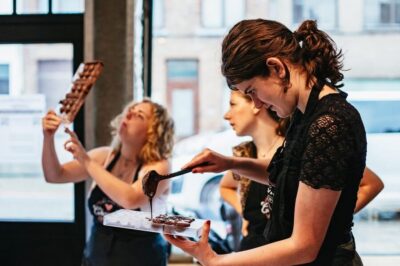
The hands-on section is the reason to choose this activity instead of a simple tasting. You use the provided equipment, including molds, spatulas, and machines, to make your own chocolates.
Each participant receives personal supplies such as a cap, apron, and gloves. The equipment and ingredients are included, so you do not need to bring chocolate-making tools with you. The instructors give directions and help you work through the steps.
The exact number of chocolates can vary in the way the experience is described. Several people left with two bars each, including one bar with toppings and another with a filling. Others left with four chocolates. The safest expectation is that you will make at least two personal creations, but I would ask at the start how many pieces your session includes.
You choose the toppings and fillings, then use your own ideas to shape the results. This is simple enough for beginners, but still gives older children and adults something to think about. It is less like watching a chef perform and more like taking part in a guided craft project that you can eat later.
Mauricio is often singled out for being patient, clear, and encouraging. He has helped people who felt anxious about following the steps, and he welcomes questions. That matters because melted chocolate can be slightly messy and the process may feel unfamiliar at first.
The workshop also works well for families, couples, solo visitors, and groups of friends. A teenage child can take part, and the activity has been used for a bachelorette outing. The best group is one that enjoys tasting, asking questions, and making something imperfect but personal.
More Chocolate Factory Tours in the world:
- Lindt Home of Chocolate Museum Entry Ticket
★ 4.7 · 9,329 reviews - Zurich: City Tour, Cruise, and Lindt Home of Chocolate Visit
★ 4.5 · 4,624 reviews - Zurich Sights: Cruise, Lindt Chocolate and optional FIFA Ticket
★ 4.0 · 1,028 reviews - Full-Day Tour: Concord Waterfall, Chocolate Factory, Rum Distillery, Grand Etang
★ 5.0 · 871 reviews
Designing an Eco-Friendly Chocolate Package
After the chocolate work, you prepare the packaging. Tapir provides boxes, wrapping paper, stickers, and other creative materials, with an emphasis on eco-friendly choices.
This final step gives the class a satisfying finish. You are not handed a generic bag at the door. You design a package for the chocolates you made, turning the result into a small souvenir of your time in San José.
The packaging activity also helps explain why this tour costs more than a basic chocolate sample. You are paying for a lesson, a full sequence of tastings, ingredients, equipment, personal protective items, and a take-home project. The value is strongest if you enjoy making things and want more than a short tasting.
Your chocolate may not look like a professional chocolatier’s finished product, and that is part of the charm. The point is to learn the process, make choices, and leave with something connected to your own visit.
How the $57.50 Price Measures Up
At $57.50 per person, this is not the cheapest chocolate activity in San José. One dissatisfied participant felt another class offered a better experience for roughly half the cost. That criticism is worth considering if you mainly want to eat chocolate or watch a demonstration.
The price makes more sense when you count everything included. You receive a guided explanation of cacao, a tasting of multiple cocoa products, snacks, a cacao drink, access to ingredients, equipment, protective supplies, fillings, toppings, and packaging materials. You also take home your own chocolate creations.
The small-group promise is central to the value. When the class is genuinely small, you get more time with the instructor and less waiting at the equipment. If the group is large, the same price feels harder to justify because the practical part can slow down.
I would book this for the experience rather than for the quantity of chocolate. You are buying a two-hour activity with instruction and participation. If your goal is simply to purchase excellent Costa Rican chocolate, a shop may be a better use of your money.
The rating is very strong, at 4.9 from 115 ratings, with 97 percent recommending the experience. That does not remove the capacity and cancellation concerns, but it indicates that the format works very well when the session runs as planned.
Timing, Language, and Group Size
A 3:00 p.m. start gives you a useful afternoon plan. You can spend the morning elsewhere in San José, attend the workshop, then eat in Barrio Escalante afterward. The two-hour length is long enough for the tasting and making stages without taking over your whole day.
Ask about the language arrangement if you are not comfortable switching between Spanish and English. One person found that using two languages made parts of the class distracting and caused some people to feel left out. If your group needs instruction in one language, confirm that before arrival.
The advertised capacity needs clarification. The highlights say a maximum of 8 people, while the additional details say 12. A report of at least 20 people suggests that the actual number may occasionally exceed both figures. If you are booking for a special occasion or paying for a more personal class, this is the most important question to ask.
The experience requires a minimum number of people to operate. If the minimum is not reached, the activity may be moved to another date or replaced with another experience, with a full refund offered. A cancellation caused by a problem at the workshop has also occurred, so keep your contact information current and avoid planning an important connection immediately afterward.
You can cancel for a full refund up to 24 hours before the start time. Inside that 24-hour window, changes and cancellations are not accepted for a refund. The activity is also subject to weather and operational conditions.
Who Will Enjoy This San José Workshop?
I would recommend it most to people who like food with a story. You do not need prior chocolate-making experience. The instructions are designed for beginners, and the equipment and materials are supplied.
Families with older children and teenagers should find plenty to do. Couples can treat it as a shared activity, while solo visitors may appreciate the easy conversation built into a small class. Friends can make different flavor choices and compare the results.
It is also a good choice for anyone who wants a local food experience without leaving San José. You support a local chocolate business and learn about Costa Rican cacao in a working chocolate setting rather than only buying a packaged souvenir.
I would be more cautious if you dislike group activities, have a tight schedule, or expect a quiet private lesson. The experience can be intimate, but that depends on the number of people booked. I would also skip it if you need a fully predictable itinerary, since the operator has had to cancel a session because of a water leak in the workshop.
Should You Book Tapir Chocolates?
Book this workshop if you want to taste cacao in forms you probably have not tried before, make your own bars, and finish with a handmade package. The fresh cacao fruit tasting is a real point of difference, and Mauricio’s friendly instruction adds warmth to the class.
Before paying, I would confirm the expected group size and teaching language. Those two details have the biggest effect on the experience. At $57.50, the class is fair value for a well-run small session, but less appealing if the room is crowded or you only want a quick chocolate sample.
For most food-minded visitors spending time in San José, I would put this on the short list, especially for families, couples, and friends. Just arrive early, leave room in your schedule, and treat the finished bars as a personal souvenir rather than a professional confection.
FAQ
Where does the chocolate workshop take place?
The activity begins and ends at Tapir Chocolates, located at 10101 San José in Barrio Escalante, Costa Rica.
What time does the experience start?
The scheduled start time is 3:00 p.m.
How long does the chocolate class last?
The workshop lasts approximately two hours.
Is transportation included?
Private transportation is not included. The meeting point is near public transportation.
What is included in the price?
The experience includes tastings from cacao fruit through finished chocolate, snacks, a cacao drink, water, fillings and toppings, equipment, personal supplies such as aprons and gloves, and materials for eco-friendly packaging.
Can I cancel for a full refund?
Yes. You can cancel at least 24 hours before the local start time for a full refund. Cancellations or changes made within 24 hours are not refunded.
Just added around the world
- Lindt Chocolate Museum with Cruise Transfer from Zurich★ 4.6 · 7 reviews
- Zurich Open-top Tour and Chocolate and Cheese Countryside★ 3.5 · 11 reviews
- Zagreb: Lake Bled and Ljubljana Day Tour with Chocolate Gift★ 5.0 · 26 reviews
- Zurich: Chocolate Tasting and Walking Tour with a Local★ 4.2 · 13 reviews
- Wine and Chocolate experience★ 4.6 · 3 reviews
- York: Introduction to Chocolate Making Experience★ 4.9 · 10 reviews
- Zaandijk-Near Zaanse Schans Chocolate making demo & tasting★ 4.8 · 13 reviews
- Private Wine and Chocolate Tasting Experience★ 4.4 · 3 reviews
Chocolate Making Workshops, compared.
Chocolate Workshop in Chocolate Museum w/ Tasting
Read our review →
Belgian Chocolate Making Workshop with Tastings
Read our review →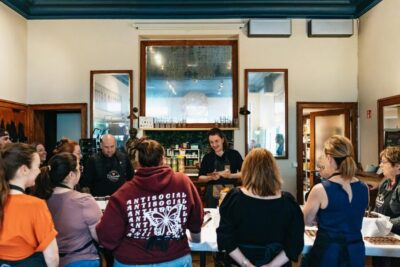
Belgian Praline and Mendiants Chocolate Workshop
Read our review →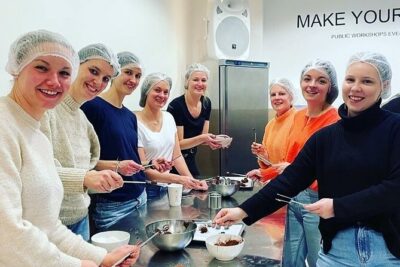
1.5h Belgian Chocolate Workshop in Brussels (bean to bar)
Read our review →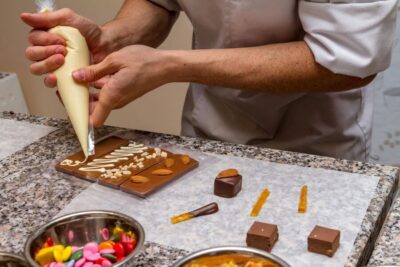
45-minute Chocolate Making Workshop at Choco-Story
Read our review →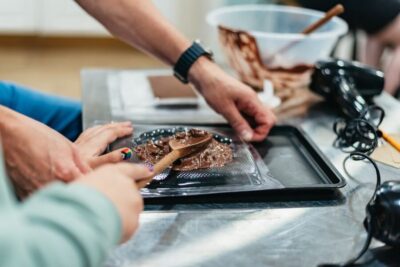
Chocolate Bar Making Workshop at York Cocoa Works
Read our review →Browse the lists this tour appears in