
Review · FRANCE
Paris Cooking Class: Chocolate Éclairs and Cream Puffs
Pastry makes Paris taste better. This three-hour class at Le Foodist teaches you to make choux pastry, Chantilly cream, chocolate éclairs, and cream puffs in a group capped at eight. I like the small class size, which gives you real time with the instructor, and I like that you take home five or six pastries instead of merely watching a demonstration. The main catch is the price: at $155.68 per person, this is a splurge, especially if you are mainly after a sweet snack.
The class begins at 3 p.m. in the Latin Quarter, at 59 Rue du Cardinal Lemoine. You will work with an English-speaking pastry chef, then sit down with coffee, tea, or fruit juice to sample the results. You should also plan for a hands-on session rather than a relaxed tasting, since mixing, piping, filling, and baking all require attention.
Five things to know before you book
- You make choux pastry from scratch: Learn the key steps behind the shells used for both éclairs and cream puffs.
- The group never exceeds eight people: That keeps the class personal and makes it easier to ask for help.
- You take home five or six pastries: A box of your own chocolate éclairs or cream puffs comes with the class.
- The practical tricks matter: Your chef explains how to get an even rise and pipe filling neatly into the baked shells.
- The class ends with a proper pastry break: Sit down for coffee, tea, or fruit juice and taste what you made.
- You receive the recipes electronically: The digital English recipes give you a chance to repeat the lesson at home.
Starting at Le Foodist in the Latin Quarter
The meeting point is Le Foodist at 59 Rue du Cardinal Lemoine in Paris’s 5th arrondissement. The location is near public transportation, and the activity ends at the same place, so you do not need to arrange a second pickup point or find your way across Paris after the class.
The 3 p.m. start works well for a day when you want something more active than sightseeing. You can spend the morning visiting a museum or walking through the Latin Quarter, have lunch, and then settle into pastry work in the afternoon. Since the class lasts about three hours, it takes up a meaningful part of your day, not just an hour between other plans.
Le Foodist provides the equipment and required attire. That matters because you can arrive in ordinary sightseeing clothes without packing baking tools or protective gear. The kitchen is described as well lit and comfortable, with supplies ready for use.
You work in pairs or alongside the other people in the group, depending on the setup. The small maximum of eight makes a big difference. In a larger class, pastry work can turn into a demonstration where you barely touch the ingredients. Here, you have room to ask why a step matters and get help when your dough or piping technique needs correction.
A few more chocolate tours around Paris worth a look
- Paris: Entrance Ticket to the Chocolate Museum
★ 4.1 · 1,105 reviews - Paris French Sweets Tasting Tour with Pastries and Chocolates
★ 4.5 · 947 reviews - Paris: Brussels and Bruges Tour & Optional Chocolate Tasting
★ 4.6 · 643 reviews
The first lesson: building choux pastry
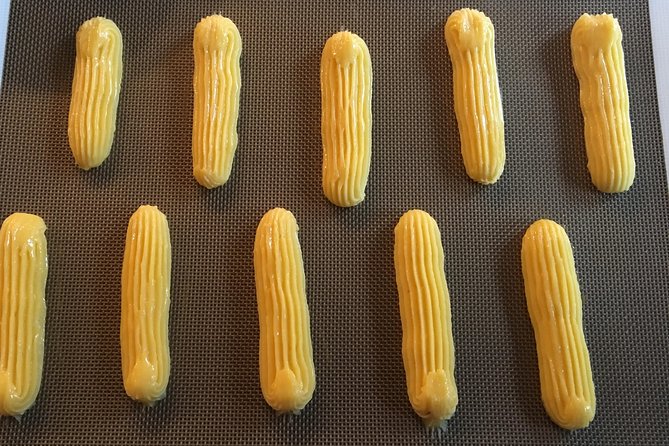
The foundation of the class is pâte à choux, the light pastry used for both éclairs and cream puffs. It is not a simple stir-and-bake recipe. You must handle the mixture correctly so the shells rise well and leave enough space inside for the cream.
Your instructor takes you through the process step by step. The focus is not only on what to add, but on how the mixture should behave as you work. That is useful for anyone who has tried to follow a pastry recipe at home and wondered why the result came out flat, heavy, or uneven.
One of the main skills is getting an even rise in the oven. The class explains the technique behind that result, rather than treating the oven as a magic box. You will also learn why timing and consistency matter before the dough goes in to bake.
You do not handle hot baking trays, according to the class details. That keeps the session more manageable, particularly for younger participants, but it also means this is not a full lesson in every part of professional bakery work. The emphasis is on mixing, shaping, filling, and understanding the method.
The class is suitable for people without extensive baking experience. Instructors such as Stephane, Luc, Anne, Fanny, and Amanda are praised for giving clear help and staying involved throughout the process. Stephane is described as energetic and passionate about pastry, while Luc is noted for his patience and careful coaching. Fanny brings a lively, funny teaching style, and Anne is praised for being patient with family groups.
That range of instructors means the exact personality of your class may vary. The common thread is direct guidance, rather than a lecture delivered from across the room.
Piping, fillings, and the chocolate finish
Once the choux pastry is ready, you move on to shaping and filling. Piping is one of the most useful parts of the class because it affects both the look and the texture of the finished pastry.
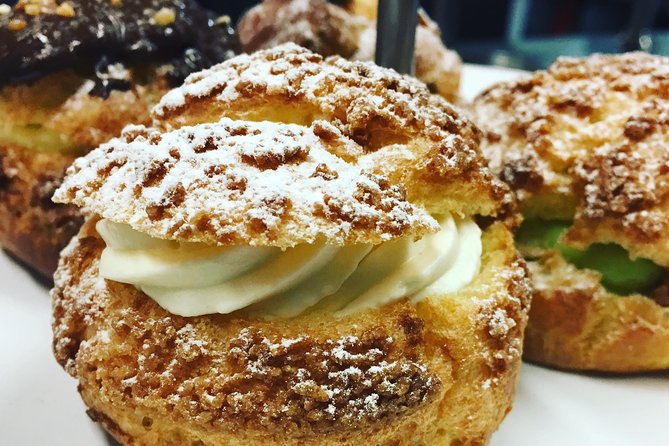
You learn how to pipe the dough into the right forms for éclairs and cream puffs. You also practice piping cream into the baked pastries. This sounds easy until you try to fill a shell without splitting it or leaving empty pockets, so having an instructor nearby is valuable.
The filling may vary by participant. One class included different filling flavors, with four flavors mentioned by one participant, while the chocolate icing for the éclairs was prepared with the chef’s guidance. The exact flavor arrangement is not guaranteed, but you can expect the class to cover both cream puffs and chocolate éclairs rather than focusing on only one pastry.
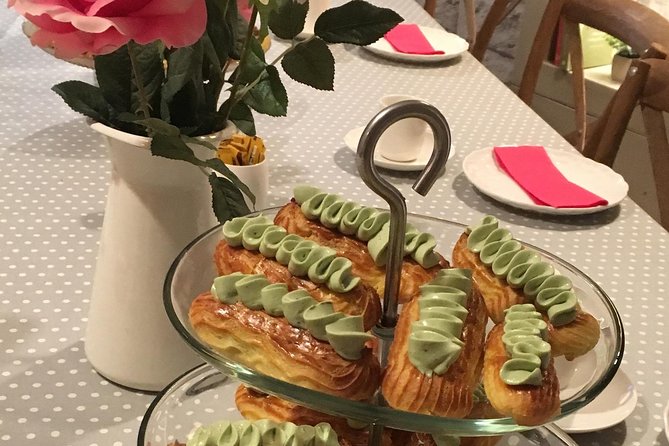
The chocolate element gives the class a clear French pastry-shop feel. You are not just making plain dough and taking it home. You finish the éclairs with chocolate and learn how the parts fit together: a crisp shell, a creamy center, and a chocolate topping.
This is also where the small group earns its keep. Piping takes practice, and different people need help with different details. One person may need a reminder about pressure on the piping bag, while another may need help judging how much filling to use. With no more than eight people, the chef can respond to both.
Coffee, tasting, and the box to take home
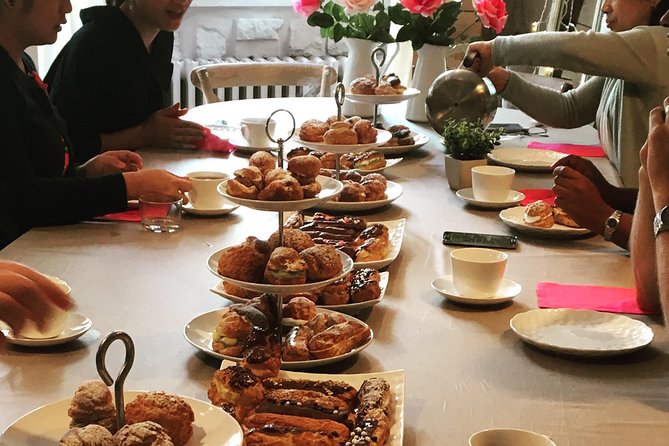
After the work is done, you sit down with coffee, tea, or fruit juice and taste the pastries. This pause is more than a snack. It gives you a chance to compare the texture of the shells and fillings while the instructions are still fresh.
You receive a takeaway box containing five or six chocolate éclairs or cream puffs. That is one of the strongest value points in the experience. You get a treat during the class and a second round to enjoy later, though you should handle the box with care as you continue your day in Paris.
The amount also makes the class feel more substantial than a tasting. You have enough to share or save, and you can use the leftovers as a practical reminder of what you made. The exact mix may depend on the session, your output, and the class format, so do not assume you will receive every flavor shown in another class.
The recipe handout arrives electronically in English. This is important because pastry lessons move quickly. You may remember the broad idea but forget the precise order, texture cues, or filling method once you return home. The digital recipes let you try again in your own kitchen.
Still, the class cannot guarantee professional results on your first repeat attempt. Choux pastry rewards careful technique, and home ovens can behave differently. The value is that you leave knowing what to watch for, especially the rise, piping, and filling.
Same place, a different sort of tasting:
- A Morning in Paris Food Tour: Croissants, Baguettes & Chocolate
★ 5.0 · 556 reviews - Saint-Germain: Gourmet Chocolate & Pastry Walking Food Tour
★ 4.8 · 495 reviews - Paris: 45-minute Chocolate Making Workshop at Choco-Story
★ 4.4 · 444 reviews - Paris Chocolate, Macaron & Pastry Food Tour: 10 Gourmet Tastings
★ 5.0 · 339 reviews
Why the small group improves the class
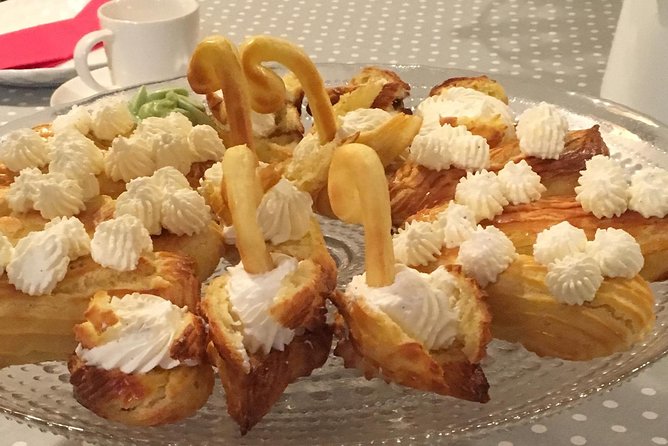
The eight-person limit is one of the best details here. Pastry classes can become frustrating when you spend much of the session waiting for a turn or watching someone else handle the dough. This format keeps you involved for much of the three hours.
Several class experiences used only six participants, which gave everyone room to work and ask questions. The range of ability did not prevent beginners from keeping up. You do not need advanced baking skills, and you are not expected to arrive with professional knowledge.
The class also suits mixed-age groups. The minimum age is 12, and no unaccompanied children are accepted. That makes it a reasonable choice for a parent and teenager, grandparents with an older grandchild, couples, or friends who want an activity that produces something tangible.
A family group used the class as part of a 16th birthday trip, while another participant enjoyed it with a granddaughter. Those examples point to the class’s social side. You have a shared task, plenty to talk about, and a dessert at the end instead of a formal cooking-school atmosphere.
The pace is active. One participant described the afternoon as fast moving, and that is useful to know. If you want a slow, quiet pastry demonstration, this may feel busy. If you like learning by doing, the pace should help keep the three hours from dragging.
The teaching style and the Paris setting
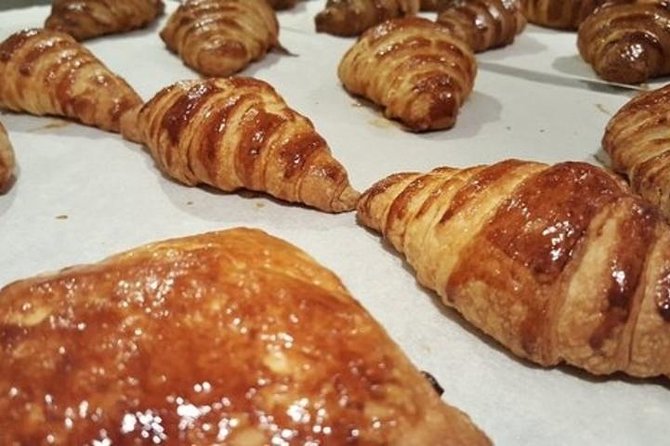
The strongest part of the class is the instruction. The chefs do not simply hand you a recipe and step away. They explain why the dough needs certain treatment, show how to pipe, and answer questions as you work.
Stephane is praised for humor, energy, and enthusiasm. Luc is noted for patient coaching and for helping each person reach an edible result. Fanny is described as entertaining and full of life, while Anne receives praise for clear explanations and a calm manner. These details matter because a pastry class can feel intimidating if the teacher is stiff or rushed.
You also hear stories about French pastry traditions during the work. That gives the recipes some context without turning the afternoon into a history lesson. The setting is practical and modern, but the food connects directly to the pastry shops you see throughout Paris.
The class is offered in English. That is a major plus if you want detailed instruction rather than relying on gestures and visual cues. You can ask about technique as it happens, which is especially useful when the dough does not look exactly as expected.
Is $155.68 a fair price?
At $155.68 per person, this is not a bargain activity. You can buy an éclair in Paris for far less, and the finished pastries alone do not justify the price.
You are paying for a three-hour lesson, an English-speaking chef, a small group, use of the kitchen and equipment, drinks, a box of five or six pastries, and recipes for future use. You are also paying for the chance to ask questions and correct mistakes while you are making the food. For someone who wants a real cooking activity, that package is easier to justify.
The price works best for a special occasion or a short Paris visit when you want one planned experience that fills an afternoon. It is also a good fit if you bake at home and expect to use the techniques again. The digital recipes increase the long-term value, particularly if you want to recreate a taste of Paris after your trip.
I would think twice if you mainly want to eat excellent pastry. In that case, buying from a respected bakery and spending the rest of the money elsewhere may suit you better. This class is about learning, not simply consuming.
Who should book this pastry class?
I would recommend it most strongly to:
- Couples or friends who enjoy hands-on activities
- Families with children aged 12 or older
- First-time bakers who want close instruction
- Experienced home bakers looking to improve choux pastry
- Anyone seeking a food-focused afternoon in Paris
- Visitors who like bringing home a useful skill, not just a souvenir
You should be comfortable working in a group and following instructions in real time. The class is not designed for children under 12, and children cannot attend alone.
It may not suit you if you dislike structured activities, have little interest in baking, or want a short stop between major sights. Three hours is a serious block of time, and the work requires some focus.
Booking details and cancellation terms
The experience is offered in English, uses a mobile ticket, and is often reserved well in advance, with an average booking lead time of about 63 days. If this is a priority for your Paris schedule, booking early is sensible.
You can cancel for a full refund up to six full days before the start time. A cancellation made two to six full days ahead receives a 50 percent refund. Less than two full days before the class brings no refund, and late changes are not accepted. Cutoff times follow Paris local time.
The activity requires a minimum number of participants. If that minimum is not reached and the class is canceled, you are offered another date or experience, or a full refund.
Should you book it?
Book this class if you want to understand how French éclairs and cream puffs are made, not just eat them. The eight-person limit, close coaching, digital recipes, and box of five or six pastries make it a strong choice for a food-minded afternoon, especially with a partner, friend, or older child.
Skip it if the $155.68 price feels too high for a pastry lesson or if your Paris plans leave no room for three hours indoors. For everyone else, this offers a pleasant mix of skill, sweets, and good company, with enough instruction to try the recipes again at home.
FAQ
Where does the Paris pastry class meet?
The class meets at Le Foodist, 59 Rue du Cardinal Lemoine, 75005 Paris, France.
What time does the class begin?
The scheduled start time is 3:00 p.m.
How long does the experience last?
The class lasts approximately three hours.
Is the class taught in English?
Yes. The experience is offered in English.
What pastries will I make?
You will learn to make chocolate éclairs and cream puffs, including choux pastry, Chantilly cream, and chocolate icing for the éclairs.
What is included in the price?
The price includes use of the required equipment and attire, coffee, tea, or fruit juice, a takeaway box with five or six chocolate éclairs or cream puffs, and an electronic copy of the recipes in English.
Can children attend the class?
The minimum age is 12. Children are not accepted without an accompanying adult.
Just added around Paris
- Private Wine and Chocolate Tasting Experience★ 4.4 · 3 reviews
- Private Wine and Chocolate Tasting in Paris★ 4.5 · 4 reviews
- Paris Sweet & Chocolate Family Treasure Hunt★ 5.0 · 37 reviews
- Molded Bonbons Chocolate making class in Paris (collective)★ 4.5 · 20 reviews
- Paris Saint-Germain Private Tasting Tour with Chocolate plus Pastries & Macaron★ 5.0 · 10 reviews
- Private Family Chocolate Making Class in Paris★ 5.0 · 16 reviews
- Pure Chocolate Tour in Paris★ 5.0 · 20 reviews
- Expert-Led Sweet Secrets of Paris Pastry & Chocolate Marathon★ 5.0 · 3 reviews
Chocolate Tours, compared.
Choco-Story Brussels: Chocolate Museum Entrance with Tasting
Read our review →
City Tour, Cruise, and Lindt Home of Chocolate Visit
Read our review →
The Chocolatarium Chocolate Tour Experience in Edinburgh
Read our review →
Award-Winning Geneva Chocolate &Old Town Tour with Boat Ride (3h)
Read our review →
Yarra Valley Wine, Gin, Whisky and Chocolate Tour
Read our review →
4×4 Dominican Adventure with Chocolate and Coffee Tasting
Read our review →
Browse the lists this tour appears in