
Review · FRANCE
Visit of Choco-story COLMAR, the Chocolate Museum.
Chocolate gets a full theatrical treatment here. At Choco-Story COLMAR, you follow cocoa from a forest and Aztec legend to Spanish ships, European courts, and modern factories. I like the interactive storytelling and the generous mix of films, games, projections, and tastings. I also like that the visit works for adults and children without turning the subject into a dry museum lecture.
The main drawback is that the experience is short at about 90 minutes, so you should not expect a large traditional museum. The information also lists the audioguide in both four and six languages, so check the available language choices when booking. A hot chocolate is not included, either, which may surprise anyone arriving with a steaming cup in mind.
Key points to know before you go
- Cocoa begins in a forest: The first scenes introduce the cocoa plant through animated panels and a playful little monkey.
- Quetzalcoatl appears in an Aztec temple: The museum connects chocolate with the legend of the feathered serpent god who brought cocoa to Earth.
- A Spanish ship becomes part of the story: Moving lamps, creaking ground, and sea views create a 16th-century setting.
- You can sit like European royalty: Royal armchairs provide a lighthearted photo opportunity as chocolate enters court life.
- The second floor focuses on industry: A 250-kilogram Statue of Liberty made of chocolate is part of a cabaret-style display.
- Tasting is included: You get chocolate to sample, while a hot chocolate drink costs extra.
A 90-minute visit built around cocoa
Choco-Story COLMAR is best understood as a short, staged museum visit rather than a standard collection of glass cases and labels. You move through a sequence of themed areas, using an audioguide while films, 3D projections, props, animations, and interactive features carry the story forward.
That approach gives the museum a clear advantage: chocolate becomes something you see, hear, and taste. You are not only reading about cocoa beans. You are watching a monkey sample them, standing near an Aztec temple, entering a ship, and seeing oversized chocolate sculptures.
I would allow about an hour and a half. That is enough time to follow the story without rushing, but the visit is not long enough to fill half a day. If you have a busy Colmar schedule, this makes the museum easy to fit between sightseeing stops. If you want an in-depth study of chocolate-making techniques, you may find the visit too brief.
The route begins at 12 Place de la Cathédrale in Colmar and ends back at the same meeting point. The location is near public transportation, so it fits neatly into a day spent exploring central Colmar.
More Chocolate Museums in France
- Paris: Entrance Ticket to the Chocolate Museum
★ 4.1 · 1,105 reviews - Paris: 45-minute Chocolate Making Workshop at Choco-Story
★ 4.4 · 444 reviews - Colmar: Chocolate Museum Entrance Ticket
★ 4.5 · 187 reviews
The forest opening and the first taste of cocoa
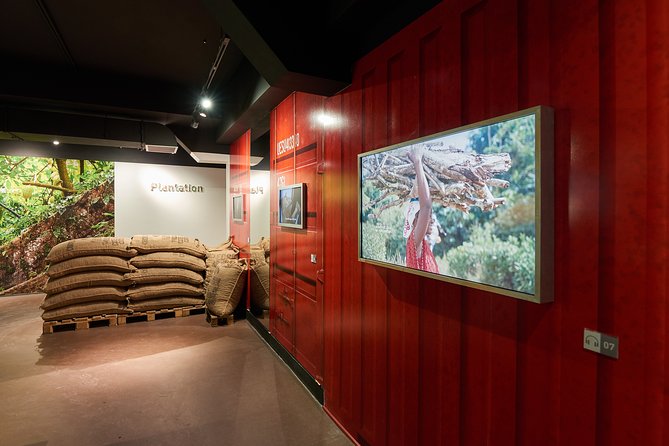
The opening scene takes you into a virgin forest. An animated panel shows a little monkey tasting cocoa beans, a simple moment that gives the museum a playful start.
This matters because the museum begins with the plant itself, not with a finished chocolate bar. You get an early reminder that chocolate starts as a fruit from the cocoa tree. For children, the monkey adds humor and movement. For adults, it sets up the larger question of how a tropical crop became one of Europe’s favorite foods.
The displays use animation rather than a long block of text. That helps keep the pace moving, especially if you are visiting with children or if you prefer museums that explain through scenes instead of labels alone.
You should still keep your expectations realistic. The forest sequence is designed as an introduction, not as a botanical lesson. The supplied information does not indicate that the museum offers a detailed scientific study of cocoa cultivation, so think of this section as a lively beginning to the larger story.
Quetzalcoatl and cocoa’s pre-Hispanic story
The next important stop is an Aztec temple. Here, the story introduces Quetzalcoatl, the feathered serpent god who, according to legend, brought cocoa to Earth.
This is one of the more useful parts of the visit because it places chocolate in a cultural setting before its arrival in Europe. You see that cocoa was not simply an ingredient waiting to be shipped overseas. It already had meaning and a place in pre-Hispanic traditions.
The temple setting also gives the museum a stronger sense of place than a modern display would. Instead of hearing only dates and names, you encounter a recreated environment linked to the legend. The use of projections and interactive features keeps the presentation accessible, though it also means the experience is interpretive and theatrical rather than a quiet archaeological exhibit.
I like this balance for a general visit. You receive enough context to understand why cocoa mattered, while the format remains easy to follow. If you want a highly detailed account of pre-Hispanic societies, you will need another source. Choco-Story’s focus remains the long journey of chocolate itself.
The 16th-century Spanish ship
The museum then shifts to the era when cocoa crossed the Atlantic. The scene takes place aboard a Spanish ship, complete with creaking ground, moving hurricane lamps, and windows showing the sea.
These small physical effects are important. They give you a sense of travel and uncertainty without requiring a long explanation. You can picture cocoa leaving the Americas and entering a new chapter in Europe.
This is also one of the clearest examples of the museum’s style. The display asks you to notice movement and sound as well as information. The ship is not simply a picture on a wall. The lamps move, the floor creaks, and the windows change the feel of the room.
For families, this section is likely to be more memorable than a conventional account of maritime trade. For adults, it provides a useful link between cocoa’s earlier cultural role and its later place in European society.
The experience does not promise a complete account of colonial history, shipping, or European trade. Those subjects are suggested through the chocolate story, not treated as separate academic topics. Keep that in mind if you are looking for a fuller historical treatment.
Same place, a different sort of tasting:
- Paris French Sweets Tasting Tour with Pastries and Chocolates
★ 4.5 · 947 reviews - A Morning in Paris Food Tour: Croissants, Baguettes & Chocolate
★ 5.0 · 556 reviews - Saint-Germain: Gourmet Chocolate & Pastry Walking Food Tour
★ 4.8 · 495 reviews - Paris Chocolate, Macaron & Pastry Food Tour: 10 Gourmet Tastings
★ 5.0 · 339 reviews
European courts, royal chairs, and a playful photo stop
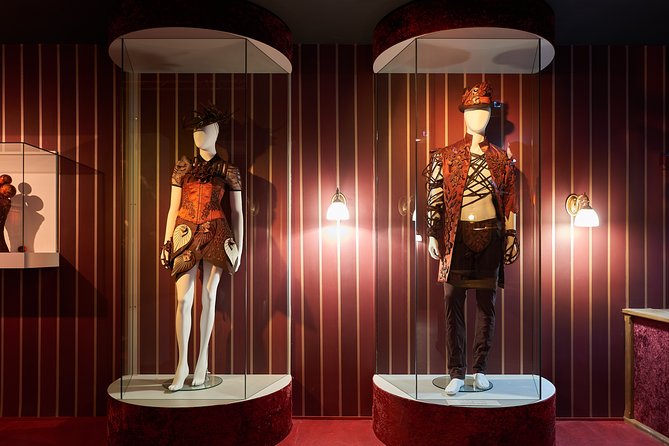
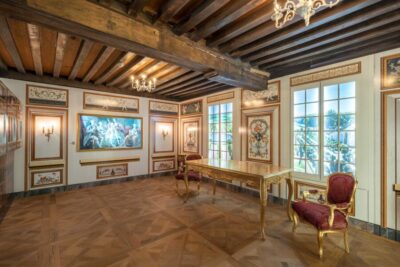
After cocoa reaches Europe, chocolate enters royal courts. You can sit in royal armchairs and take a picture, turning the museum’s history into a small personal souvenir.
This is a clever pause in the route. Much of the visit asks you to watch and listen, but the chairs let you take part. The activity also gives children something concrete to do while adults follow the historical thread.
I like that the museum does not treat itself too seriously here. Chocolate has long been linked with luxury and status, and the royal seating lets you play with that idea. You get a quick laugh, a photograph, and a visual reminder that chocolate became more than a basic food.
The photo moment is not likely to satisfy someone seeking a major historical artifact. It is a prop, not a preserved palace interior. Its value comes from the way it keeps the visit active and social.
The choco scanner and the benefits of cocoa
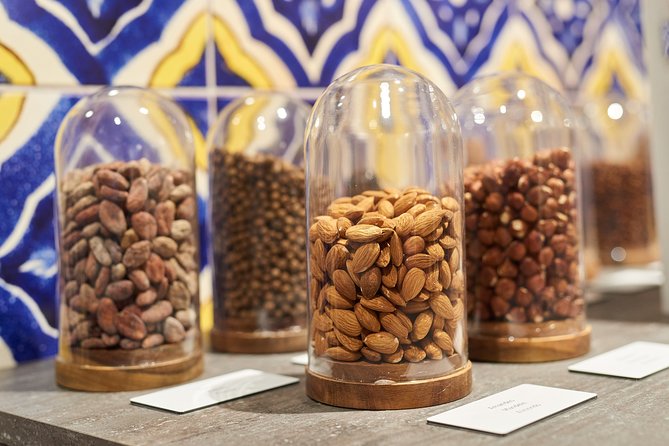
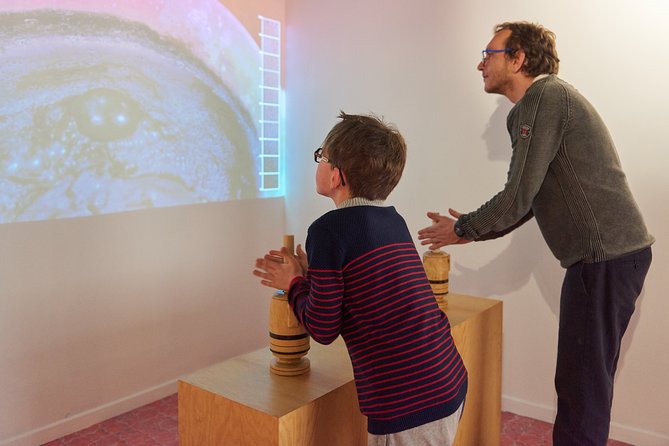
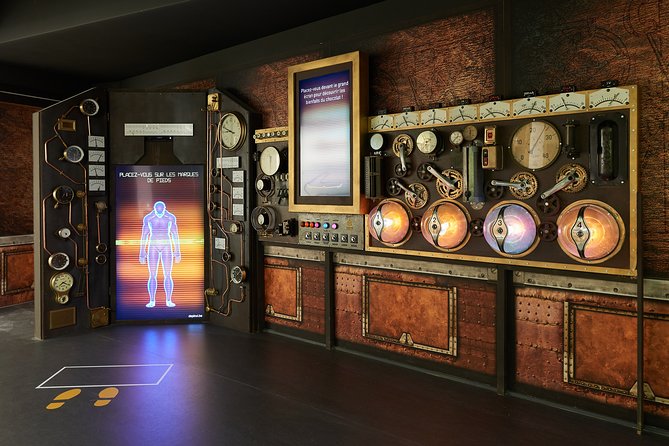
One of the more unusual features is the choco scanner. It follows the movements of your body and presents information about the benefits of the cocoa tree fruit.
This type of attraction gives you another break from simply listening to an audioguide. You can move, interact, and see the subject respond to you. That makes the museum feel suited to mixed-age groups, since younger visitors often need more than spoken information to stay interested.
You should treat the health information as part of the museum’s presentation rather than as medical advice. The supplied details say the scanner extols the benefits of cocoa, but they do not specify particular health claims or scientific sources. Enjoy the interaction, but do not use it as a substitute for professional health guidance.
The choco scanner also shows the museum’s broad idea of education. It teaches through a blend of history, entertainment, technology, and taste. That format will appeal to you if you like museums that encourage participation. It may feel light if you prefer long, detailed explanations.
The second floor and the rise of industrial chocolate
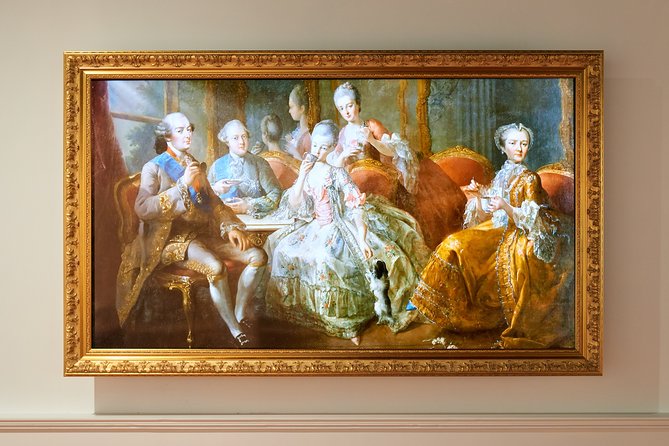
The second floor turns toward industrialization. This change in subject gives the visit a clear structure. You begin with the cocoa tree and early traditions, then follow chocolate through travel, court culture, and large-scale production.
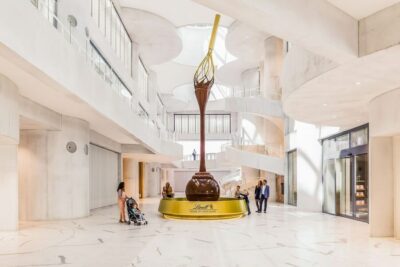
A cabaret-style show features a 250-kilogram Statue of Liberty made from chocolate. The sculpture lights up the world alongside other chocolate creations.
The size alone makes this a memorable display. A chocolate Statue of Liberty weighing 250 kilograms is not the sort of thing you expect in a normal museum. The cabaret setting adds spectacle and gives the industrial section a show-business feel.
This part is especially good for photographs and for anyone who enjoys food sculpture. It also makes a practical point: modern chocolate production is capable of turning a familiar food into a huge decorative object.
The tradeoff is that the display favors wonder over technical detail. You may not leave knowing every step of factory production, the exact machinery used, or the economics of the chocolate industry. You do, however, get a strong visual impression of how chocolate changed from a rare luxury into a mass-produced product.
Chocolate recipes on the giant screen
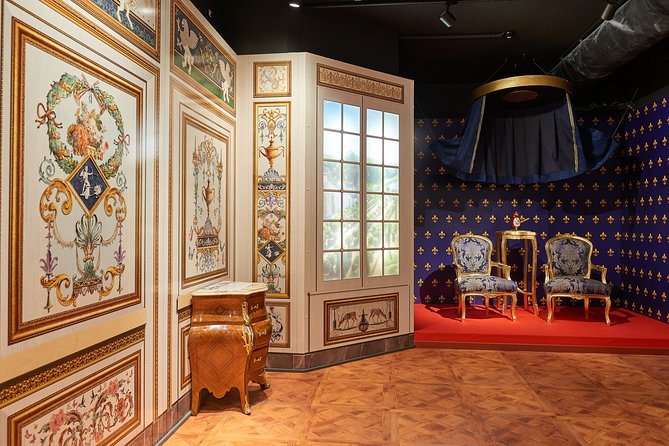
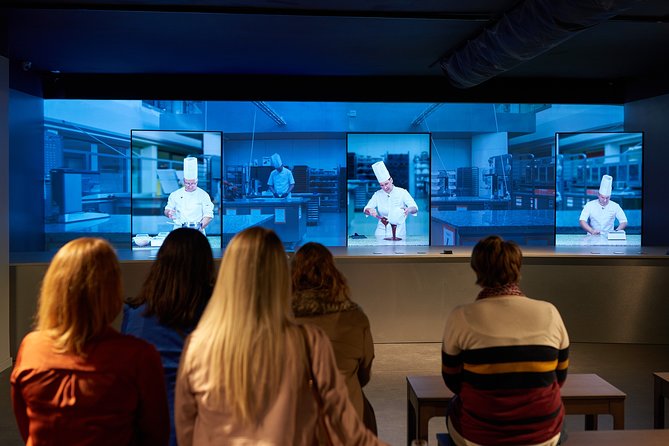
Three master chocolatiers appear on a giant screen to present their recipes. This is a useful addition because it shifts the focus from chocolate’s past to what people do with it today.
Watching professionals work with recipes can help you connect the history lesson with the food in front of you. Chocolate is not only a product with a long past. It is also a craft ingredient that depends on technique, timing, and presentation.
The supplied information does not list the names of the chocolatiers or the specific recipes. You should therefore expect a general presentation rather than a scheduled live class with hands-on instruction.
For many visitors, that will be enough. You get ideas and a look at professional chocolate work without adding another long activity to a 90-minute visit. If you hope to make truffles or temper chocolate yourself, this museum visit is not described as a workshop.
Tasting: the part many people will remember
Chocolate tasting is included, and it adds real value to the ticket. A tasting gives you a direct way to connect the museum’s story with your senses. After learning about cocoa beans, travel, and production, you get to enjoy the finished product.
The tasting is also one reason the experience works well for a city break. You do not need to reserve a full meal or set aside half a day. You receive a small edible part of the visit, then continue exploring Colmar.
The important distinction is that a hot chocolate drink is not included. If you want a warm cup as well as the included tasting, you should budget for it separately.
The information does not specify the number of samples or the exact varieties offered. I would treat the tasting as a pleasant part of the museum rather than as a full chocolate workshop or dessert course.
Price, timing, and overall value at $18.02
At $18.02 per person, the experience offers fair value if you enjoy interactive museums and want a compact indoor activity in Colmar. The price covers the audioguide, interactive presentation, and chocolate tasting.
I see the strongest value in the combination. A traditional museum entry might give you objects and labels. Here, your ticket also supports staged environments, films, 3D projections, games, a giant screen, and food to sample.
The visit becomes less attractive if you only want to buy chocolate or if you expect an extensive industrial tour. You are paying for the presentation and the sequence of themed scenes, not simply for a shop visit.
The experience is booked an average of nine days ahead, which suggests that planning in advance can be sensible, especially for a fixed Colmar itinerary. Confirmation is provided at booking. The maximum group size is 200, so the attraction can accommodate a substantial crowd, though the actual feel of your visit will depend on how many people are there at your time.
Who will enjoy Choco-Story COLMAR most?
I would recommend this experience most strongly to:
- Families looking for a museum with games and hands-on moments
- Couples who want a light indoor stop with a tasting
- Chocolate fans who enjoy the story behind familiar foods
- Visitors with about 90 minutes between other Colmar plans
- People who prefer films, projections, and recreated scenes to long written displays
- Anyone looking for a convenient activity near central Colmar and public transportation
Children should have plenty to keep them interested, including the animated monkey, interactive features, spontaneous games, royal chairs, and large chocolate sculptures. The visit also works for adults because it covers cocoa’s journey across several periods and settings.
You may want to choose another attraction if your main interest is advanced chocolate technique, a live cooking class, a detailed archaeological collection, or a long factory tour. The museum offers a broad, entertaining account rather than a specialist course.
The audio guide is listed as available in six languages in the included features, while the main description refers to four languages. Since that information is inconsistent, confirm your preferred language before you go. Most people can participate, and the museum is near public transportation.
Should you book Choco-Story COLMAR?
Book it if you want a family-friendly, interactive museum that turns cocoa’s history into a 90-minute story with sound, movement, projections, games, and tasting. The Aztec temple, Spanish ship, royal chairs, choco scanner, and giant chocolate Statue of Liberty give the visit enough variety to avoid feeling like a simple lecture.
Skip it if you want a serious museum devoted to technical chocolate production or a long, quiet historical exhibition. At $18.02, it is a sensible choice for a short Colmar activity, especially when you value presentation and tasting as much as detailed museum objects. Just remember that hot chocolate costs extra and the visit cannot be changed or refunded after booking.
FAQ
Where does the Choco-Story COLMAR experience start?
It starts at 12 Place de la Cathédrale, 68000 Colmar, France.
Where does the experience end?
The activity ends back at the meeting point.
How long does the visit take?
The visit lasts approximately 1 hour and 30 minutes.
How much does the experience cost?
The listed price is $18.02 per person.
Is an audio guide included?
Yes. An audio guide is included. The information lists six languages in the included features and refers to four languages in the main description, so confirm the available language options when booking.
Is chocolate tasting included?
Yes. Chocolate tasting is included in the experience.
Is hot chocolate included?
No. A hot chocolate drink is not included.
Can children participate?
Yes. The interactive features and games make the experience suitable for children, and most participants can take part.
Can I cancel or change the booking?
No. The experience is non-refundable and cannot be changed for any reason.
Just added around France
- Wine and Chocolate experience★ 4.6 · 3 reviews
- Private Wine and Chocolate Tasting Experience★ 4.4 · 3 reviews
- Wine and chocolat tasting at Chablis.★ 4.9 · 5 reviews
- Trio Chocolaté – Tour en français – Champagne Passy-Grigny★ 5.0 · 5 reviews
- Private Wine and Chocolate Tasting in Paris★ 4.5 · 4 reviews
- Paris Sweet & Chocolate Family Treasure Hunt★ 5.0 · 37 reviews
- Molded Bonbons Chocolate making class in Paris (collective)★ 4.5 · 20 reviews
- Paris Saint-Germain Private Tasting Tour with Chocolate plus Pastries & Macaron★ 5.0 · 10 reviews
Museums, compared.
Choco-Story Brussels: Chocolate Museum Entrance with Tasting
Read our review →
Chocolate Workshop in Chocolate Museum w/ Tasting
Read our review →
Choco-Story Chocolate Museum Guided Tour w/Tastings
Read our review →
Browse the lists this tour appears in