Review · BELGIUM
Brussels: Belgian Chocolate Making Workshop with Tastings
Chocolate starts with a fruit, not a fancy shop window. This 90-minute workshop takes you from fresh cacao pod and bitter bean to truffles, mendiants, and a decorated bar you can carry home. I especially like the hands-on variety and the chance to taste cacao at several stages, including the surprising sweet juice around the beans.
The other big plus is the staff. Patricia, the guide praised most often, mixes clear instruction with a sharp sense of humor. She keeps the group moving without making the class feel stiff. The main drawback is the price: at $82 per person, it is not a cheap tasting, and the meeting point is separate from the actual workshop.
Key things to know before you book
- You taste the whole cacao story: Try fresh cacao beans, mucilage, cacao liquor, and finished chocolate.
- You make three types of chocolate: Your work includes a personalized bar, mendiants, and truffles.
- The chocolate is made from traceable cacao: The workshop uses organic cacao from small farmers and premium cacao from Haiti’s Grand Anse region.
- The class is led by working chocolatiers: Patricia is especially entertaining, but the wider team is made up of Belgian government-certified chocolate makers.
- You take everything you make home: A box is provided, and you also receive 20 percent off the company’s chocolate collection in its stores.
- Arrive early and pack light: Check in at Place de la Justice 5 at least 15 minutes before your session, then walk about 200 meters to the training centre.
From Place de la Justice to the chocolate workshop
Your appointment begins at The Belgian Chocolate Makers ticket office at Place de la Justice 5, close to Brussels Central Station and Mont des Arts. This is important: the ticket office is not the workshop room.
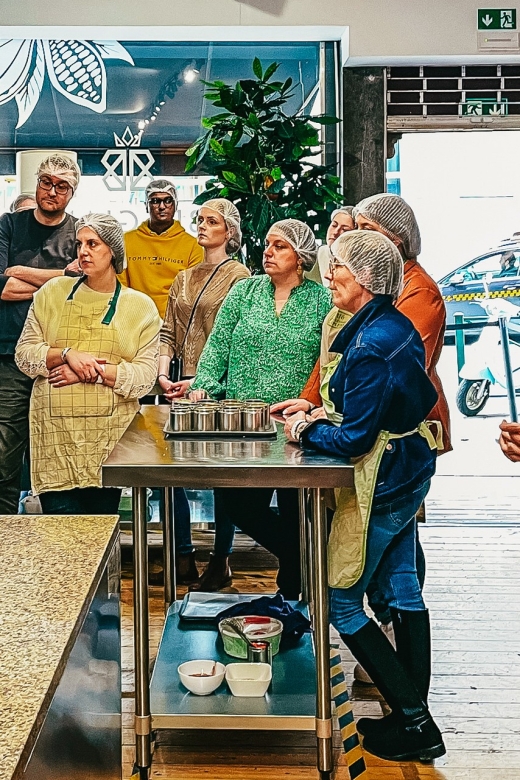
Give yourself a little extra time. Staff check your ticket, provide a wristband and hairnet, then bring the group on foot to the training centre. The walk is only about 200 meters, but late arrivals are not accepted once the class begins. Brussels sightseeing has a relaxed rhythm, but this particular appointment does not.
The check-in process is simple, though the arrangement can feel slightly unclear if you expect to walk straight into a shop or classroom. Look for the ticket office first, not the workshop entrance. Tie back long hair before you arrive, since the hairnet is required.
The training centre is a new, air-conditioned space measuring 150 square metres. It can hold up to 60 people, although some sessions feel much smaller. One recent group had only three participants, while another described four workstations. Group size can affect the mood, so a smaller session may give you more room to ask questions and work at your own pace.
The air-conditioning is practical for chocolate work, but it can make the room chilly. Bring a light layer, especially if you are visiting Brussels in winter. Water dispensers and an accessible toilet are available.
More Chocolate Making Workshops in Belgium
- Brussels: 2.5-Hour Belgian Chocolate Making Workshop
★ 4.8 · 933 reviews - 1.5h Belgian Chocolate Workshop in Brussels (bean to bar)
★ 4.5 · 462 reviews - Brussels: Chocolate Truffle & Belgian Hot Chocolate Workshop
★ 4.7 · 367 reviews
Start with a cacao pod, not a chocolate square
The workshop begins with the raw material. You get to hold a fresh cacao pod and taste fresh cacao beans before they become anything like the chocolate in a Belgian shop.
The bean itself is famously bitter. That first taste helps explain why chocolate requires so much processing, roasting, grinding, and balancing. Around the bean is a pale, fruity pulp called mucilage, or cacao pod juice. It is one of the most unusual parts of the session because it tastes nothing like a finished chocolate bar.
This tasting gives the class a useful sense of scale. Chocolate is not simply melted candy poured into a mould. It begins as an agricultural product, and the flavour changes at every step. If you already love chocolate, you will appreciate the comparison. If you are less interested in sweets, the cacao lesson gives the workshop more substance than a basic decorate-and-eat class.
You also taste several origin chocolates from different countries. The supplied chocolate is sourced from Haiti, including cacao from Grand Anse, and the company explains its work with small farmers and traceable supply. The business says its cacao avoids deforestation and child labor and provides farmers with a fair level of revenue.
These claims are part of the company’s approach to sourcing, and they matter because the workshop connects your finished treats to the farming stage. You are not working with anonymous industrial chocolate. The company says it uses no industrial chocolate in its workshops and makes its products from premium cacao in its own bean-to-bar operation.
See what bean-to-bar really means
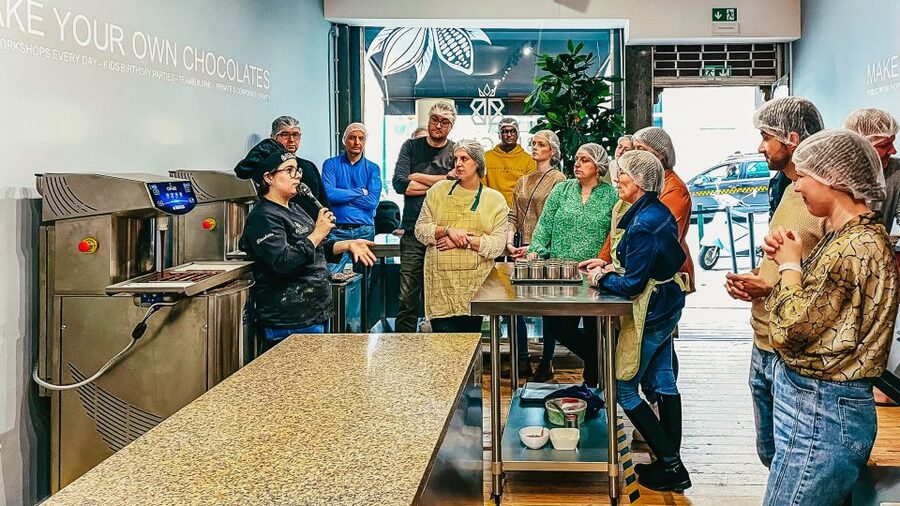
The educational part is not a long lecture. Instead, the chocolate makers explain the path from cacao tree to finished bar while you taste and work.
You learn about the cacao fruit, the beans inside it, and the chocolate mass known here as cacao liquor. The name can be confusing. It contains no alcohol. It means ground cacao mass, and the flavour is intense, dark, and direct.
After the hands-on work, you visit the bean-to-bar machinery and see the equipment used to process the cacao. This is a useful addition because it connects the talk to the actual production process. You can see that the company is not simply buying ready-made couverture chocolate and handing it to visitors.
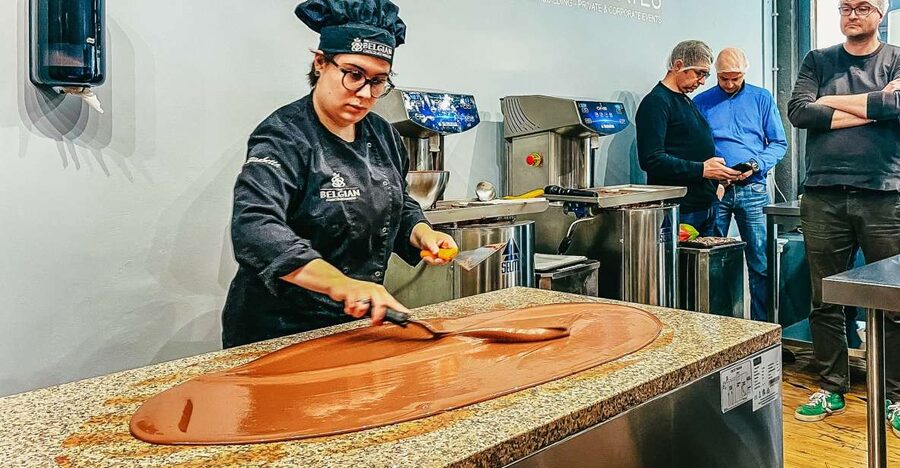
The exact flow can vary slightly with the instructor and group, but the session is built around tasting, explanation, demonstration, and making. Patricia has received especially strong praise for balancing facts with jokes. Her style is lively and sometimes a little strict, more like a cheerful headteacher than a quiet pastry chef. That can be entertaining, though anyone wanting a slow, meditative class may find the pace brisk.
Making your own bar, mendiants, and truffles
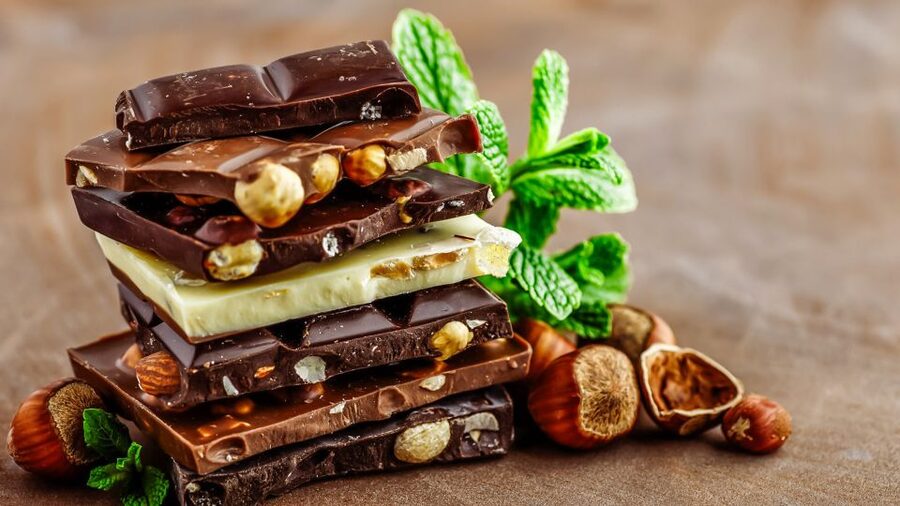
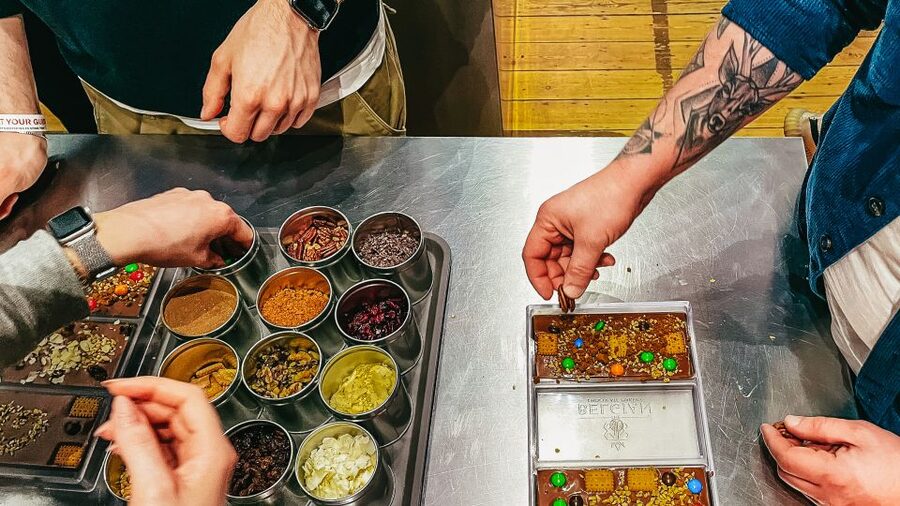
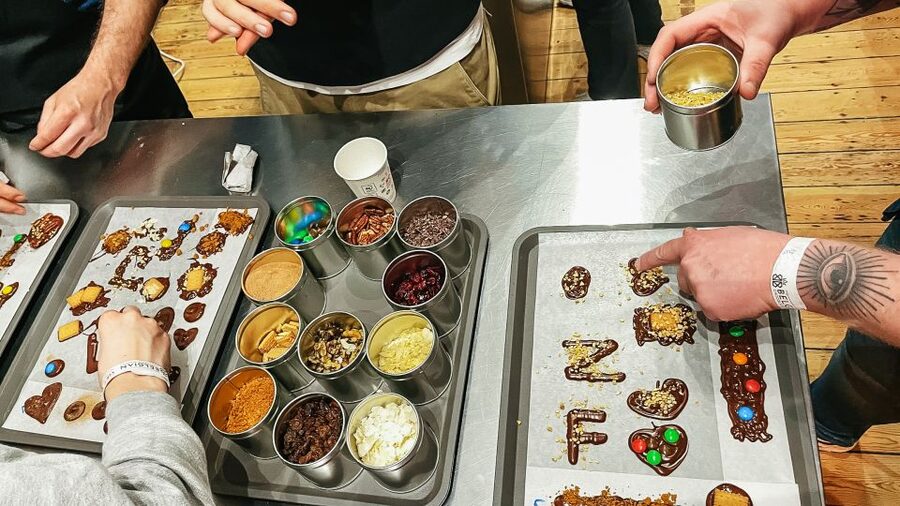
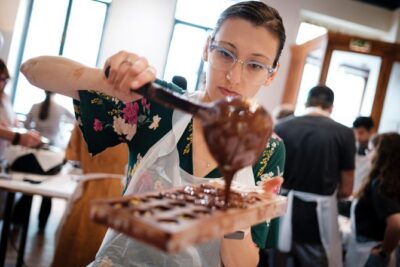
The practical work is the heart of the appointment. You make a personal chocolate bar, decorated dark chocolate pieces, and truffles. The toppings let you add your own touch, although nuts are included among the toppings, so allergy concerns need to be raised at check-in.
The bar is the most straightforward souvenir. You choose toppings and create a piece that is recognisably yours, even if the final design is less polished than the chocolates in the store window. That is part of the fun. You are making something by hand, not taking a professional tempering exam.
Mendiants are small chocolate rounds finished with toppings. They give you more freedom to arrange shapes and ingredients. The class also includes truffles, which are rolled and finished with options such as cocoa powder or coconut.
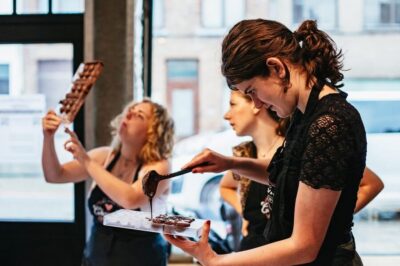
The instructor demonstrates each stage, then gives you time to work. You do not simply watch a professional make the chocolate while receiving one sample at the end. Everything you make belongs to you, and the workshop provides a box for carrying it away.
Expect plenty of chocolate during the class as well. Tastings are spread through the session, and hot chocolate is included in winter. In summer, it changes to a chocolate granita. Water is available, and one session also included lemonade.
A practical warning: your creations may look homemade. That is not a flaw, but you should not expect a box of perfectly uniform pralines. The value is in the process, the tasting, and the quantity you get to take home.
More Chocolate Making Workshops in Brussels
- Brussels: Chocolate Workshop and Guided Walking Tour
★ 4.6 · 263 reviews - 1.5h Hands on Chocolate Workshop: Truffles & Tasting
★ 4.5 · 76 reviews - Chocolate Workshop and Self-Guided Museum Visit at Choco-Story in Brussels
★ 4.5 · 72 reviews - Brussels: Make Your Own Chocolates Workshop with Tastings
★ 4.8 · 38 reviews
A class for families, couples, and solo visitors
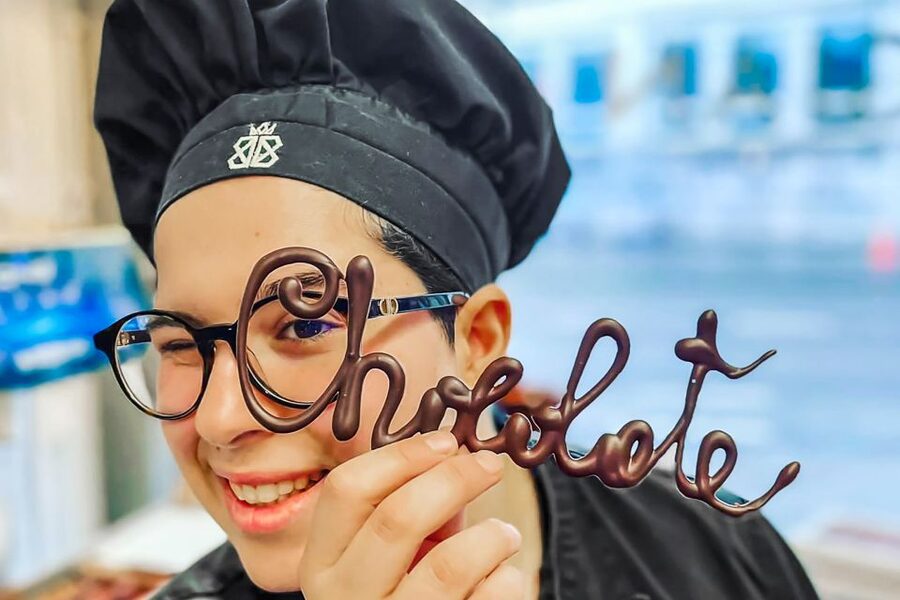
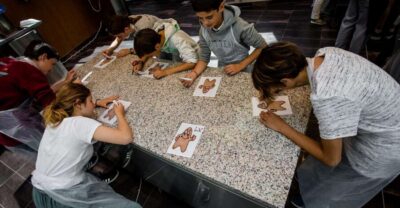
This works well for couples and families because everyone gets a clear task and a sweet reward at the end. Children under six are not allowed, while older children have enjoyed the activity. One family found it particularly successful with a 10-year-old, and teenagers also have plenty to do.
The class can also suit a solo visitor. You may share a workstation with other participants, but the activity gives you an easy way to join in without needing to arrive with a large group.
It is not only for serious chocolate fans. The process is active enough to hold your attention, and the guide’s personality adds energy. Still, if you dislike dark chocolate, nuts, or tasting unfamiliar cacao flavours, some parts may be less appealing.
The experience is conducted in English. If you have food intolerances or allergies, tell staff during check-in. The provided information says the activity is not suitable for people with food allergies, gluten intolerance, or lactose intolerance. It also says vegan or lactose-intolerant participants can work only with dark chocolate, so you should confirm your needs before booking rather than assume every recipe can be adapted.
Is $82 a fair price?
At $82, this costs more than a quick chocolate tasting or a visit to a shop. The price makes more sense if you value the combination of instruction, tastings, equipment, and take-home chocolate.
You are paying for a working chocolatier, not just admission to a display. You taste raw cacao, cacao juice, cacao liquor, and finished chocolate. You make several different products, receive a box, and get 20 percent off the company’s chocolates in its stores.
The ethical sourcing and bean-to-bar element also add interest, particularly if you want to understand Belgian chocolate beyond its reputation for smooth pralines. The company is certified by the Belgian government as an artisan chocolate maker and says it is the only certified artisan chocolate maker in Brussels.
That last claim is a company statement, not something I would use alone to justify the price. The stronger reason to book is the actual format: a compact lesson with plenty of tasting and a generous amount of chocolate to carry away.
The value is best when you participate fully. If you only want to eat chocolate and listen, $82 may feel high. If you want an indoor activity, a practical lesson, and souvenirs you made yourself, the cost is easier to defend. A discount can make it more attractive, but I would judge it on the standard price rather than hope for one.
Timing, clothing, and small practical details
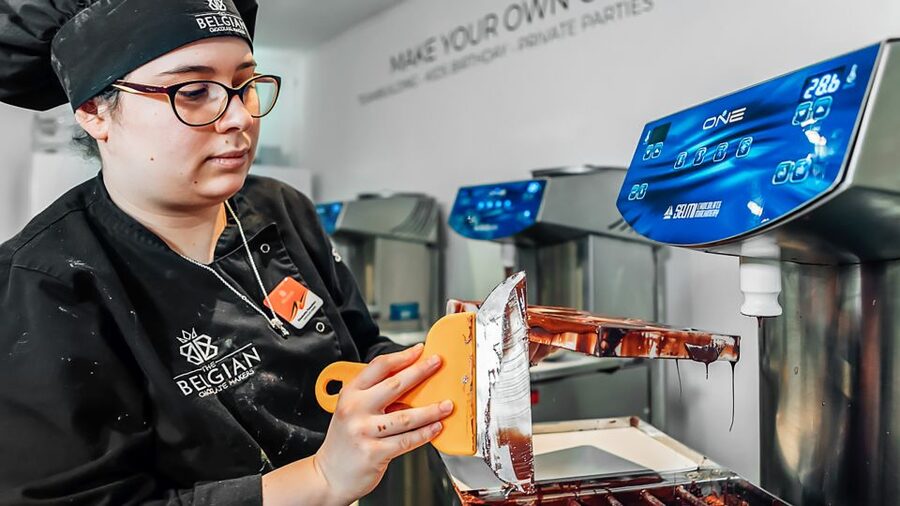
Sessions currently run at 11 a.m., 2 p.m., and 5 p.m. The 90-minute length fits neatly into a day of sightseeing. The 11 a.m. class leaves the afternoon free, while the 2 p.m. time works well as a warm indoor break between visits to central Brussels.
The 5 p.m. session can fit after sightseeing, but remember that you still need to arrive at the ticket office early. Do not bring luggage or large bags. Pets, smoking, outside food, and drinks are not allowed.
Wear clothes you can work in comfortably. A hairnet is required, and the room may be cold because of the air-conditioning. An apron is not included with the standard booking. It is included with the VIP upgrade, which also adds a Champagne glass and a laboratory visit.
The activity is described as wheelchair accessible, but one person noted stairs on the short route to the workshop. If mobility is a concern, contact the provider before booking and ask about the exact route for your session. The accessible toilet is at the training centre, not necessarily at the ticket desk.
The best parts, and the limits
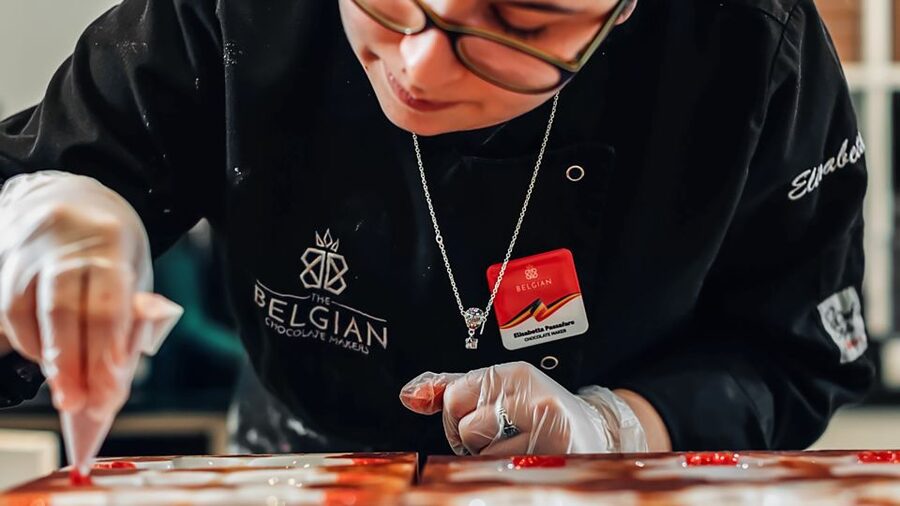
The strongest feature is the combination of good teaching and real participation. The most praised guide, Patricia, is funny, direct, and able to explain the bean-to-bar process without turning the class into a school lesson. Her personality seems to make a major difference.
The variety also works in the workshop’s favor. You do not spend 90 minutes decorating one bar. You taste cacao in raw and processed forms, create a bar, make mendiants, and finish truffles. That gives the session a satisfying rhythm.
The main limits are practical. The meeting point and workshop location are different, the no-late-entry rule is firm, and the room may be chilly. Some groups may be larger than others, which can affect how much individual attention you receive. One person also found it occasionally hard to hear, so stay close to the guide if the room is full.
The chocolate itself is dark and serious in places. The raw bean and cacao liquor are bitter, while the finished products are sweeter and easier to enjoy. You should come ready to taste beyond familiar milk chocolate.
Should you book this Brussels chocolate workshop?
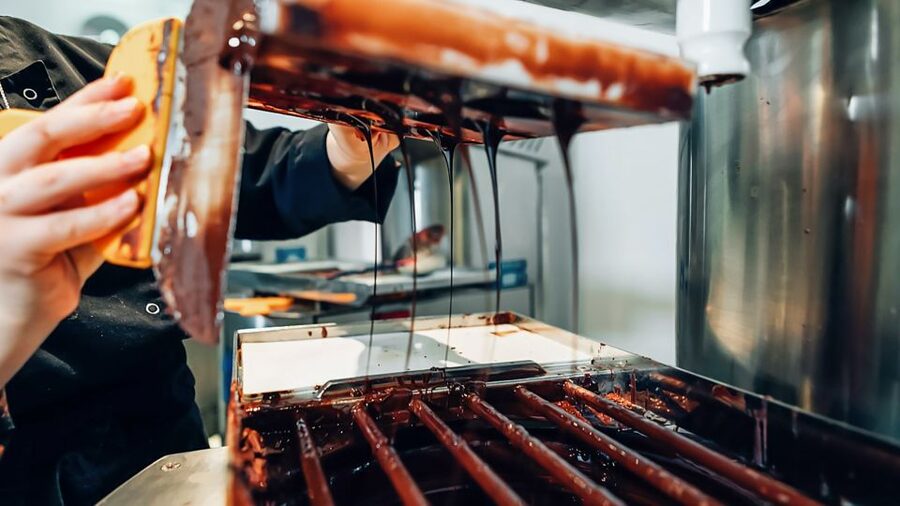
Book it if you want more than a shop visit. You will learn how cacao becomes chocolate, taste unusual ingredients, work with a certified chocolatier, and leave with a box of your own creations.
It is especially suitable for families with children over six, couples, solo visitors, and anyone looking for a weather-proof Brussels activity. I would also recommend it for winter days, when the indoor setting and hot chocolate make the appointment particularly appealing.
Skip it if $82 feels too high for a short activity, if you need a fully custom allergy-safe menu, or if you want a polished professional chocolate-making course. For most chocolate fans, though, the mix of humor, hands-on work, and generous take-home treats makes this one of Brussels’s more satisfying food activities.
FAQ
Where does the Brussels chocolate workshop begin?
You begin at The Belgian Chocolate Makers ticket office at Place de la Justice 5, near Gare Centrale and Mont des Arts.
Is the ticket office inside the workshop?
No. After checking your ticket, staff walk you about 200 meters to the training centre.
How early should I arrive?
Arrive at the ticket office at least 15 minutes before your scheduled start time. Check-in closes when the activity begins, and late arrivals are not accepted.
How long does the workshop last?
The workshop lasts 90 minutes.
What will I make?
You will make a personalized chocolate bar, mendiants, and truffles. Everything you make during the workshop is yours to take home.
What tastings are included?
You can taste fresh cacao beans, mucilage from the cacao pod, several origin chocolates, and cacao liquor, which is cacao mass and contains no alcohol.
Is the workshop suitable for vegans?
Vegan participants can work only with dark chocolate. The provided information says the activity is not suitable for people with lactose intolerance, so confirm your dietary needs before booking.
Is the workshop suitable for children?
Children under six are not allowed. Older children can attend, and the activity has been enjoyed by families and children around 10 years old.
Is an apron included?
A standard booking does not include an apron. An embroidered apron is included with the VIP upgrade, which also includes Champagne and a laboratory visit.
More Chocolate Tastings in Brussels
- Brussels: Belgian Chocolate Tasting Tour
★ 3.4 · 32 reviews - Beer and Chocolate Tasting Tour in Brussels min 6 pax
★ 5.0 · 11 reviews - Brussels: Beer and Chocolate Pairing Class with Tastings
★ 4.6 · 9 reviews - Brussels: Chocolate and Beer Private Tour with Tastings
★ 4.6 · 7 reviews
More Chocolate Tastings in Belgium
- Brussels Walking and Tasting Tour (Beers,Chocolates&Fries/Waffle)
★ 5.0 · 929 reviews - Brussels Chocolate Tasting Tour
★ 5.0 · 568 reviews - Brussels: Beer Tour with 6 Beers and 3 Chocolate Tastings
★ 4.7 · 392 reviews - Brussels: Belgian Chocolate, Beer, and Fries Tasting Tour
★ 4.5 · 54 reviews
Just added around Brussels
- Brussels: Make Your Own Chocolates Workshop with Tastings★ 4.8 · 38 reviews
- Beer and Chocolate Tasting Tour in Brussels min 6 pax★ 5.0 · 11 reviews
- Afternoon Tipsy Tour with Cocktails & Chocolates in Brussels★ 5.0 · 9 reviews
- Private: Discover Brussels beer & breweries by a young local (incl. chocolate)★ 5.0 · 8 reviews
- Navigate through Brussels and Discover Beer and Chocolate★ 5.0 · 9 reviews
- Brussels Chocolate Tour Private & Personalized with a Local Guide★ 5.0 · 13 reviews
- Brussels Beer and Chocolate Walking Tour★ 4.0 · 2 reviews
- Chocolate and Beer Food Tour of Brussels★ 5.0 · 8 reviews
Chocolate Making Workshops, compared.
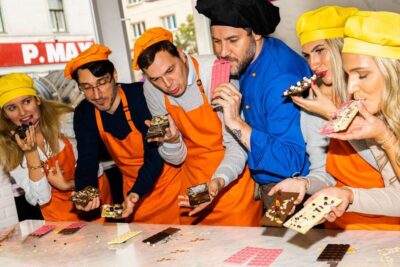
Chocolate Workshop in Chocolate Museum w/ Tasting
Read our review →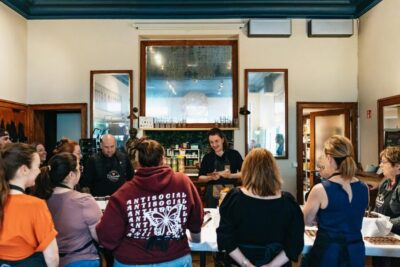
Belgian Praline and Mendiants Chocolate Workshop
Read our review →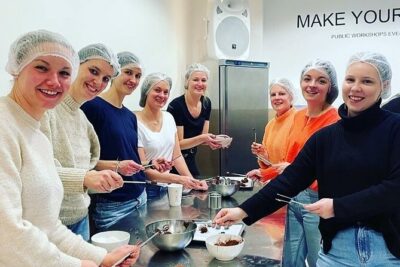
1.5h Belgian Chocolate Workshop in Brussels (bean to bar)
Read our review →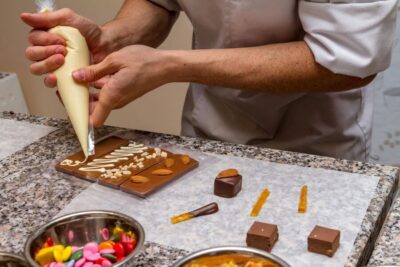
45-minute Chocolate Making Workshop at Choco-Story
Read our review →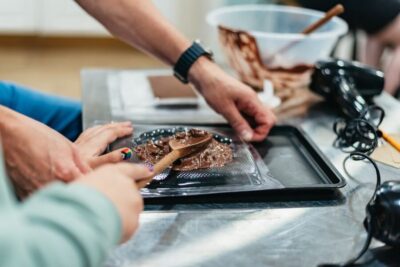
Chocolate Bar Making Workshop at York Cocoa Works
Read our review →